RAM Clutches Logo

803.788.6034 | 201 BUSINESS PARK BLVD., COLUMBIA, SC 29203

RAM Clutches Logo

Single Disc vs Dual Disc Clutch Systems for Street Performance
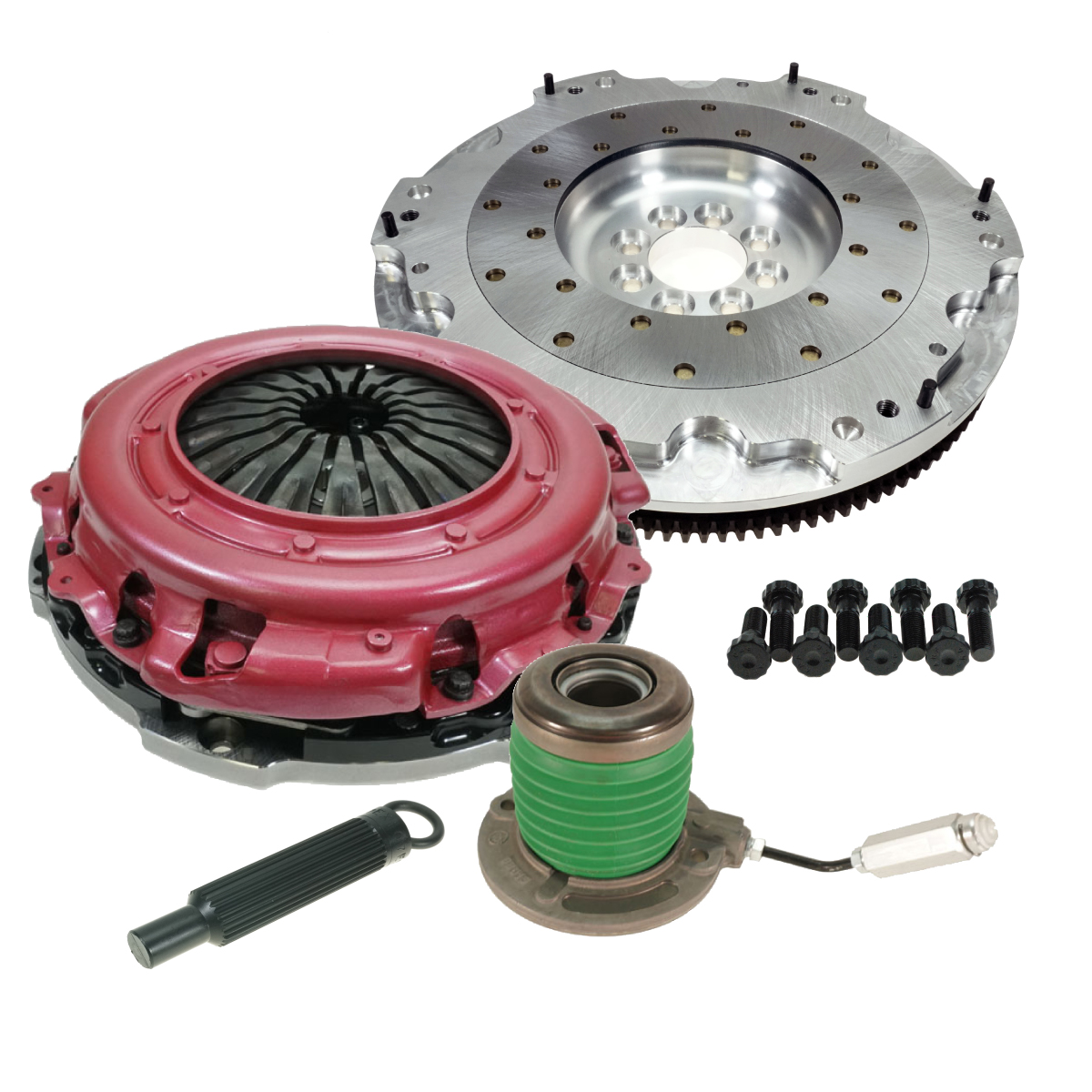
 

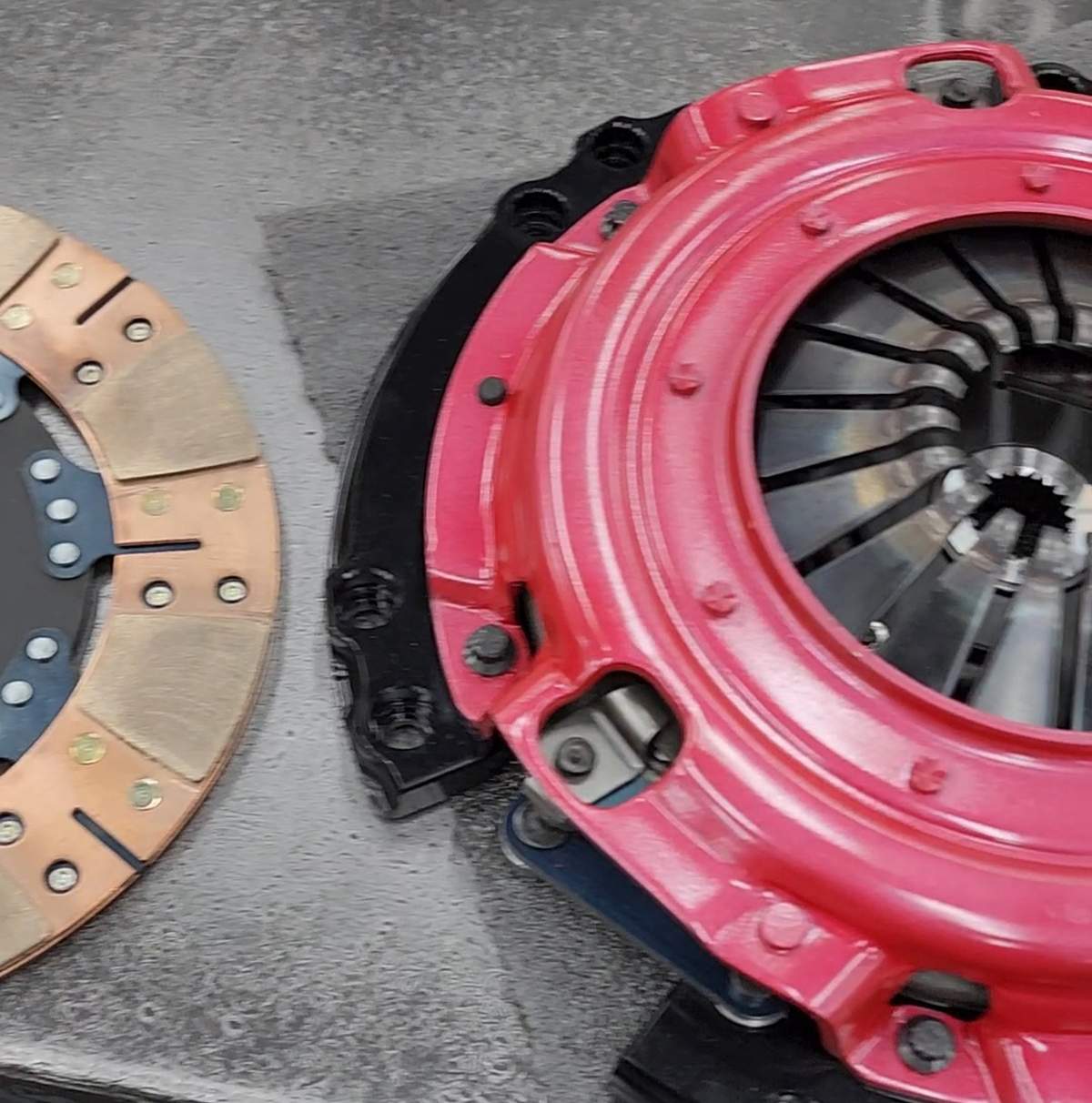
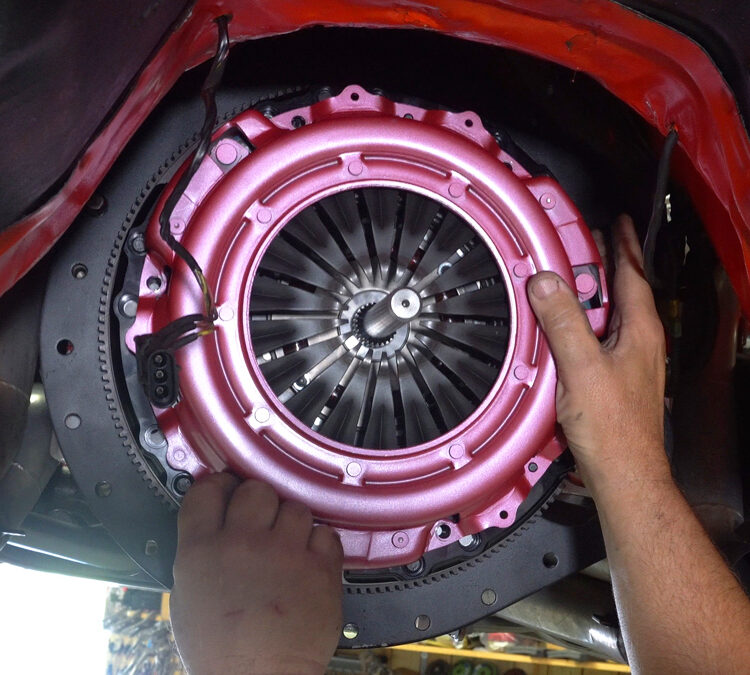
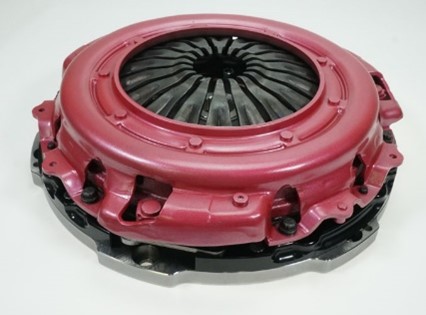
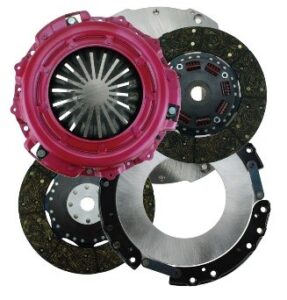
Single disc clutch kit with flywheel

When upgrading a performance vehicle, one of the most common questions enthusiasts have is whether to run a single disc or dual disc clutch system. Both options offer advantages, but the right choice depends on horsepower level, vehicle use, driving style, and long-term goals.

Understanding the differences between these systems helps ensure you get the performance, drivability, and reliability your build demands.

A Brief Overview
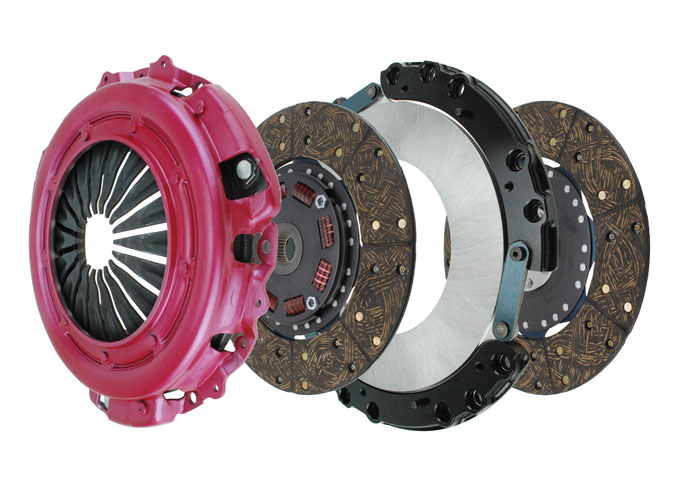
Dual disc clutch stack up
Most street cars manufactured up to around 2008 come equipped from the factory with a single disc clutch. For many street-driven performance cars, a properly matched single disc clutch provides outstanding performance without sacrificing comfort.

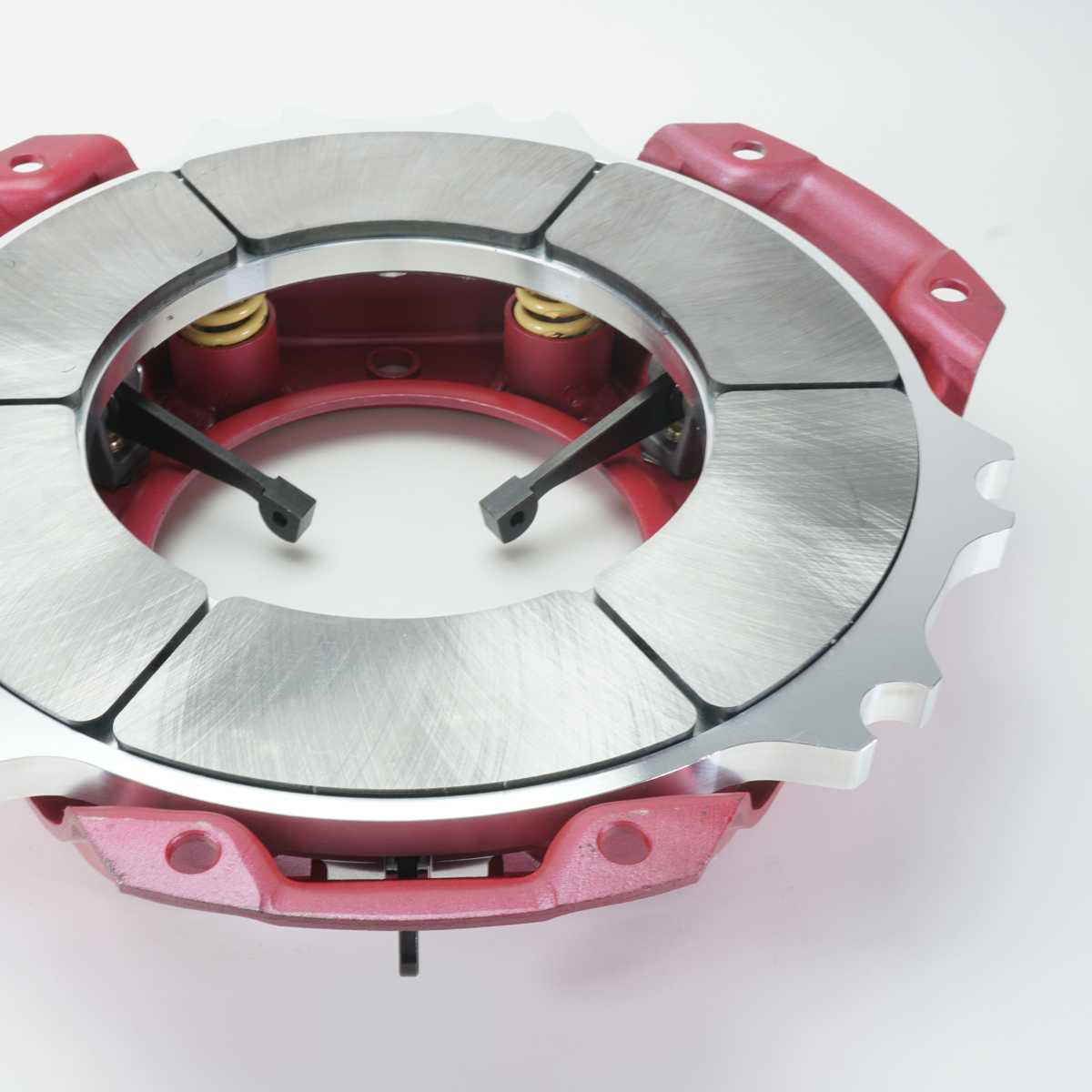
A dual disc clutch adds a second friction disc and floater plate, effectively doubling the available friction surface area without dramatically increasing pedal effort. Instead of relying on higher pressure plate load alone, dual disc systems increase capacity through added surface area.


Benefits of a Dual Disc Clutch

  • Significantly higher holding capacity
  • Lighter pedal effort compared to aggressive single discs
  • Improved heat management
  • Better durability under hard use

Dual disc systems allow high-horsepower street cars to maintain drivability while handling power levels that would overwhelm a traditional single disc.

Why Not Just Use a Single Disc?

Many enthusiasts try to push a single disc beyond its ideal range by increasing pressure plate load or using more aggressive friction materials. While this can work, most street drivers prefer the stock, OEM feel that your factory single disc provides. A dual disc setup frequently becomes the better solution because it achieves higher holding power without compromising drivability.

When a Single Disc Clutch Is the Better Choice
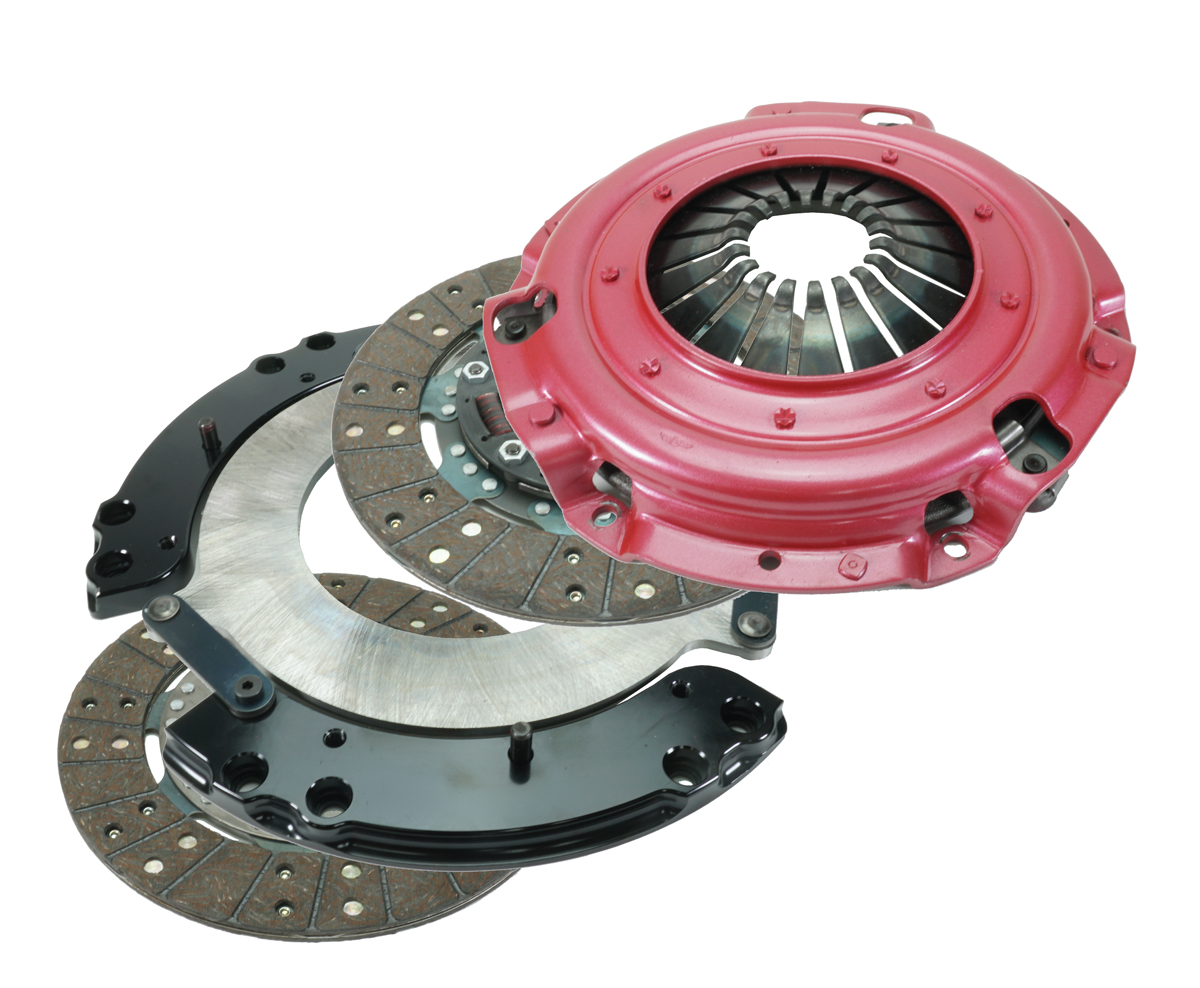
Single disc clutch stack up
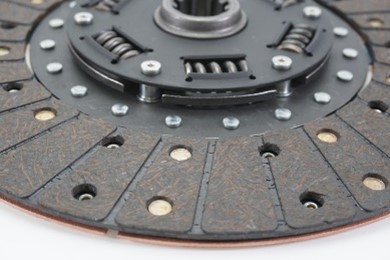
A single disc system is typically the right choice when power levels are moderate and the modifications made to the vehicle are few — or your car sees little track time and OEM pedal feel is not your greatest concern.

Click Here to view our Street Performance Single Discs


When a Dual Disc Clutch Makes More Sense
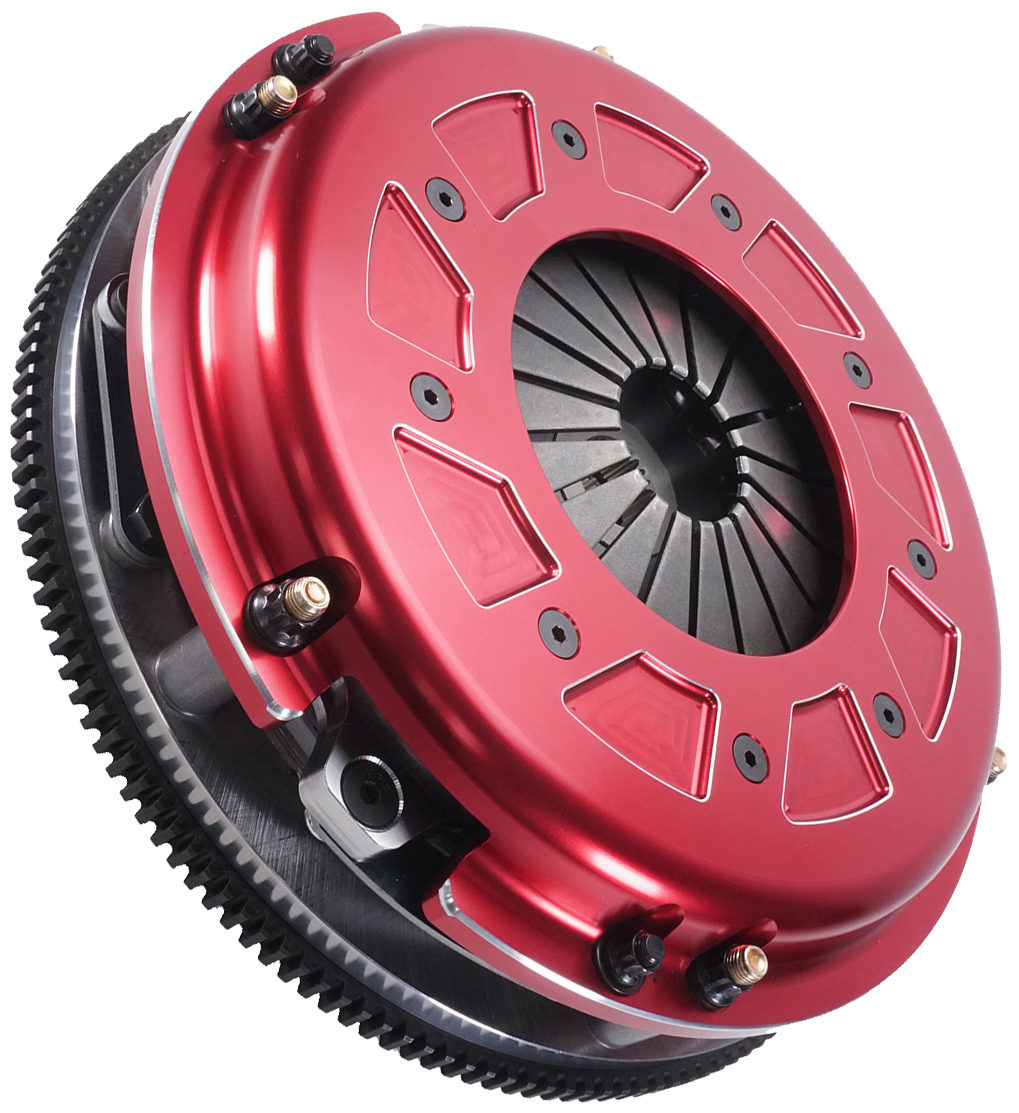
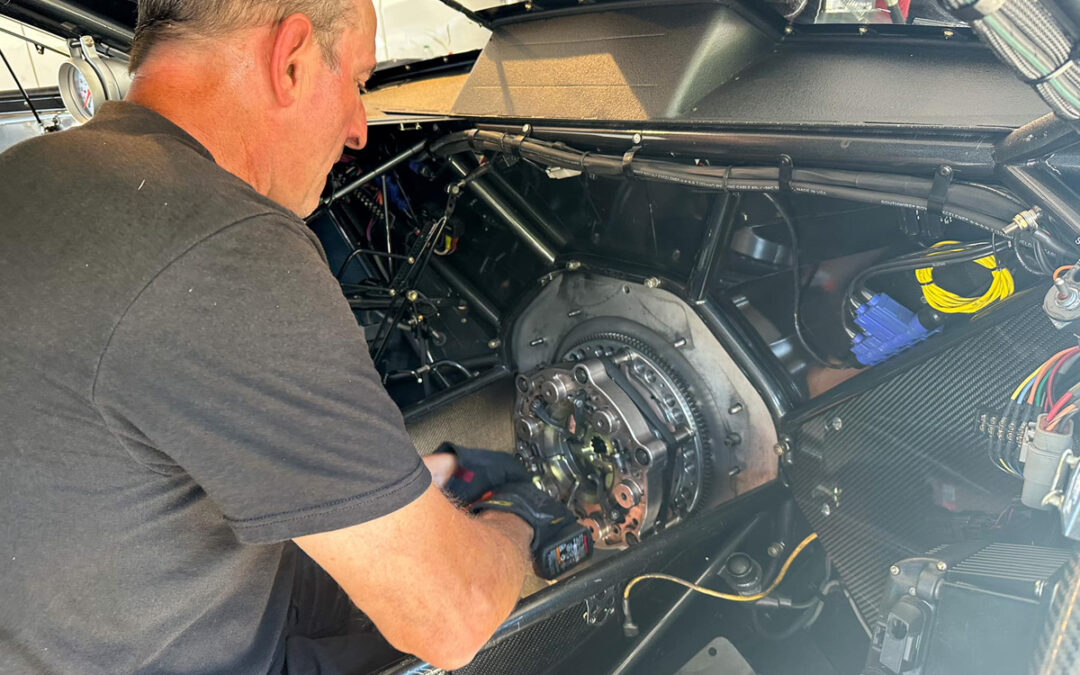
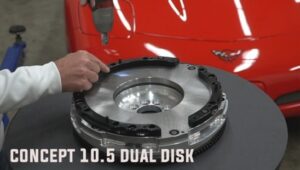
Pro Street dual disc clutch
A dual disc system becomes advantageous when you're creeping up on the 550 HP level but would like to keep your car equipped with a stock, OEM feel clutch. Modern dual disc designs have dramatically improved street manners, making them increasingly common even in vehicles that spend significant time on public roads.

If you are replacing a dual disc clutch in a later model car, you don't want to change to a single disc! RAM dual disc clutches for these applications are built to exacting specs that make them a true bolt-in solution.

Click Here to view our Street Performance Dual Discs


Common Misconceptions

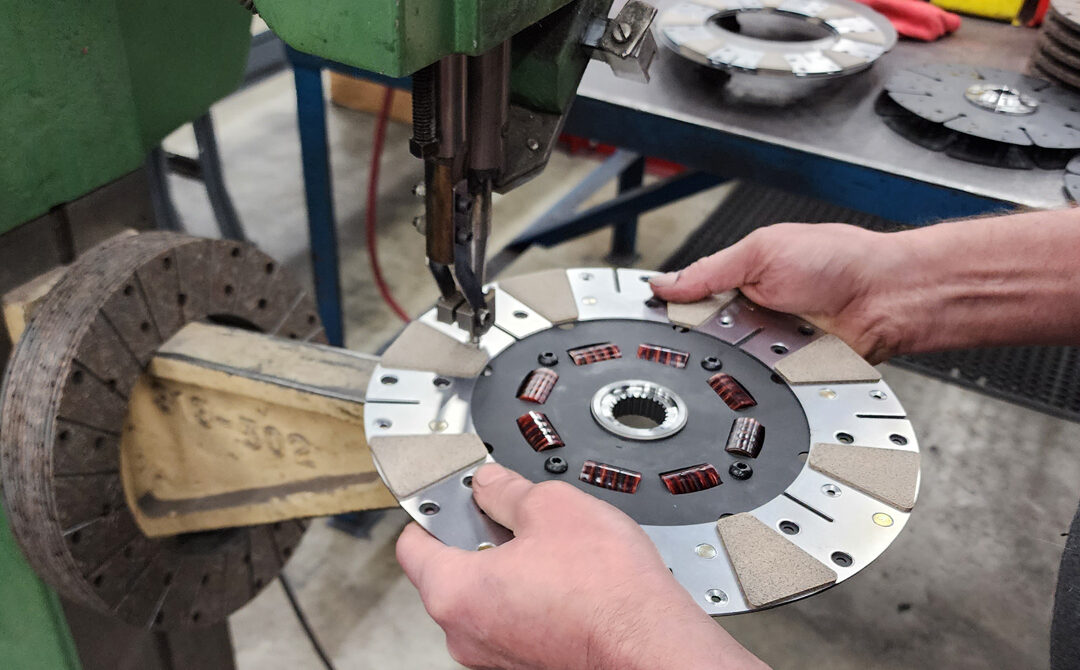
One of the biggest myths is that dual disc clutches reduce drivability. Drivability is very important to the engineers at RAM. Our Street Performance Dual Discs come with an optimized clutch pack, utilizing a nesting sprung hub top disc and solid hub bottom disc. These hubs provide a wider spline engagement area to reduce wear and evenly spread the load across the input shaft. A strap-driven floater plate ensures quiet operation, and our larger pressure plate diameter improves heat dissipation while delivering a silky-smooth, stock-like pedal feel.

The key is choosing the correct system for the vehicle's intended use — not simply selecting the highest torque rating available.

Another common misconception is choosing an aggressive single disc over a dual disc to keep installation "easy." There is nothing easy about pulling a transmission, so you want to make sure you do it right the first time! Installing a clutch that might take 10 minutes less won't save you any time when you have to pull the transmission again because you're unhappy with the single disc's drivability. RAM takes out the guesswork by providing accurate measurements, thinner flywheels to ensure space in the bellhousing, and easy setup sheets to guide you through the process.

Final Thoughts: Which One Should You Choose?

Choose a Single Disc If: You've made only minor modifications to the vehicle.

Choose a Dual Disc If: Your power levels are growing and you want to keep the feel the car had leaving the showroom.

Need Help Choosing the Right Setup?

Selecting the right clutch system can make or break the driving experience. Our team works directly with racers and street enthusiasts to match clutch systems to your exact build.

Contact us for a personalized recommendation using this form or by emailing [email protected]


As always, the RAM Team welcomes your feedback as well as stories of your experiences, good or bad!

Be sure to subscribe to our YouTube channel to keep up to date on our latest tech tips, installing videos, and product information!

Keep up with all happenings at RAM by subscribing to our monthly newsletter. We promise not to inundate your inbox!

OEM Feel Isn’t an Accident: How RAM Engineers Street Clutches

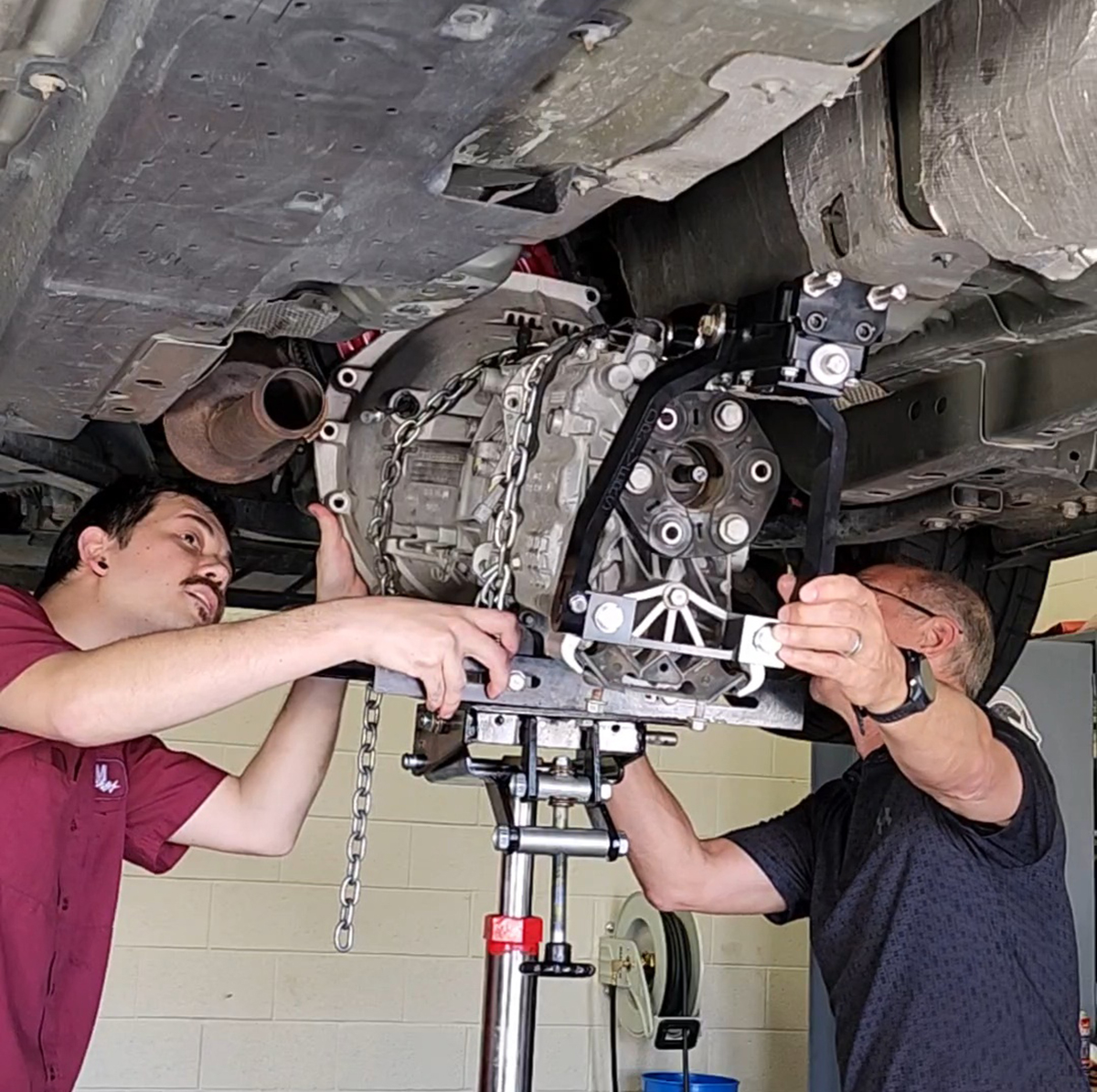
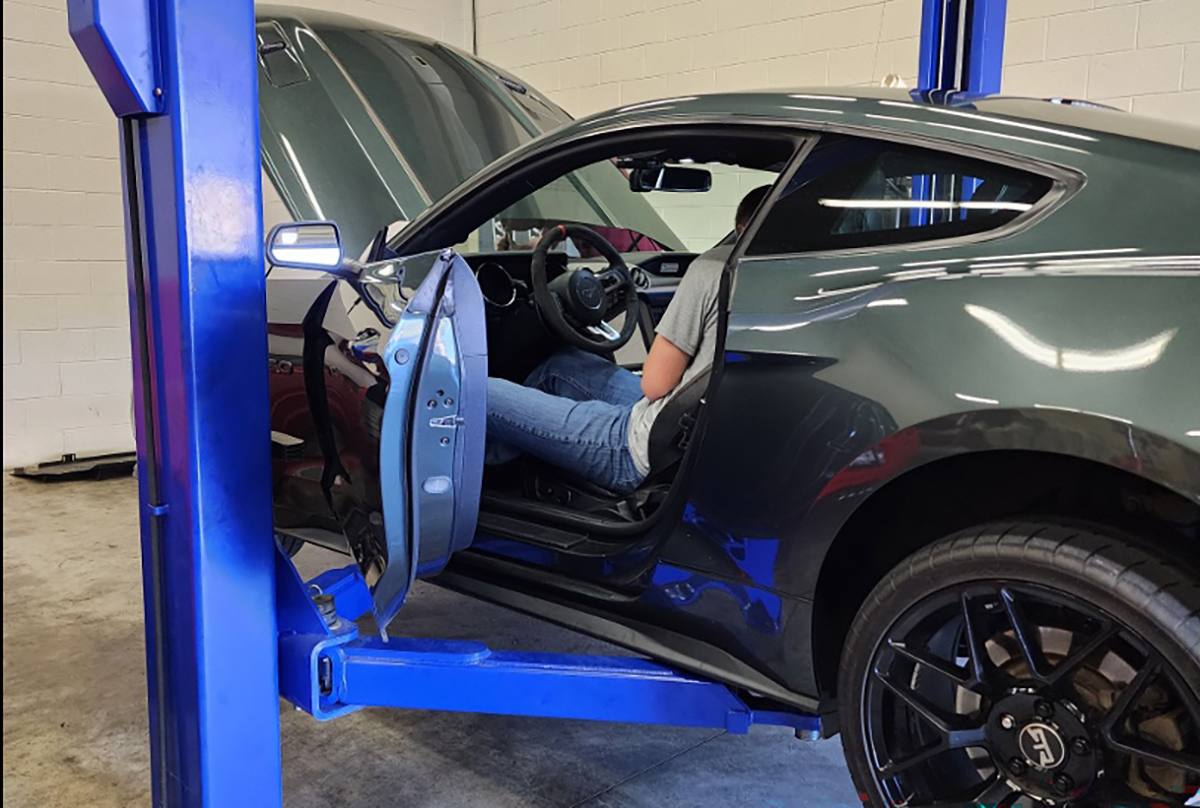
Car on lift in shop

One of the most important questions we ask our manual transmission enthusiasts when recommending a RAM Clutch is how they expect the car to feel when they are driving. Almost everyone wants the car to drive like a well-mannered street vehicle, regardless of how many upgrades made. Having a sweet ride is only fun when it's drivable - and at RAM Clutches, we have achieved the holding power any street car needs while keeping the most important thing easy: driving.

So, you’ll hear the term “OEM feel” thrown around when discussing a new clutch. When we say OEM Feel at RAM, we do not mean OEM quality, but the showroom feel that the car had before you supercharged it. What we actually want out of OEM feel is pretty simple:

  • Smooth engagement
  • An easy, predictable pedal

Those two things define how a clutch feels in real driving. Achieving them—while still increasing torque capacity—is what drives how RAM designs its street clutch lines.

OEM Feel Starts With How the Clutch Engages

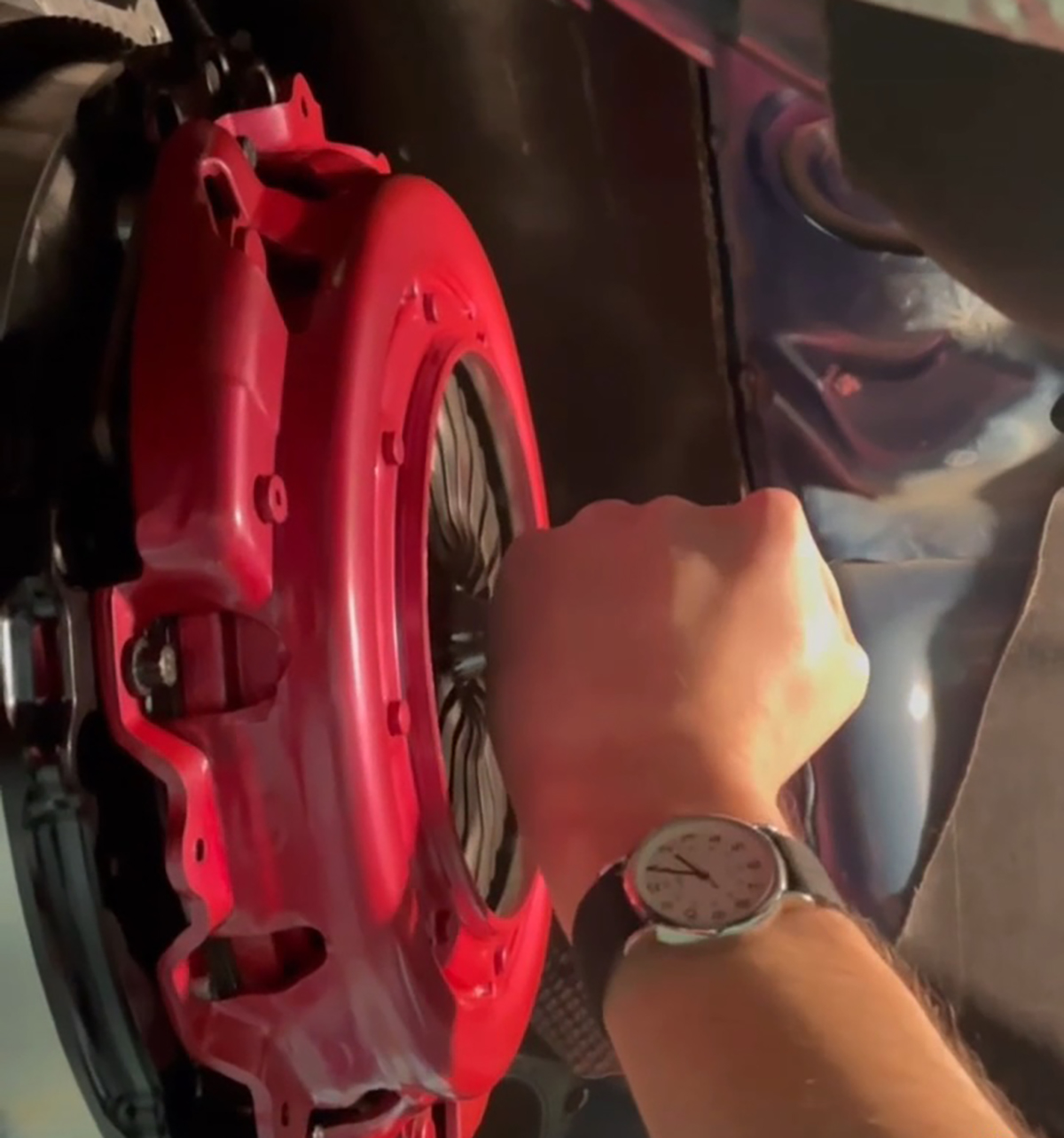
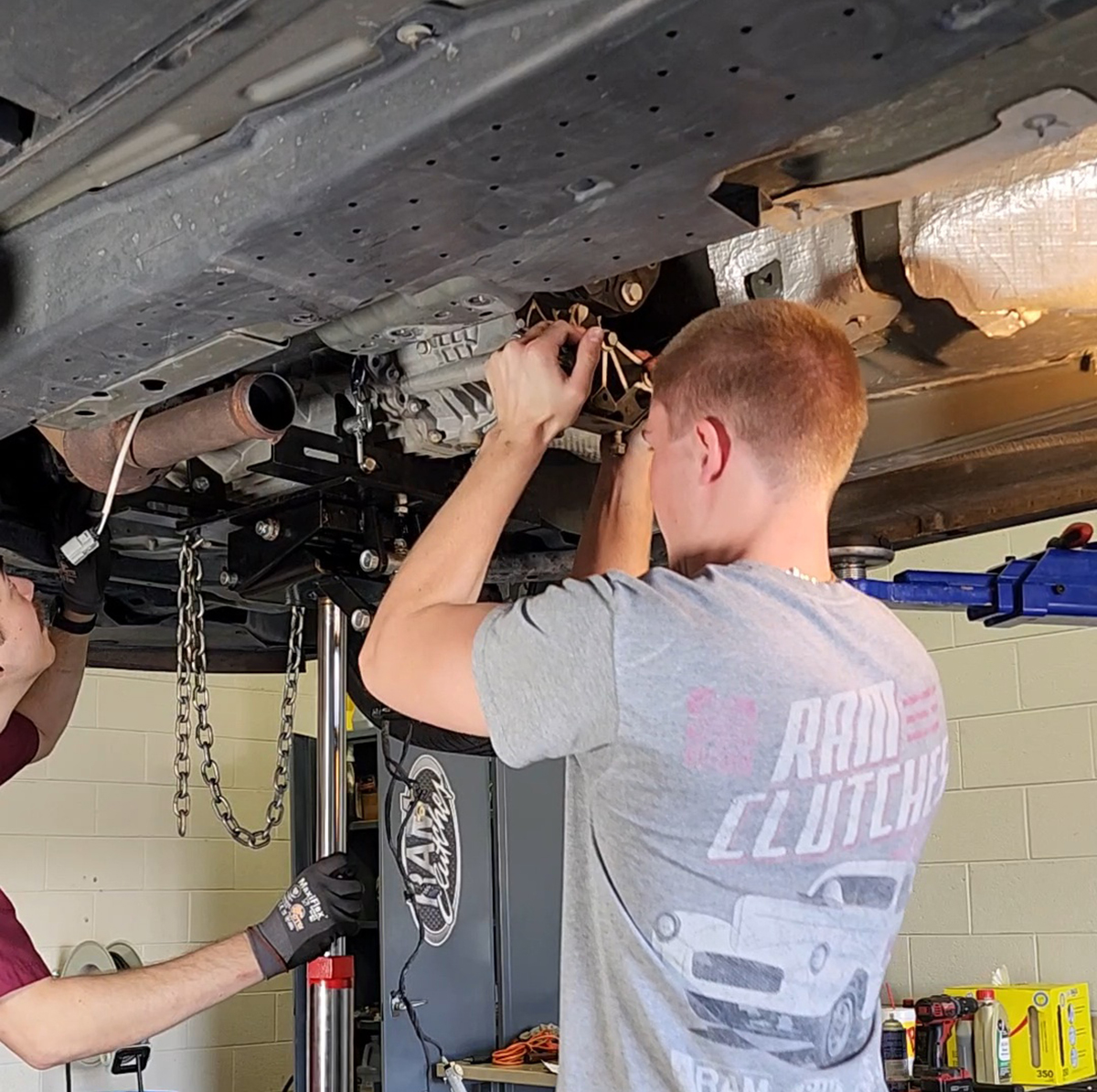
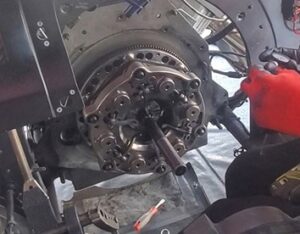
Removing transmission Most street drivability complaints come down to engagement. A clutch that grabs too quickly or feels on/off at low speed is exhausting in traffic.
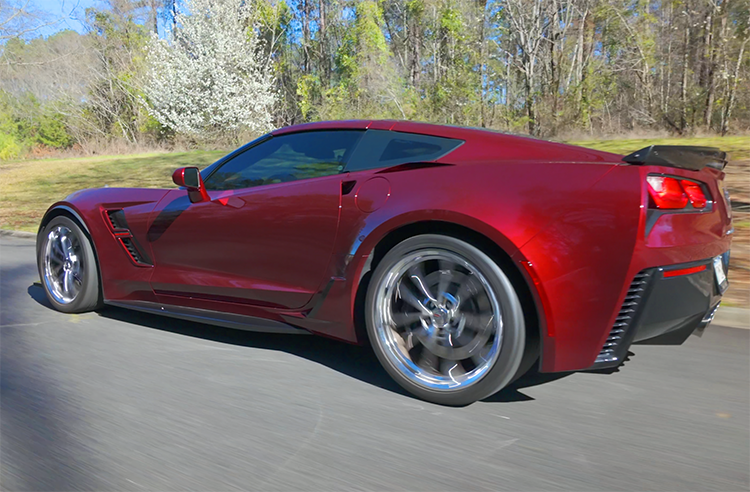
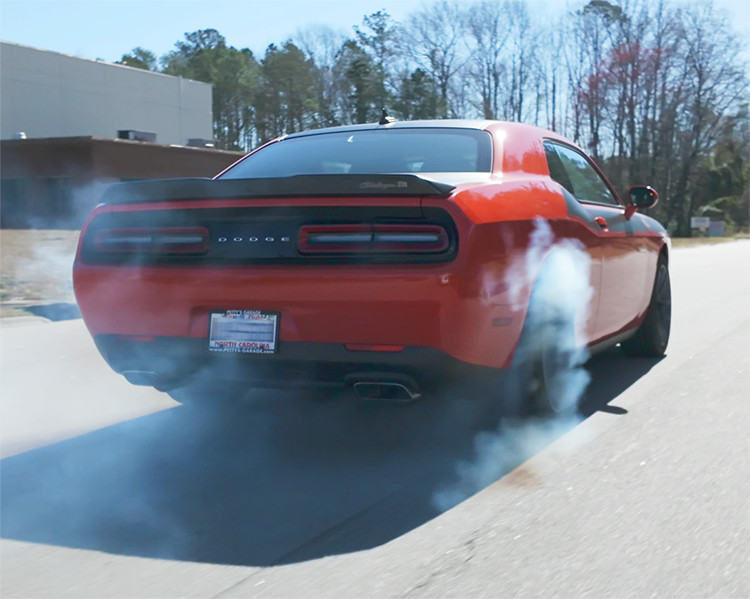
RAM engineers street clutches to engage consistently. That’s true whether it’s a clutch from our single disc line (OEM replacement, HDX, Musclecar, Powergrip, or Powergrip HD) or our dual discs (Concept 9.5, Concept 10.5, Pro Street). Even though these clutches cover different power levels, the goal stays the same: smooth takeoffs and predictable engagement that feels natural from the first drive.

That smoothness comes from treating the clutch as a system. Disc design, pressure plate characteristics, friction material, and hub damping all have to work together.


Pedal Effort Is a Design Target, Not an Afterthought

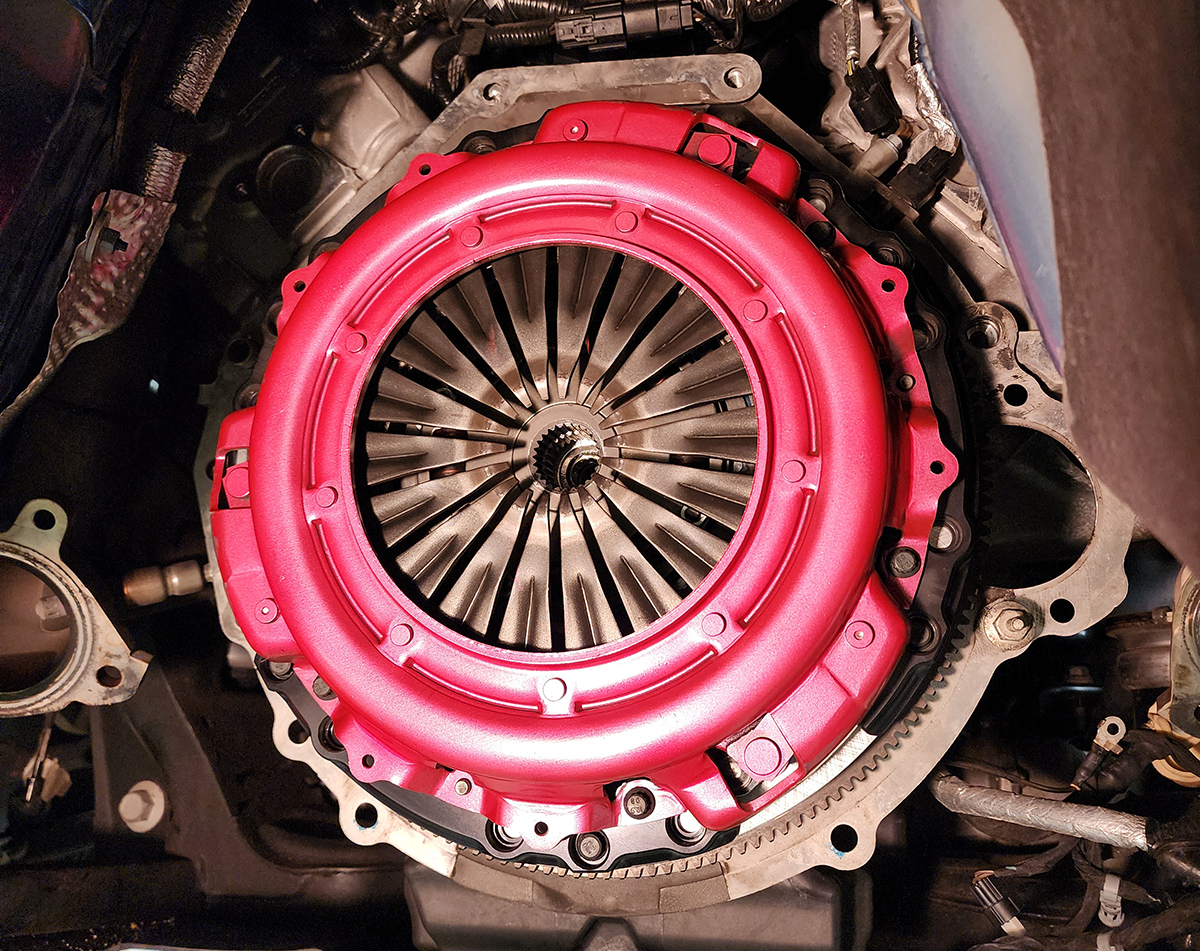
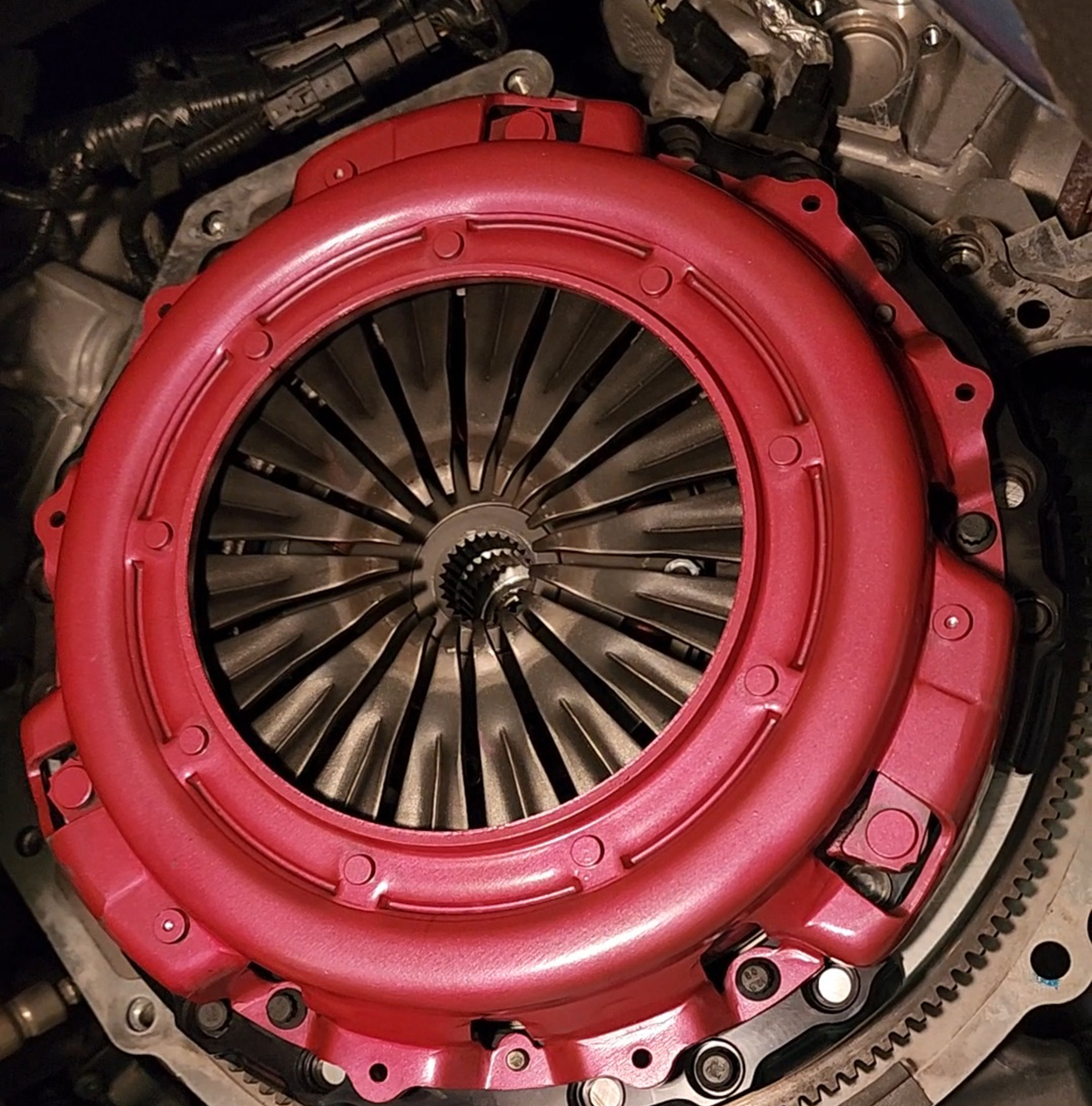
Concept 10.5 installed Another major part of OEM feel is pedal effort. Nobody wants to install a new clutch just to stand on the pedal! RAM's street-oriented clutches, from the HDX to the Pro Street, were designed intentionally to keep your pedal light and predicable.
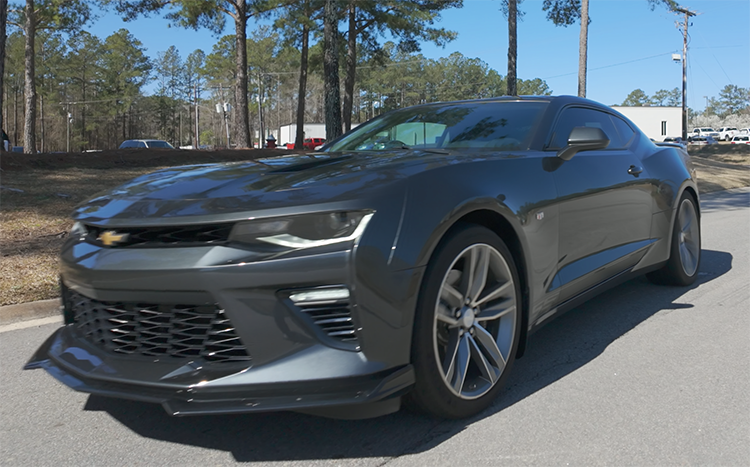
Instead of relying on excessive clamp load, RAM uses disc diameter and pressure plate efficiency to create holding power. That’s how these clutches can handle more torque without feeling heavier under your left foot.


Why Disc Diameter Matters on the Street

Larger diameter clutch assemblies are a big part of how RAM maintains OEM feel. More surface area means the clutch doesn’t have to work as hard to hold torque.

This approach is built into designs like the Concept 9.5 and 10.5, which use compact, efficient layouts that balance torque capacity with smooth engagement. The same thinking applies across the HDX and Muscle Car lines—surface area is used to improve drivability, not just power ratings.

The result is:

  • Less aggressive engagement
  • Better heat control
  • More forgiving behavior in normal driving
 

Friction Material Is Chosen for Control, Not Just Grip

Friction material directly affects how a clutch feels—not just how much power it can hold.

RAM's street clutch line use intentionally selected friction materials from the best brands available to ensure smooth engagement and consistent behavior in traffic.

Whether it’s an OEM Replacement clutch in a stock car, or an HDX or Muscle Car clutch in a car that has seen mild modifications, the materials are chosen to preserve that familiar, showroom-fresh feel.

Hub Design and Damping Keep the Car Civil

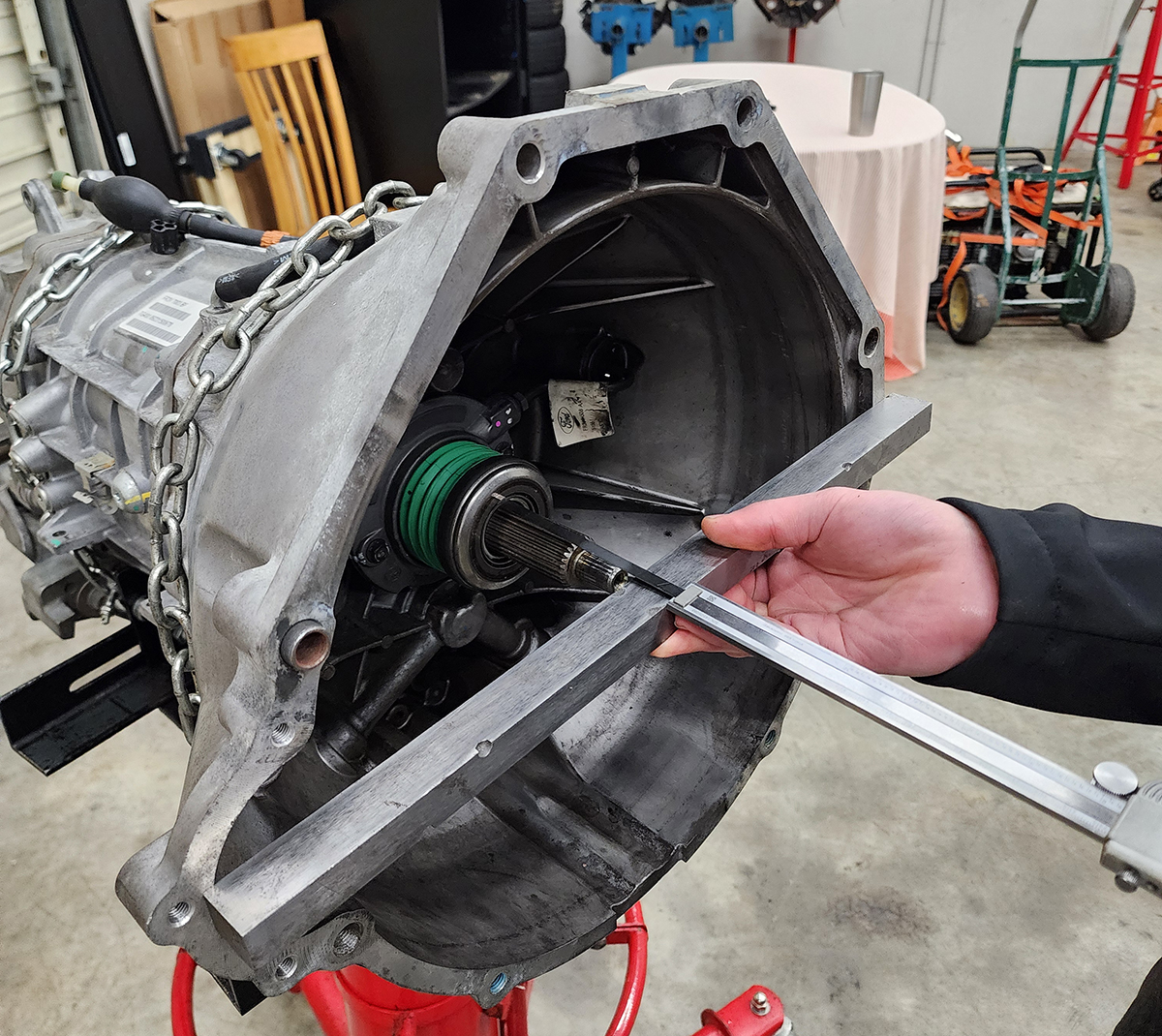
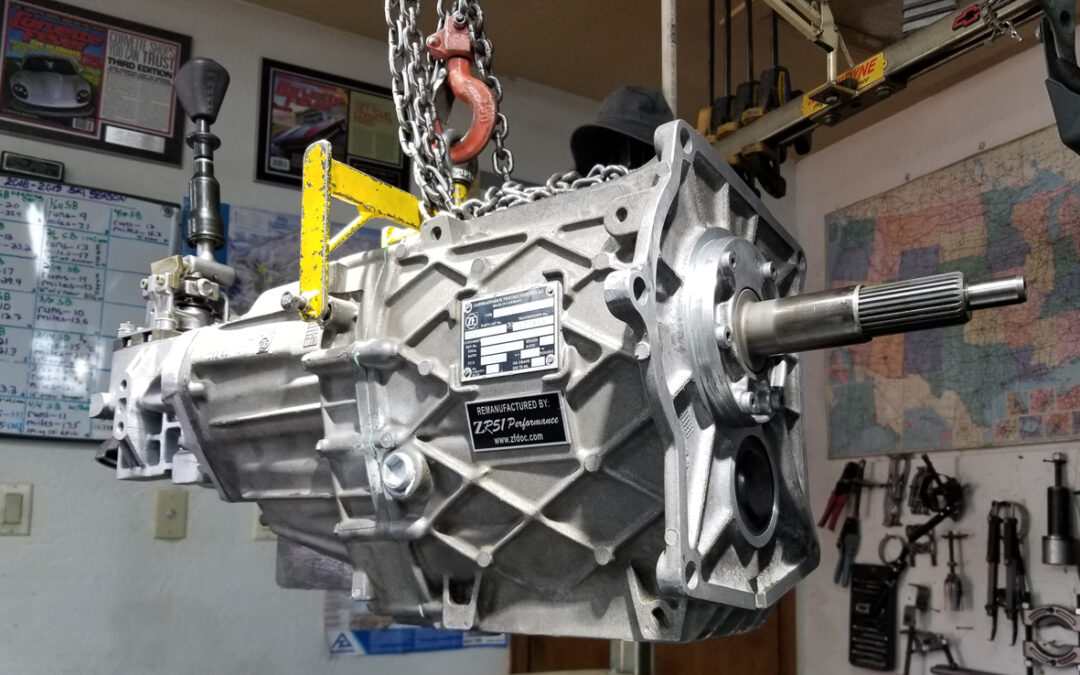
Installing transmission RAM street clutches commonly use dampened hubs, marcel springs, and application-specific tuning to manage shock and vibration. This is especially important in high-torque street builds where driveline harshness can creep in if the clutch is too rigid.
That’s why even higher-capacity street systems—like the Powergrip and Concept Series—are still designed to feel calm and composed in everyday driving.


OEM Feel Means Consistency, Not Just First Impression

A clutch that feels good for the first 100 miles isn’t enough. RAM clutches are engineered to provide smooth engagement, predicable behavior in stop and go traffic, and consistently pedal feel over time.

RAM street clutch lines are designed with everyday conditions in mind. Whether it’s a classic muscle car, a modern street build, or a stock-style replacement, the expectation is the same: the car should feel like you just rolled it out of the showroom—only with more capability under the hood.

OEM Feel Is Engineered on Purpose

Across all of RAM Clutches’ Street lines, the philosophy doesn’t change. OEM feel isn’t a marketing term—it’s a design goal built around smooth engagement and an easy pedal.

That’s why RAM street clutches don’t feel accidental. They feel intentional. Because they are.


As always, the RAM Team welcomes your feedback as well as stories of your experiences, good or bad!

Be sure to subscribe to our YouTube channel to keep up to date on our latest tech tips, installing videos, and product information!

Keep up with all happenings at RAM buy subscribing to our monthly newsletter.  We promise not to inundate your inbox!

An interview with Braden discussing the install of RAM 9.5 dual disc clutch in his 2015 Mustang GT


In our never-ending quest for improvement, your technicians and engineers at RAM take advantage of the fall by diving deep into real-world testing to validate, refine, and push our products to the next level. This month, we wanted to shine a spotlight on a unique comparison: how our lighter, tighter-fit Concept 9.5 metallic clutch behaves in a stock 2015 Mustang GT, and how it stacks up against our proven Concept 10.5 organic unit. While we typically recommend our Concept 10.5 units (50-2230 or 50-2230N), curiosity got the best of us. The Concept 9.5 uses metallic facings and comes in 7 pounds lighter —how would it feel in a daily-driven, bolt-on Mustang?

To get the real answers, we followed the experience of one of our own: Braden Swisher, Technical Assistant at RAM and the driver of the 2015 GT Mustang with the stock MT82 transmission.

Below is our interview with our very own Braden Swisher who has taken his car enthusiasm and turned it into a career at Ram Clutches.

Interview With Braden Swisher

Technical Assistant, Mustang Enthusiast, and Resident Clutch Tester

M: I’m here with Braden; he is one of our Master Technical Assistants and has been here at RAM for a couple of years now. He brought his 2015 Mustang GT in and allowed us to test a few clutches in there. So, tell me about your car Braden!

B: Yeah! It is a 2015 Mustang GT. It’s pretty much stock overall, but I’ve done a handful of bolt-ons, but nothing too wild for the most part including: an intake, short shifter, valved exhaust mufflers and H pipe, diffuser and a carbon spoiler I made a mold for and installed myself.

M: And some suspension work as well, correct?

B: Yes, just some linear coil springs on all four corners.


Installing the Concept 10.5 (50-2230 + 1545LW + 78175)

M: So, the original clutch came out, what happened with that?

B: The clutch had been dragging and was hard to disengage.  Finally, it got to where it would not disengage at all.  When we pulled the clutch out, we noticed the facings on the disc had completely come off the carrier, and in addition to that, the stock slave cylinder was leaking.

M: So, it blew the facings off the carrier and obviously some material was lodging itself in there, which is probably what made it drag.

M: Which clutch did we decide to put in the first time?

B: We installed a RAM Concept 10.5 with our organic facing material, part# 50-2230 and billet steel flywheel part# 1545LW. This is our clutch kit for the 2015 Mustang GT that have not seen any major engine or power modification.  We also installed a RAM hydraulic bearing 78175 at the same time because the stock slave was leaking.

M: We were wanting you to have some real-world experience with this clutch kit since you talk to so many customers about them on the phone and by email.  So how was the install process? How did it drive?

 B: Yeah, it was great! What I was super excited about was how easy the installation went. We did the install using all the information we provide to our customers. The RAM setup sheet lays everything out step by step and made the install a breeze and it drove great. I really couldn’t tell any difference between the two if you’re comparing pedal effort. Engagement was very smooth on takeoff without any chatter.

M: And you did take the car to a track day some with the Concept 10.5, right? Showed those old guys how to drive, did you?

B: I did, I’m lucky to come from a car enthusiast family, so my dad and I took our Mustangs and got to drive at Carolina Motorsports Park in Camden and the clutch handled everything without any issues at all. And yes, I tried my best (laughing.)

M: That’s awesome. So, Braden, you drove the Concept 10.5 clutch for about half a year, maybe 5000 miles, and then we wanted to do some testing with our Concept 9.5, part# 75-2230NS. When we took your Concept 10.5 clutch out, man that looked brand new, didn’t it?

B: Yeah, it did (laughing.)  You could still see the RAM signature ground finish on the flywheel which was impressive to see how well everything held up after around half a year and several thousand miles of mixed driving.

Installing the Concept 9.5 Metallic (75-2230NS)

M: Haha, well obviously you are a good driver. So anyway, we decided we wanted to do some testing with the Concept 9.5, part number 75-2230NS, so we put one in your car. And that clutch features the metallic facings, boosting its holding capability. You’d never daily-driven a metallic clutch before, so how was the transition?


B: I was honestly curious about it. Metallic facings usually get a reputation for being aggressive or grabby, so I expected some chatter or a harsher engagement. But it surprised me — in a good way. The pedal felt almost exactly like the 10.5, and I found I really like the engagement point on the 9.5. It picked up right where I wanted it to.

M: Great. So, it wasn’t too aggressive or difficult to engage at low speeds or anything like that?

B: Absolutely not which surprised me. In normal driving like parking lots, stop-and-go traffic, backing out of my driveway, etc. it behaved almost identical to the organic clutch. I didn’t have to change how I drove at all. If you put someone in the car blindfolded and had them drive both clutches back-to-back, they probably couldn’t tell you which one was metallic.

M: That is great. I must admit that when I drove it, I was also very surprised how smooth it was, considering the metallic based friction material. Typically, you’d expect a metallic clutch to be more aggressive, but this drove just like the organic! And the install itself, what did you think about it? As far as difficulty and such, would you say it was very hard to get in?

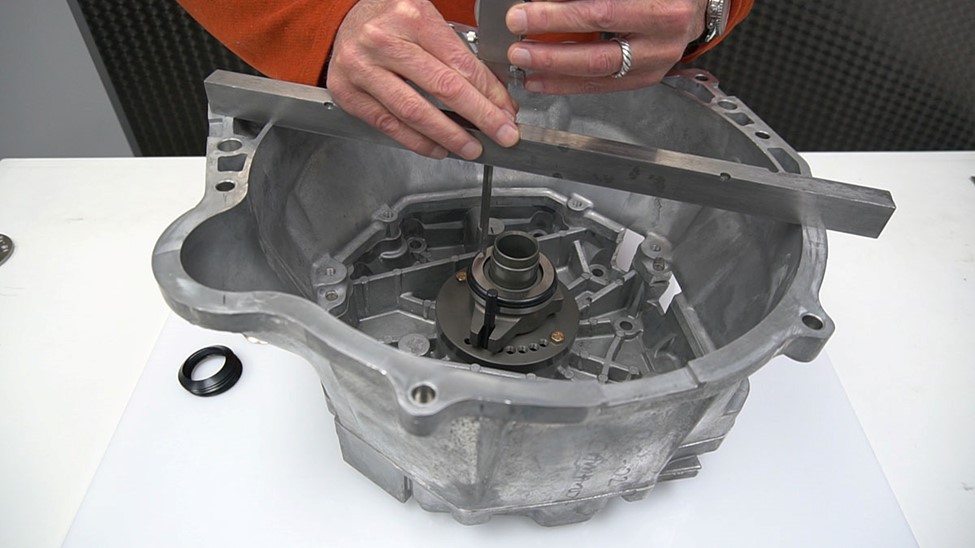
B: No, it wasn’t bad at all, aside from getting the trans off the dowel pins on the block because They were a little tight, everything else was straightforward.  Other than that, it was straightforward. As I said earlier, we did the install using all the information we provide to our customers. The RAM setup sheet made the install a breeze. And with the Ram hydraulic bearing setup sheet, we were able to determine our gap and shims for the shorter clutch before taking the car apart, which made remeasuring and re-shimming for the shorter clutch painless.

M: You have done all the mods on your car yourself.  So, for an amateur or home mechanic, is this is a project that they could tackle themselves?

B: Well, it would certainly be a bit more difficult without a lift and a transmission jack, but otherwise yes.  I would also recommend having a helper.  Not only does another person make handling the transmission easier but having a second set of eyes to make sure I didn’t do anything wrong was comforting!  The key is taking your time and follow the instructions.

M: Great. So, you have driven this Concept 9.5 for a few weeks now, we will pull it out in a couple months, but I suspect it will look good as new since you’re clearly a great driver with our clutches!

B: Haha, apparently!

M: Well, thank you so much Braden for your time.

We love having the ability to test these products in-house. Having employees that are car enthusiasts is certainly helpful too!  We’ll update you in the future on how this system is performing and what Braden thinks after some extended use!

As always, the RAM Team welcomes your feedback as well as stories of your experiences, good or bad!

Be sure to subscribe to our YouTube channel to keep up to date on our latest tech tips, installing videos, and product information!

Keep up with all happenings at RAM buy subscribing to our monthly newsletter.  We promise not to inundate your inbox!


Making the Most of Your 2025 Season – Part 4

Making the Most of Your 2025 Season – Part 4


With the racing season entering the home stretch, we hope that you have learned the value of becoming more systematic and intentional in your approach to racing. Whether you're riding the momentum of a dream season or working to overcome challenges, it's critical to remain focused and committed. Stick with the plan that you have laid out and stay focused on finishing the season strong. If things haven’t gone as planned, there is still time to prepare a plan and make adjustments to close out the season on a high note. It is never too late to set a new or adjust an intermediate goal.

A Staying the Course-Building on Strengths-Staying Focused

As you and your team go through the season you must realize that progress brings change. Reaching intermediate goals often leads to new goal setting and challenges with new expectations. While this is a natural and healthy cycle, you must be careful and stay grounded and maintain perspective at this point. This is a great time to reflect back and review the process and steps you took that allowed you to get to this point. Your success has not happened purely by accident. Your success is a direct result of planning, preparing and execution. Staying grounded and maintaining perspective is one of the most difficult things for a team to do when experiencing any level of success. We notice this time and time again about teams as they become successful. They take one step forward but then take two steps backwards. This typically happens because they change their strategy regarding their planning and preparation. Staying grounded and employing the same game plan that got you here is the key to building consistent long-term success.

TIP: Do not take success for granted.

  • To summarize, for continued success you must:
    • Stay grounded and maintain perspective
    • Be strategic when planning
    • Prepare thoroughly
    • Execute to your full potential

If results have not met expectations or you have not been able to achieve your intermediate goals, then a review is in order. Remain positive and identify the reason or reasons for the shortcomings.  When things go wrong, our instinct may be to blame others or make excuses—but true progress begins with identifying the real problem. The issue can very well be the engine, chassis, driving, or simply your decision-making process during the race.  Any or all of these items can contribute to lackluster results. Dialing in your engine setup, chassis configuration, and reaction time all at once is a tall order. Choose one or two aspects to concentrate on, and work through them step by step. After you identify a potential reason for poor performance, act on it and set an

intermediate goal. Develop a plan, prepare and execute it. While it may be easy to get frustrated during this time REMEMBER: if you do not set goals for you and the team, you cannot be disappointed with the results.

  • To summarize, in order to improve results, you must:
    • Maintain a positive attitude
    • Identify the issue or reason for the shortcoming
    • Set an intermediate goal
    • Develop a plan
    • Prepare thoroughly
    • Execute to your full potential

Tuning for Fall

With fall bringing cooler temperatures and shorter days, a subtle shift in mindset is necessary. If you recall, in part 1 of this blog series we discussed laying out a plan. Part of that plan was for you to be aware of certain things you should expect at the race before even leaving for the racetrack. Weather conditions, track temperatures and run schedules will begin to look a little different this time of year. By anticipating these seasonal changes, you can stay ahead of the curve and be better positioned to have a successful outing. This is the time of year where personal bests are set and records are broken.

TIP: Stay grounded and maintain perspective

It is easy to get blinded by great track and weather conditions. Remember you must “GO” first before you can “GO FAST.”

Eye on 2026

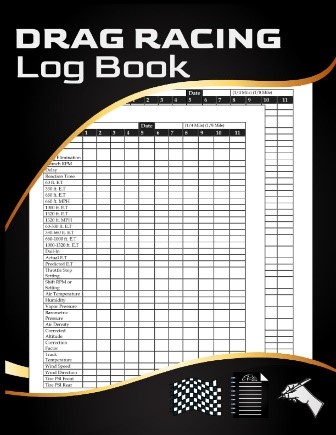
Throughout the 2025 season, maintaining detailed notes and regularly updating your logbook should have been a core part of your process. Reviewing those notes should help you begin to shape your success in 2026. Keeping a list of items that need to be repaired, serviced, or replaced during the off season is a great step to being prepared for the upcoming year.  Identifying offseason requirements in advance enables you to plan and schedule at season’s end, minimizing delays due to timing and/or parts availability.  Don’t forget all of the data you have been collecting. Log and organize all incremental times, weather, and other key information into your run files. Keeping your run files and data up to date will make future planning, preparation and execution much more efficient and effective.  Above all, remember, racing is supposed to be fun!

As always, the RAM Team welcomes your feedback as well as stories of your experiences, good or bad!

Be sure to subscribe to our YouTube channel to keep up to date on our latest tech tips, install videos, and product information!

Keep up with all happenings at RAM buy subscribing to our monthly newsletter.  We promise not to inundate your inbox!


Missed the previous blogs in this series?  Catch up with the links below:

Making the most of your 2025 race season – Part 1

Making the most of your 2025 race season – Part 2

Making the most of your 2025 race season – Part 3


WHO IS GOING TO INSTALL MY NEW RAM CLUTCH?


When selecting a new clutch system for your car and deciding on who is going to install it, doing your research is a paramount and often an overlooked step. Making sure you review the new clutch requirements based on your car’s combination and how you intend to use it allows you to make the best choice to meet your expectations.

Once you choose the clutch, or perhaps even before you purchase it, you have another important decision to consider: Who is going to install the clutch?  You have two options – install the clutch yourself or enlist the help of an installer to do the job for you.  This decision requires research as well – maybe more than the purchase itself!

TIP #1: A clutch is a very simple and basic part of the driveline and should not be a difficult part to install. Regardless of experience level, whether you are going to tackle the installation yourself or you decide that an installer may be a better choice for the job, follow the instructions. All clutches and components are NOT created equal. Become familiar with your specific installation and the associated parts needed for the installation. It will save you a lot of problems and aggravation down the road.

If you think you want to tackle the job yourself, you will want to ask yourself some questions:

• Do I have any experience installing a clutch?

• Do I have good mechanical knowledge of my car?

• Do I have the proper work environment to do the job?

• Do I have the proper tools needed to complete the job, including accurate measuring tools for hydraulic system installations?

• Do I have someone that can help me if necessary? Keep in mind that these are heavy parts. Having a helper available not only means that you will have assistance with the heavy parts but also have a second set of eyes on the project as it progresses through to its completion.

If you answer yes to most, if not all, of those questions and are willing to do the research up front, doing the installation yourself can be very rewarding.  It is important to be prepared; search for and review videos and “how-to” articles on your vehicle.  A vehicle service manual can be a great help, too. Educate yourself as much as you can before beginning the job. This step should minimize any surprises once the work begins. You only want to take apart what you need to.  If the clutch system is hydraulic, review documentation on proper slave cylinder setup.  RAM has great instructions and videos to help guide you through this process.  Whether it is a factory slave or aftermarket hydraulic bearing be sure to read and follow the instructions for trouble-free installation. Another great source for installation and product information is the RAM YouTube page. Most importantly, TAKE YOUR TIME.

If this seems like a lot for you to handle, your best option may be to locate an installer to do the job for you. This means that you will incur additional cost to complete the job. You then owe it to yourself to once again ask some questions before making your final decision regarding the installer.  This is not the time to look for the ‘best deal’ or to try and cut corners.

  • Is the installer familiar with your particular vehicle?
  • Have they worked on your style of vehicle before?
  • Does the installer have experience installing a clutch in your particular vehicle?
  • Have they installed a RAM or other aftermarket clutch system before?
  • Have they worked with factory hydraulics or performance hydraulics before?
  • Do they have all the necessary tools?
  • Can they dedicate adequate time to do the job and adapt and overcome any unforeseen issues?

If you take your installation seriously, there are quite a few questions that the installer needs to answer before earning your business.

TIP #2: Review the installer’s website and/or read any reviews you can find about the installer. Interview the installer/shop to confirm their experience and confidence level in completing the job properly. If possible, talk to other customers to find out their personal experience with the installer. A shop that specializes in performance work or with your particular vehicle is usually going to be a good choice. You want someone to complete this job like they are working on their own car!

What about dealerships or general repair facilities, you may be asking? That is a great question and one that we are asked frequently.  While these establishments have some great technicians, they may not be your best option.  These shops are usually more familiar with replacing factory parts with factory parts and may not be as familiar with your aftermarket clutch system. This does not mean one of these shops should automatically be disqualified. Once again, research is key.


TIP #3:You have spent a lot of time doing research. You have spent a fair bit of money on parts and perhaps even had a professional shop complete your installation. You want to go out on the road and try out your new parts. STOP!!! You must resist going out and abusing your new parts right away. Regardless of brand, a break in procedure is required so your clutch will provide you with the performance and longevity you expect. Check out our video detailing the break in procedure RAM Clutches Break in procedure.

Whether you decide to install your new clutch yourself or decide to take it to an installer, do your research. Make certain that you give yourself and/or your installer the best chance to perform a trouble-free installation that will provide thousands of miles and many years of enjoyment.

As always, the RAM Team welcomes your feedback as well as stories of your experiences, good or bad!

Be sure to subscribe to our YouTube channel to keep up to date on our latest tech tips, installing videos, and product information!

Keep up with all happenings at RAM buy subscribing to our monthly newsletter.  We promise not to inundate your inbox!

MORE HYDRAULIC BEARING MYTHS BUSTED AND QUESTIONS ANSWERED

MORE HYDRAULIC BEARING MYTHS BUSTED AND QUESTIONS ANSWERED

If it seems like I write about hydraulics a lot, it is because I do! Hydraulic bearings, internal slave cylinders, and master cylinders seem to be the most taken tech calls and emails we receive. So here are a few more things you need to add to your knowledgebase.

SHIMMING THE BEARING WILL INCREASE TRAVEL OF MY BEARING

False! Whether it’s a factory slave cylinder or a RAM aftermarket hydraulic bearing, adding shims to your install because you are not getting adequate release will NOT solve your problem. We cannot stress this enough!

With factory slaves, the bearing works on the principle of preload as often described previously.  If you have the proper preload for your application, and the hydraulic system is functioning properly, you will get adequate bearing travel.  If you don’t have enough preload, you won’t get enough potential travel, so this is the only case where shimming could benefit.  Otherwise, there is another problem in the system.  Our factory slave cylinder installation videowill walk you though the procedure to check bearing preload.

With the RAM hydraulic release bearing, and most other aftermarket models, the bearing is set up at a predetermined ‘gap’, leaving room for clutch wear over time. Now listen close – if you have the gap set correctly, shimming the bearing closer to the fingers will not increase the bearing travel. As soon as you cycle the clutch pedal, the bearing is only going to retract as far as the clutch fingers push it back. So, on the next stroke of the pedal, the bearing is pushing right from the finger starting position. Shimming will NOT change this, only leave less gap for wear over time in the clutch system. Our RAM hydraulic bearing installation video will help you get the setup gap correct to start.

IF THE SPECIFIED MASTER CYLINDER SIZE IS GOOD, THEN BIGGER MUST BE BETTER, RIGHT?

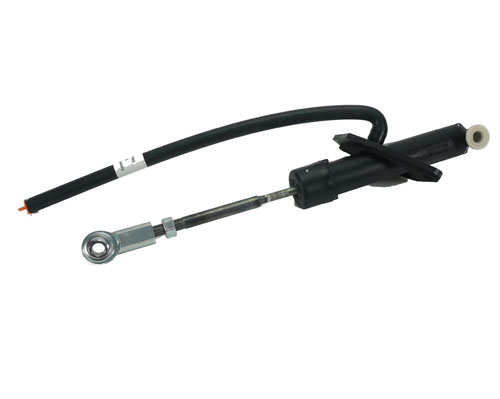
False! For RAM hydraulic bearing is the recommended master cylinder size is ¾” bore with a stroke length of 1.1” to 1.4”. This sizing provides travel in the bearing

 ranging from .475” to .550”. We are often asked if a bigger master will provide more travel – the answer is yes, BUT, increasing the bore size of the master cylinder has another effect. As you go up in size, the pedal effort required to disengage the clutch becomes higher. Our specified size offers the best balance between travel length and pedal effort.

IF I CHANGE MY CLUTCH, I DON’T NEED TO RESET THE BEARING GAP/HEIGHT SINCE I ALREADY SET IT ONCE

False! Most clutch packages will have a variance in the setup height of the clutch, and this always needs to be rechecked and the shimming appropriately adjusted to the recommended .150-.200” gap. You might have your own hydraulics myths you have encountered. We would love to hear from you explaining your experience and how you dealt with it!

To keep up with everything RAM, follow us on Facebook and Instagram, and subscribe to our YouTube channel.

If you have any comments or feedback, email us at [email protected] 

Making the Most of Your 2025 Racing Season – Part 3

Making the Most of Your 2025 Racing Season – Part 3

Making the Most of Your 2025 Racing Season – Part 3

By now you should have a few events under your belt. This would be a good time for you to evaluate your progress towards achieving your intermediate goals.  Realize that you may find us being somewhat repetitive in some of our philosophies. Understand that repetition is necessary to help build a good routine, which is paramount for ultimate success. It is always important to keep the annual goals in sight but at this juncture we should still be focusing on the intermediate goals you put in place in the first two blogs.  (If you have not read blogs 1 or 2, please refer to those blog posts).

Progress Evaluation

 Keeping a healthy and positive perspective is essential to achieving a successful season.  At this point you need to ask yourself some critical questions. These questions must be fair and answered honestly.  The better you become at this self-examination process the more likely you are to become successful.

Race Car Performance

  • Did you run respectable elapsed times and speeds for the provided conditions?
  • Are the engine and chassis performing efficiently and meeting expectations?
  • Did you make good tuning decisions for both qualifying and elimination runs?

Driver Performance

  • Did the driver have a positive attitude during the outing? NOTE: Often overlooked, attitude plays a key part in a driver’s performance in and out of the car.
  • Did your in-car performance meet expectations? Did you complete a proper burnout, stage the car properly, hit your shift points, get the parachutes deployed on time (if you have them) and get the car shut down properly and safely off the racetrack?

Equipment, Maintenance, & Crew Performance

  • Is the towing and support equipment performing as expected?
  • Is everything on the car working properly?
  • Is the crew carrying out their duties properly with a healthy, positive attitude?

Keeping a healthy, positive perspective and focusing on your intermediate goals will help keep you on track to meeting your annual goals.  Focus on the positives from these early season outings.  That certainly doesn't mean that you should ignore the things that did not go as expected. It is important that for any issue that you identify needing improvement, that you put a plan in place to help correct it. From equipment to crew, race car to driver, there are always areas for improvement. Some may need more work than others.

 Warmer Weather & Decision Making

As we move into the warmer months, racing becomes a bit more challenging.  The summer heat can make racetrack conditions difficult and tricky. Because of this you will typically see slower elapsed times and speeds. Good planning, preparation and decision making during these warmer times will not only help you excel in the warm weather but will also put you in a great position for when the weather begins to cool off in the fall.

One of the biggest challenges facing us during the summer is the sun and the heat that will generate on the racetrack. We see much larger swings in track temperatures from day to night during the warmer months.  Understanding what the conditions are going to be like well ahead of making the run will help keep your program moving in a positive direction.  Many teams get hyper-focused on the run that they just made and ignore the changing conditions that are approaching for the next run.  Keep in mind that it is very typical to see track temperature differences of 20-30 degrees or more between morning, afternoon, and evening runs. These temperature swings will affect the available grip of the racetrack significantly. Think ahead to maximize your opportunities!

Data

As we have pointed out multiple times in the previous blogs, the data gathered from your data acquisition system and logbook are crucial.  If you are new to keeping a logbook or even data logging you will quickly recognize the value of these practices. Not only will you begin to build a library of knowledge that will help you this year but will help you for years to come.  If you have historical data from a track that you can access, be sure to review it well in advance of the upcoming event.  This coupled with studying the potential weather conditions will allow you to develop a ‘gameplan’ before you even leave home for the event.  Establishing a solid and consistent routine between races will help set your team up for success.

Revised Goals or Stay the Course

 Now may be good time for you to decide if you need to revise your goals or stay the course.  If you have been effectively planning, preparing, and achieving your initial intermediate goals it is quite possible that some new goal setting is in order. Successful teams are always challenging themselves to get better. On the other hand, if things haven’t gone exactly as planned you can, most likely, go back to the self-examination section of this blog and identify the areas that the team needs to work on. Staying the course may be the best plan.

Racing is Supposed to be Fun!

REMEMBER: Racing is something that you do on purpose and should be fun! Nobody makes you go racing. At least that is the way we see it. Racing should be both challenging and rewarding. Having a positive attitude and outlook on what you are wanting to accomplish can have a significant impact on the outcome.  If your season isn’t progressing as expected, do not worry. This may be a good time to seek advice and benefit from an outside perspective.  This doesn’t mean asking everyone who is parked within earshot of you at the track or calling every contact that you have saved in your phone. After determining the area that requires attention, you should then choose a reliable and knowledgeable source to contact. At this point you can discuss a strategy to help get the program back on track. Nobody said that this racing stuff was going to be easy after all.

 Questions or Comments?

 If you have any questions or comments about this blog, we would love to hear from you.  Much like you and your race team, the RAM Team is always trying to improve and be the best that we can be.   You can email your questions or comments to [email protected].

To keep up with everything RAM, follow us on Facebook and Instagram, and subscribe to our YouTube channel.

If you have any comments or feedback, email us at [email protected] 

READ PART 1:  https://ramclutches.com/making-the-most-of-your-2025-season/ 

READ PART 2:  https://ramclutches.com/making-the-most-of-your-2025-season-2/ 

MORE HYDRAULIC BEARING MYTHS BUSTED AND QUESTIONS ANSWERED

The Six Most Common Questions We Get About Hydraulic Bearings

Some of the more popular tech calls we receive are about RAM hydraulic release bearings and installations. Here are some from the "Hall of Fame" that have some of the best info for you.

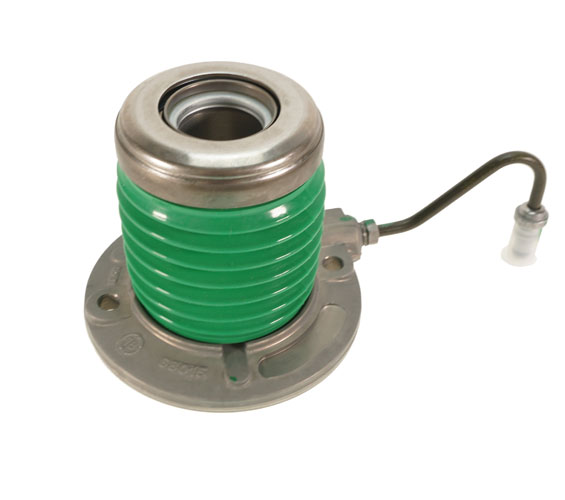
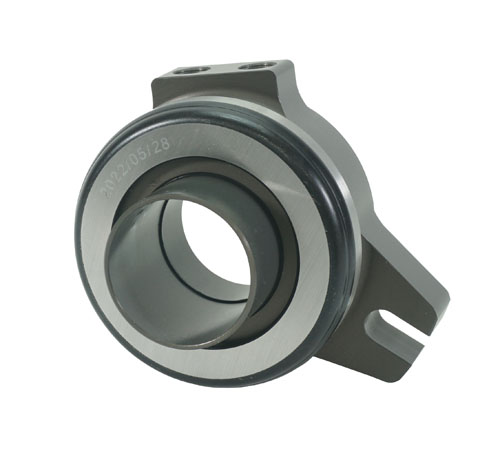
What is the difference between factory hydraulic bearings, or slave cylinders, versus RAM and other aftermarket bearings?

Factory internal slave cylinders/hydraulic bearings operate on a principle of preload. The slave bearing installs ‘extended’ and has a set travel range. As the transmission is loaded into the bellhousing, the bearing pushes back a certain amount against the clutch fingers to provide the forward movement to disengage the clutch.

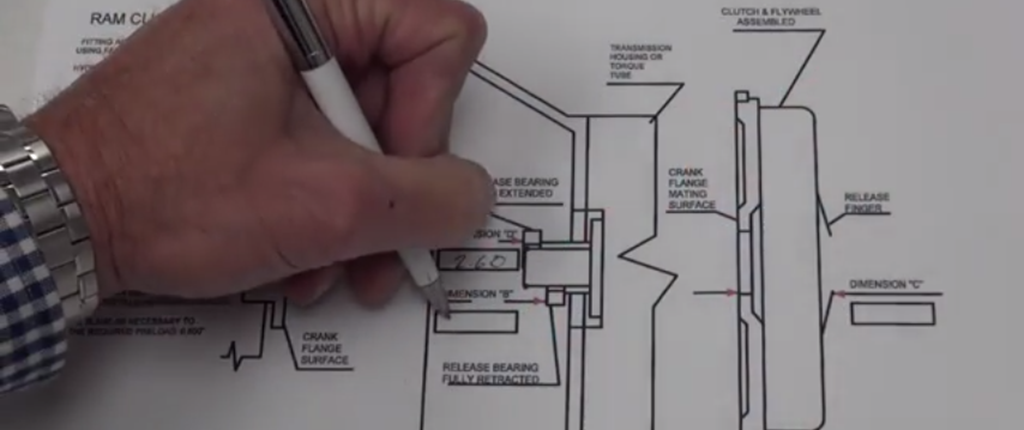
For example, if the bearing has a travel range of one inch, it needs to push back roughly .700” to have enough preload for its forward movement and leave enough room for the clutch to wear over time. RAM hydraulic bearings (and most other aftermarket bearings) work on a principle of bearing gap. The bearing installs fully retracted, and typically, a gap of .150-.200” is set up to allow for clutch wear over time. RAM offers both styles and has prepared a detailed setup diagram for both factory slave and RAM aftermarket bearings. RAM also offers a detailed video showing how to measure and set up the factory slave preload and how to measure and set up a RAM aftermarket hydraulic bearing.


Why does my hydraulic bearing look like it is riding on the fingers all the time?

RAM hydraulic bearings (and most others on the market) do not have a return mechanism.  After you set your proper bearing gap between the fingers and bearing face, once you cycle the pedal, the bearing will only move back as far as the clutch fingers push it. So, the bearing face is always right up there, lightly touching the fingers. This is fine since the bearing face itself is a "constant contact" bearing and designed to be able to withstand the contact, much like the factory slaves.

When you are selecting a brand of aftermarket hydraulic bearing to purchase, make sure to ask the question, "Is your bearing a constant contact type?" The last thing you need is a bearing to fail prematurely by all the grease spinning out.

My clutch is not releasing fully. If I add a shim to move the bearing closer, will that help?

If you have properly set your bearing gap at .150-.200," shimming the bearing will not increase the amount of release for the exact reason mentioned above.

Once cycled, the bearing starts right at the fingers on the next push. Adding a shim does not change this. If the clutch is not disengaging, you have another issue such as the master cylinder, master cylinder size, bleed, or the clutch itself. See the next point to learn about measuring bearing travel!

How can I tell if my hydraulic release bearing is getting enough travel to disengage the clutch?

You can measure the actual travel of the bearing with your master cylinder by hanging the bearing under the vehicle and measuring the piston movement. We have prepared a great video on how to do this procedure, measuring your bearing travel.

You should get a minimum of .450” travel with almost any master cylinder in the recommended bore of ¾ inch.

I have bled my hydraulic bearing using the gravity method, a power bleeder, a vacuum bleeder, or by opening the bleeder and pumping the pedal. My clutch will not disengage. Why?

Most likely, the system still has air in it, even though you used one of the mentioned methods. The best method of bleeding we have found is very simple – leave the bleeder valve closed, reservoir cap off, and pump, pump, pump! You will need to use your toe to pull the pedal back up at first, as it will feel like it is sucking down. As you continue to pump, you will feel the pedal start to achieve pressure, and it will continue to do this as you pump until the pedal is at the top and there is no mushiness in the pedal at all.

Be sure to keep an eye on the fluid level in the reservoir so you do not run out of fluid and start sucking air again.  Pre-bleeding the master cylinder and bearing assembly will also help speed up this process.

My hydraulic bearing gap is set properly at .150-.200” and has plenty of travel when tested. The pedal is solid from top to bottom, but the clutch still does not disengage. What do I do now?

If you get to this point and the clutch does still not release, you need to test the clutch itself and make sure it is operating properly. The best method is to assemble the clutch on the flywheel and torque in place, just as it would be in the car. Put the entire assembly into a press and move the fingers to .450” travel. At that point, the disc (or discs) should slide around freely. This would indicate that the clutch is operating properly.

If the disc or discs are not free, then there is a problem with the clutch.  If the disc(s) are free, there is another problem going on somewhere and you will need to back up to the start and recheck everything, starting with the bearing gap setting. The only thing that this test will not disclose is a bent or running out disc – if you had any problem getting the transmission back in place and had to wiggle it aggressively or (gulp) use the bolts to pull it in, you may have a bent disc.

To keep up with everything RAM, follow us on Facebook and Instagram, and subscribe to our YouTube channel.

If you have any comments or feedback, email us at [email protected] 

Making the Most of Your 2025 Racing Season – Part 2

The First Outing of 2025

As you prepare for the first outing of the season, take some time to think about what you hope to accomplish. Is this going to be a test session, or are you going straight into competition?  There is a huge difference. Stop, breathe and think.  If you have the luxury of testing ahead of your first competitive event, you will be in a much more relaxed state. You can be more intentional regarding your goals during the test session. If you are going directly into a competitive environment, you will need to review your logbook and quickly formulate a systematic plan to optimize success. More about the logbook later.

Consider the following factors:

Performance Goals

If you have been following along with the blog, you are familiar with annual and intermediate goal setting. Are you looking to address certain weaknesses in your program, or are you looking to build on the success of the previous season? Depending on your goals, expectations can vary considerably. If your goal for the first run is to log a career-best 60-foot time, then you should probably return to last month’s blog and re-read the planning and goal-setting section. A great 60-foot time is normally a result of doing everything else well, from staging the car to optimizing the chassis setup, gearing, engine, and clutch tune-up. It all matters. In most cases, we are either racing on an eighth or quarter-mile track and while 60-foot times are important, remember that you first need to “GO” before you can “GO FAST.”

Weather and track conditions will also play a significant role in your performance goals during your first outing. We will cover those in detail below.

The Crew

What will each crew member’s responsibility be at the track? Consider all your between-run maintenance.  Establishing crew responsibilities immediately will make your outing and season go much smoother. With well-defined responsibilities, you and your team will not be tripping over each other between runs, trying to do each other’s job. Each member of the crew can complete their task and minimize the chance of overlooking any details that might cause you to miss or abort a run down the track. Your team will appreciate knowing what is expected of them.

The Track

If you have prior experience at the facility, great. This will prove helpful. You will already understand certain details that are often overlooked and taken for granted. Items such as getting your rig parked in an appropriate location and understanding how the facility itself is run help significantly. Knowing these details will give insight into how many runs you may expect to make, along with the time of day those runs may take place. You might even be able to forecast what the track conditions will be like. If this track is new to you, then plan on doing a little homework in advance to learn about the facility so you know what to expect. Did we mention the logbook yet? More on that later.

Weather Conditions

The weather is probably the single most important variable you can learn about ahead of time. Being an amateur meteorologist is part of becoming a successful racer. As we mentioned in last month’s blog, there are several weather websites and apps you can access, such as the Drag Racing Weather app or airdensityonline.com.  In most cases, your phone will already have a basic weather app installed to help you with the expected temperature, possible precipitation, and amount of sunshine you will see during your visit to the track.

Logbook

Finally, the logbook. You should have organized your logbook during the offseason in preparation for 2025. If you have never logged data or kept notes in the past, implement a plan to do so. As we detailed earlier, weather and track conditions are a great place to start. Any additional details and data points are up to you and can be specific to your class and/or car.
TIP: Every successful team has a well-detailed logbook. Assign the logbook and data recording responsibilities to one crew member. Make sure that the person recording the data has some degree of self-discipline, as this information will prove extremely important going forward. Having the same crew member handling these responsibilities will minimize any inconsistencies regarding the data. Your logbook will allow you to make tuning decisions run to run, track to track, and even year to year.

Starting Point/Baseline

Congratulations! You have identified your goals, expected weather and track conditions, your crew has their assignments, and your logbook has been reviewed. You are now ready to decide on your initial starting point/baseline. It is beneficial for you to have a plan regarding your baseline engine, chassis, gear, and clutch tune-up before heading to the track. Be prepared to be flexible if the conditions vary from your expectations. Remember that the weather, racetrack conditions, and time of day you run will significantly impact your performance. Making small adjustments to your baseline may be needed to maximize your chances of making a representative pass and will get your day off to a great start. From there, you can gradually begin to work towards a more aggressive tune-up, which will enable you to run quicker and faster.

The Event

Be patient as you go about the day. Inevitably, unexpected and/or unplanned events are going to come up. How you and your crew adjust to these events is key. It is imperative for you and your crew to stay focused on what is expected of each other. It is very easy to lose focus or feel that a drastic change is required if a sub-par run is made. This may very well be the point that separates the winners from the losers. Successful teams race smart and stick to the process. They complete their between-round maintenance and continue to be systematic in their decision-making. They realize that making good decisions will maximize the chances for success.

NOTE: Having too many unrealistic expectations can often lead to disappointment and frustration.

Post Event Evaluation

As you pack up and head home, there is a high probability that ideas are already running through your mind on how to improve the next time you go out. This is a great time to stop, breathe, and think. Take some time to review the event and your ideas.  Perhaps you had to work through a problem, or you identified an area you struggled with a bit. Once again, take some time to ponder your next steps. You may feel that a conversation with your engine builder, chassis builder or clutch provider would be helpful to remedy an issue or help plan for the next event. Making a hasty, knee-jerk reaction after just one outing is not the pathway to success. Remember, racing is supposed to be fun!

Be sure to check in with us in the coming months as we dive more into making 2025 the best season yet!

To keep up with everything RAM, follow us on Facebook and Instagram, and subscribe to our YouTube channel.

If you have any comments or feedback, email us at [email protected] 

READ PART 3:  https://ramclutches.com/making-the-most-of-your-2025-season-part-3a/

READ PART 1:  https://ramclutches.com/making-the-most-of-your-2025-season/ 

Making the Most of Your 2025 Racing Season – Part 1

Making the Most of Your 2025 Racing Season – Part 1

For the past 6 decades RAM Clutches has had the honor of working with numerous race teams in all forms of motorsports. Many of these teams have experienced success at the highest level.  We have also witnessed teams that have not reached their full potential or desired goals.  This is unfortunate because racing, at any level, takes a certain amount of dedication, commitment, planning, and preparation.

Not achieving one’s goals can lead to frustration and disappointment. All race teams spend a certain amount of time and money working on their equipment at the shop and at the racetrack. However, just spending money and time on your equipment doesn’t guarantee great results. Through our experiences, we have found that all successful race teams have one thing in common: They prepare and formulate a plan for their race team. Each team’s plan is unique to itself and is typically made up of multiple parts. Through a series of blog posts, the RAM Team will share some ideas with you to help you and your team reach its potential. These principles and ideas can apply to anything you are trying to accomplish in racing and in life. Remember, racing is supposed to be fun!

Part 1 – Annual Goal Setting

We feel that goal setting needs to be looked at from a long-term perspective. What we mean by that is, in November, when you look back and review your 2025 season, what will you have hoped to accomplish? Setting realistic performance and race result goals is very important to any team’s success. A great place to begin is laying out a schedule of races that you and your team plan to attend. Do you plan on running for a championship or with a particular organization where accruing points and participation is paramount? Perhaps you would like to set certain goals for your car’s performance. We have even seen drivers set goals for on-track reaction time and driving consistency. Keep in mind that it is very important to be realistic regarding any goals and expectations you set.

Examples of goal setting:

    • Attend a certain number of races this year
    • Attend all the races in a certain series
    • Have a better driver average reaction time for the year
    • Make my car more consistent 
    • Qualify for my first race
    • Win a round of racing for every race attended
    • Finish in the top 10 in points at the end of the year
    • Run a new career-best elapsed time and/or top-speed
    • Win a Championship

Part 2 - Planning

Once your initial goals are in place, you will need to determine what kind of resources it will take to achieve your goals and do it in a comfortable financial environment. Proper funding is essential to on-track success, but that doesn’t mean you need the biggest budget in the pits to succeed. Solid planning is a great way to help maximize a smaller budget. We have seen in many cases where a small-budget team with excellent planning can easily compete with a large-budget team with mediocre planning.

Break down the cost of running a race team into smaller, more manageable categories.

  • The race car expense bucket:
    • Engine maintenance, rods, rings, pistons, and valve springs. Engine oil, transmission fluid, rear-end fluid, race fuel, race tires, and clutch maintenance.

  • The truck, trailer, and support equipment expense bucket:
    • Truck and trailer maintenance, pit vehicle maintenance, associated chemicals and shop supplies for use at the racetrack.
  • The crew cost and race entry expense bucket:
    • Any crew that requires compensation for their labor, costs to enter the event, plus the crew passes, and any testing that may take place periodically.
  • The unexpected/unplanned expense bucket:
    • This is the one no one likes or wants to plan for. Unfortunately, it is a cost that needs to be factored in. What you plan for is up to you. Better to be prepared than be surprised. TIP: The better your maintenance program is regarding the race car bucket and truck and trailer bucket, the less the unplanned bucket gets used.

This may all sound quite overwhelming, but solid planning and having a sound financial plan in place will make the entire process more enjoyable for all involved.  If you strategize and plan in this manner, it should help you calculate the basic operational expenses for your team. No one wants to lay awake at night wondering how they will afford the next engine rebuild, set of tires, or fuel to get to the track. Remember, racing is supposed to be fun!

IF during any part of the planning process the finances are getting challenged, return to the goal-setting section to readjust your goals or the financial commitment required to meet your goals.

Part 3 – Intermediate Goals & Preparation

These are the first steps you will take towards reaching your 2025 year-end goals. Examples of intermediate goal setting and preparation may include:

  • Race Car Maintenance

These maintenance items can include repairs to the chassis, body work/paint, suspension components, and any other part of the race car that was subjected to wear and tear from the previous season.

  • Engine Maintenance

Is your engine fresh and ready to go for the new season? If not, don’t procrastinate any longer. Take whatever steps necessary to get the engine into sound condition and ready to begin the new season. If it still has time left on it heading into the new season, make a note of when you anticipate it needing to be freshened. You can then take a proactive approach and give your engine builder and parts suppliers advance notice to have the parts ready for your rebuild.

  • Truck/Trailer Maintenance & Organization

Having your towing equipment in top shape to start the season is one of the best ways to make your racing experience more enjoyable. Taking the time to clean out and organize the trailer in the off-season will make servicing the car and troubleshooting at the track much easier. While you don’t race the towing equipment, you will be surprised how many teams struggle with their transportation to and from the track. Not having your towing equipment in top shape can add tremendous anxiety and stress and make the whole outing frustrating for all. It can also be very distracting and prevent you from focusing on the race and race car throughout the event. If you require the use of a golf cart, 4-wheeler, or other pit-type vehicle, be sure not to forget servicing those as well.

  • Performance Goals

As you begin to prioritize your off or early-season goals, you can also be thinking about the first trip or two to the racetrack and what you hope to accomplish. If you are working on a new car or engine combination, it is always a great idea to try and plan to make some shakedown runs. A test session or two before the first event is also a great item to plan for, if possible. If you do not have the luxury of a test session, then keep that in mind as you layout your performance goals to begin the year.

Part 4 – Laying Out a Game Plan

Before you even start to load up and begin driving to the first outing of 2025, come up with a game plan well in advance of leaving home. Review your performance goals and think ahead of what you might encounter on the track. Typically, early-season events will provide you with very good atmospheric and track conditions. Both of these key factors may very well dictate some tuning adjustments from where you left off at the end of the previous season. Below are some examples of what you should be aware of before you leave for the track:

        • Anticipated Weather Conditions
        • Anticipated Track Temperatures
        • What time of day you expect to run
        • What kind of elapsed time and speed can you expect in these conditions at this track
        • Review your logbook notes to help predict all the above

If no logbook notes are available for this particular racetrack, you can still do your best to forecast/predict some, if not all, of the bullet points above. By making yourself aware of the conditions you may encounter, you can then begin to build a plan with regard to a starting point for the outing. Having a well-thought-out starting point will always make the outing more productive.  This is no different than a football coach having a play sheet and scripting the plays for the first series of a game. Know what you are planning to do in advance and then execute the plan.  TIP: Add a logbook to your racing program. Logbooks can be found either online or you can make your own. It can be as simple as getting a notebook and keeping track of certain information. The information that you keep track of is up to you. It is not uncommon for you to add or remove data as you decide what is useful and what is not. Take advantage of weather websites or apps as well. We have found that airdensityonline.com and the Drag Racing Weather app are great ways to keep track of the weather conditions.

Here are some examples of logbook data:

    • Racetrack name
    • Date of event
    • Run information- ET, speed, 60’ time, 330’ time, 660’ time and speed.
    • Track temperature
    • Weather conditions- correction factor, density altitude, temperature, barometer, and humidity.
    • Engine ignition timing
    • Carburetor jetting or fuel map
    • Clutch settings
    • Gearing
    • Tires (type, size, number of runs)

The data that you collect will ultimately be customized to you and your racing program. A well-tuned logbook can prove to be every bit as important as a well-tuned racecar.

Remember, you don’t need to run a career-best on the first attempt down the track. What is vitally important is going down the track and collecting data and taking notes. Keep in mind that it may also be possible that the track will need some time to come around and offer the grip needed to make a solid run. It is always a good idea to start off a bit conservatively. You can begin to push the performance envelope as the conditions allow. It is never fun to go out on the first run of the day and either spin or shake the tires. Data and notes collected from a failed run are never as helpful as a run where you make it to the finish line. Remember you must “GO” first before you can “GO FAST."

Summary

Hopefully, as you have read through our blog, you have already begun to analyze your own racing program. Perhaps you will begin to gather some ideas about what you hope to accomplish in 2025 and how to achieve the desired results.

Check back throughout the year as we will continue to share our thoughts with you and make 2025 one of your best seasons of racing. Remember, racing is supposed to be fun!

To keep up with everything RAM, follow us on Facebook and Instagram, and subscribe to our YouTube channel.

If you have any comments or feedback, email us at [email protected]

READ PART 2:  https://ramclutches.com/making-the-most-of-your-2025-season-2/


End of the Year Miscellaneous Ramblings

End of the Year Miscellaneous Ramblings

End of the Year Miscellaneous Ramblings

Here we are at the end of 2024. It’s been another interesting and exciting year for us at RAM! I thought I’d take this time to bring out some observations and cool tidbits we have seen happen over the past 12 months.

RAM Racers are in the Winner's Circle 

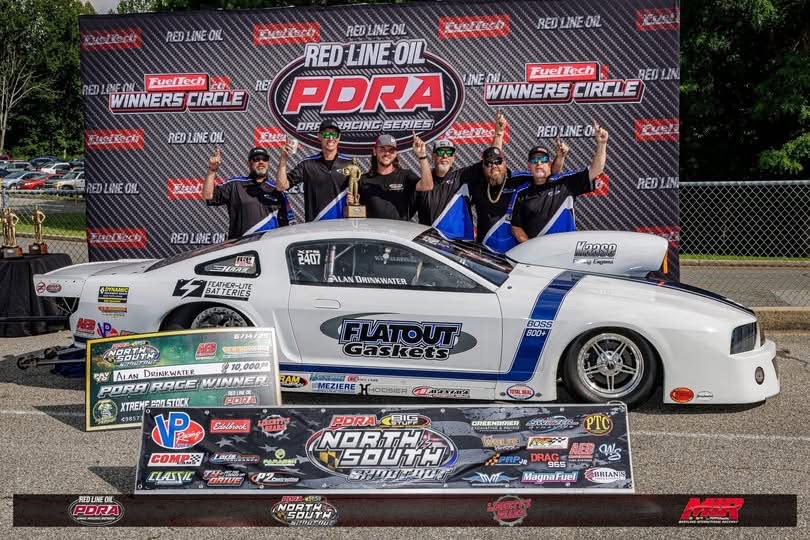
Our customers have dominated a variety of racing sanctions and events that use manual transmissions. One such example is Johnny Pluchino, who nearly did it all in wrapping up the NHRA Mountain Motor Pro Stock Championship and runner-up in PDRA Extreme Pro Stock.  

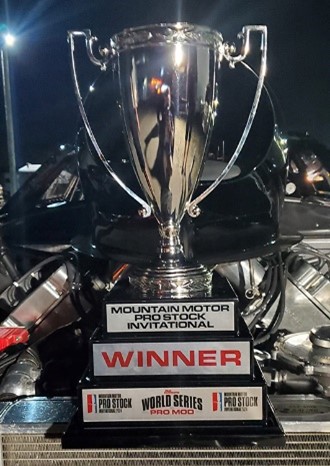
Our Director of Business Development, Matt Giangrande, pulled off an incredible win to start the Mountain Motor Pro Stock season at the prestigious World Series of Pro Mod. RAM also claimed championships in almost all of the various stick shift groups around the country, including three of the four World Champions in the Southeast Gassers Association.

RAM has also continued to grow in our street-strip markets, but some have started to take off in 2024. The Drag and Drive racing market was already hot, but racers have been figuring out that they can go very fast using manual transmissions in these vehicles.  

The Red Hat RAM, RAM Billet 10 inch, and Lo-Pro 10 single-disc units are natural for these classes as they allow for adjustment and lighter racing pressures to help get the car down the track. However, they can also be ‘turned up’ in pressure to complete the street-driving portion of these events. We see 2025 as a continued growth area for these cars!

The Street Dual disc clutch market keeps getting better and better, especially as many of the later model Mustang, Camaro, Corvette, and Challenger cars are cycling into the secondary market and becoming more affordable for enthusiasts to modify and enjoy.  

Naturally, the clutches in these older vehicles are getting tired and ready for replacement or upgrading, as they are fitted with hotter engines and power adders.

The People Behind RAM Clutches 

We are extremely proud of our employee base and how it has grown not just this year but the last several years.  We have brought quite a few younger folks into our fold. They are all very enthusiastic and dedicated to their jobs. It is really nice to have ‘young blood’ who are excited about their jobs.

Speaking of employees, in September, our employee David Simmons retired. David faithfully served us for over 35 years—you read that right. It’s an incredible feat in today’s times! If you ever bought a RAM flywheel or pressure plate, chances are David either produced it or trained his replacement to build it. We have three other current employees who will be either at or have exceeded 30 years in 2024!

Updating the RAM Website 

We are constantly working to update, upgrade, and improve our website. We know this is a critical tool for our customers and distributors to get more detailed information on our products.  

This includes ensuring that if we show you an image of a product, it is precisely what you will receive. I can’t stand it when I look at a product online and the wording under the picture says, ‘representative image’!  We are amidst a major round of updates to take this data to another level. We hope you will notice the improvements!

Keep an eye out over the next few months for more new video content as well!

We Couldn’t Do This Without You

We would like to take this opportunity to say THANK YOU to every one of you, our customers, distributors, racers, and industry friends.  

Without your support over the last 51 years, RAM would not be where it is today.  You have our best wishes for a Merry Christmas and a very Happy New Year!

The Importance of Data in Your Drag Racing Application

The Importance of Data in Your Drag Racing Application

The Importance of Data in Your Drag Racing Application 

One of the things that separates RAM Clutches from many other companies in our industry is our ability to assist you with your clutch combination.  We want to help you maximize the performance of your race car! And the information you can provide is critical in this process. 

The Numbers We Need from You 

You can provide us with high-quality, useful information in several ways. 

At the very minimum, RAM recommends having some sort of data recorder on the car to help evaluate what is happening on a run. You can find a decent recorder for an affordable price. RacePak Sportsman style systems are available for around $1,200.00.  

Even if you race with a particular sanctioning body that does not allow data recorders, you can still use a recorder while testing to help dial in your combination. RAM has full access to the RacePak software, so you can send us run files for evaluation.

Other data recorders can also help. The most important information to capture is the engine RPM, driveshaft RPM, and, if possible, the transmission input shaft RPM. These data points help us evaluate how the clutch reacts on the launch and through each gear. This can help with clutch tuning, transmission selection, and rear-end gearing.

Other Ways to Capture Good Information 

Don’t have a data recorder? There are still some more basic methods for us to help evaluate a run.  

A properly placed camera or camera phone in the car has also proven helpful. If the camera shows the tachometer and the driver, it can show us the launch RPM (if a two-step switch is not allowed) and where the driver shifts the car on each gear change.  

Small changes in the launch RPM and/or shift RPM can drastically affect the clutch's performance. Consistency and repeatability are paramount. As little as 100 RPM on any shift can drastically change the clutch engagement, especially at higher RPMs!

The consistency of the parts and the driver is crucial to making your clutch combination repeat. Here are some other things that have an impact: 

  1. A Clutch Pedal stop—you need a positive clutch pedal stop in the car to limit the overall disengagement of the clutch. The movement of the levers needs to be the same every time. This will allow them to do their job properly and consistently apply centrifugal pressure.
  2. Air gap—this needs to be checked regularly. Typically, the air gap is run between 0.045” and 0.075”. The pedal stop limits this travel and keeps it consistent. The air gap can be checked in several ways. You can use a long feeler gauge through the bottom of the bell housing or your dial calipers or dial indicator through the inspection cover.  

We want to help you make the most of your clutch combination.  

Keep in mind that the better the information you can provide, the easier and quicker this process will be. Just telling us how the clutch ‘feels’ is going to make it very difficult for us to get optimized results.

RAM Clutches Nationals and Supporting the Stick Shift Community

RAM Clutches Nationals and Supporting the Stick Shift Community

We are just a few weeks away from what has become an annual event and highlight for us here at RAM Clutches. On September 13th and 14th, the RAM Clutches Nationals, put on by The Southeast Gassers Association, rolls into Knoxville Dragway.  

When ex-Pro Mod racer Quain Stott came to us and told us that he was starting a period correct group to bring old-time drag racing back into the spotlight, we were immediately on board.  

Adhering to a strict set of rules (which includes mandating manual transmissions), this group consists of a wide range of vehicles and classes. Even some big-name hitters from the early days of drag racing have gotten involved.  

This is an excellent environment for our RAM single disc drag racing clutches, and it has also spurred development and serves as a proving ground for several new RAM clutch units that are finding their way into stick shift drag racing nationwide.

Supporting Stick Shift

RAM’s support of grassroots stick shift racing goes well beyond the Southeast Gassers. Many other groups around the country put on a series of events throughout the year and get great support from their fans and tracks. Like Pro Stick out of Maryland, Ozark Mountain Super Shifters in the Midwest, UMTR North and South in the Ohio region, CCRA in North Carolina, and the Rocky Mountain Super Shifters in the Colorado region.  

All these groups put on tremendous shows with cars that run in various classes. Some even produce elapsed times in the low 7-second range in the quarter mile.

A fantastic event started a few years ago by long-time Pro Mod racer Ken Regenthal runs each year during the summer in North Carolina. Aptly dubbed the ‘Stick Shift Nationals,’ it attracts racers from many of these groups and brings them to one location for a weekend. The event typically features several races including the main shootout, Friday night race, and second chance races. Hundreds of competitors make the trek to this event each year!

This racing style takes me back to my younger days with my brother sitting in the stands at the US Nationals where we would watch our favorite Modified eliminator and Competition eliminator cars run. If you are a diehard drag racing fan and have never made your way out to see one of these stick shift groups race, you owe it to yourself to do so. 

If you’re in Knoxville for the RAM Clutches Nationals on September 13th and 14th, please stop by the RAM booth and say hello! 

These are all great shows that will take you back to the glory days of drag racing. Do you race with a stick shift group that we have not mentioned here? Tell us about your group and perhaps we can get involved and provide support to you as well!


What in the World is Gear Rattle?

What in the World is Gear Rattle?

Gear rattle is a phenomenon that can often occur in modern-day transmissions.  

Today’s transmissions use a much lighter gear oil than, say, your old Muncie 4-speed, to improve gas mileage and drive train efficiency. Older gearboxes typically use heavy 80-90-weight oils to dampen the shock and engagement of the gear sets.  

Current transmissions use much lighter oils and cannot absorb the normal oscillations generated in the driveline. This can lead to gear rattle under light loads.

Typically, this rattle is experienced at lower engine RPMs, between 1200 and 2500, under a light load, or even at idle. In some extreme cases, this rattle or vibration can be felt right at the shifter handle.  

It may also be evident if you drive around a low-speed corner at around 1800 RPM when the throttle is lightly applied. 

Rattle may occur when the car is in the driveway idling as it warms up. Once the drivetrain is fully ‘loaded,’ such as under harder acceleration, or the engine RPM exceeds around 2500, the noise typically goes away.

Trying to Solve the Gear Rattle Problem 

Unfortunately, the manufacturer’s efforts to address this problem proved only to be a ‘band-aid’.  

Dual mass flywheels were introduced. They use a shock-absorbing mechanism built into the flywheel to take up the oscillation in the driveline and help alleviate the noise. The problem with these flywheels is that as they wear, the spring section gets worn and often starts to cause the very same gear noise problem they were designed to address.  

The accelerated wear is worse in high-performance cars that are often driven hard. Couple this with the widespread lack of availability of replacement dual mass flywheels and other alternatives had to be found.

When you convert a dual-mass flywheel application to a solid-mass standard flywheel, such as with our RAM C4 push conversion systems, the shock absorption characteristic of the dual mass flywheel is lost. The only source of dampening at that point is through the center hub of the clutch disc.  

Even the best-sprung hub discs still allow some noise and oscillation to transfer through the drivetrain. It’s made even worse by solid center clutch discs without any spring dampening, as some other manufacturer’s dual disc units are designed.

Another method to address the issue is ‘helix’ or double-dampened clutch disc hubs. In almost any late-model vehicle, you will find helix hub discs utilizing a sprung hub. A second set of small springs is placed near the spline area of the clutch hub to achieve this ‘helix’ effect.  

RAM Muscle Car kits utilize this style disc in some applications, like 86-up Mustang.

Is there a solution?  Not really, but the effect can be minimized.  

One of the best ways to minimize this issue is to use a heavy flywheel. The heavier the flywheel, the more driveline pulses and oscillations it can absorb.  

For C4 Corvette applications, some transmission companies offer a shim that can be replaced in the gearbox to handle some of the slack and reduce the noise.  

If you would like info on this, contact me at [email protected] and I can provide contact info. My last tip is to try a high-quality transmission fluid like Amsoil (this helped in my personal C5 Corvette).


Steel or Aluminum? Why Flywheel Selection is Important

Steel or Aluminum? Why Flywheel Selection is Important

We covered this topic a few years back, and we think it’s time for us to review and expand on it a bit.

To better help you during the flywheel selection process, you must first understand what role the flywheel plays in overall clutch performance. 

The Flywheel’s Purpose 

The job of the flywheel is to store and transmit inertia to help get the vehicle moving. A heavy steel flywheel can store and transmit more inertia, while an aluminum flywheel will store and transmit less.  

How this applies to your specific vehicle depends fully on its weight, power level, gearing, and intended use. 

In general, a street-driven vehicle will benefit from a RAM steel flywheel. The inertia it creates helps you move the vehicle without excessively slipping the clutch. Excessive slippage leads to faster wear of the clutch and reduced life.  

Heavier flywheels are also significantly better for low-speed driveability. This can be especially important in vehicles with aggressive camshaft profiles, which tend to make the car ‘surge’ as the RPM gets lower. The heavier flywheel will help smooth out those engine pulses and avoid this surging.

The rear-end gear ratio and the transmission low gear ratio can also have a big effect on this drivability. A car with an aggressive rear gear ratio (3.73 or higher) and/or transmission low gear ratio (2.90 or higher) can often take advantage of a lighter steel flywheel such as RAM’s LW series units. The RAM LW series steel flywheels gain you a bit of engine acceleration without sacrificing drivability.

How RAM Flywheels Help 

When is it beneficial to use a lightweight flywheel like our RAM aluminum flywheels? Drag racing vehicles are excellent candidates for taking advantage of an aluminum flywheel.  

In these applications, low-speed drivability is not a concern, and your engine typically operates in a high and narrow RPM window. Using an aluminum flywheel will allow your engine to accelerate quickly off the starting line and after each gear change. 
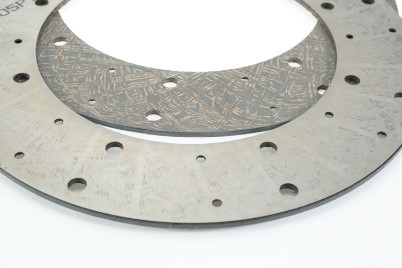
Units like our RAM single-disc sintered iron clutch systems and multi-disc clutch systems are offered with an aluminum flywheel.

Another ideal place for lightweight flywheels is in circle track, autocross, and road racing applications.  

These vehicles maximize acceleration by keeping the rotating weight down. This allows the user to drive further into the turn and have the motor decelerate quickly. And you’ll get back onto the throttle sooner coming out of the turn, which helps get the engine back into its peak operating RPM range faster. 

This is why many cars in high-level circle track applications use a smaller diameter multidisc clutch system. The entire weight of these lightweight, small-diameter clutch and flywheel systems can be as little as 12 pounds!

We are always happy to help you select the correct flywheel for your application.  Please use the RAM E-Tech form to give us the specs on your vehicle and how you intend to use it and we will give you our best recommendation!


What Goes Into Planning Our YouTube Videos?

What Goes Into Planning Our YouTube Videos?

Over the past six years, RAM has produced more than 110 YouTube videos.  

Topics range from commonly asked technical questions to new product introductions. We have even shot some pretty cool ‘hype’ videos featuring some of our customers' race cars and showing off their cool street cars.

Answering Your Questions 

How do we decide what we are going to produce each year?  The easiest way is to look back at the most common tech questions we receive over the phone and via our RAM E-Tech form.

As the manufacturer of our parts, what seems to be perfectly obvious to us at RAM is not always so obvious to the customer. We look at topics like hydraulic bearing installation, which can generate questions like “What master cylinder do I need to use with my RAM hydraulic bearing?” or “How do I measure correctly to install my RAM hydraulic bearing?”  

By addressing these questions through video, customers can now search our video library at night or on the weekend and, in many cases, find an immediate answer to their question.

Showing You the Latest Products 

Introducing new products always makes for great videos. Previously, if you wanted to see what products were new, you had to attend an industry show like SEMA or PRI and visit every manufacturer’s booth.  

If you couldn’t do that, you had to rely on news releases in the myriad of printed magazines that have since gone by the wayside.  All of this could take months.  

Now, if we have a new product today, there’s a good chance you will learn about it online by tomorrow from the comfort of your chair or on your phone!  A perfect example is the new video describing the RAM Concept dual disc clutch systems and when and where to use each.

It Isn’t an Overnight Process 

It’s fun and hard work to put these videos together. Typically, we start the process in the early fall by discussing topics we want to address for the coming year.  

We develop a list of potential topics and then write outlines for each video. The copy is written from there, and a shot list is developed. After several months of bouncing ideas around, we settle in early December and begin to shoot. This usually takes several days, and often, follow-up clips must be created as we continue to refine the content. 

Then, the hard part—sitting down and compiling the clips into a video that is both informative and, hopefully, somewhat entertaining.
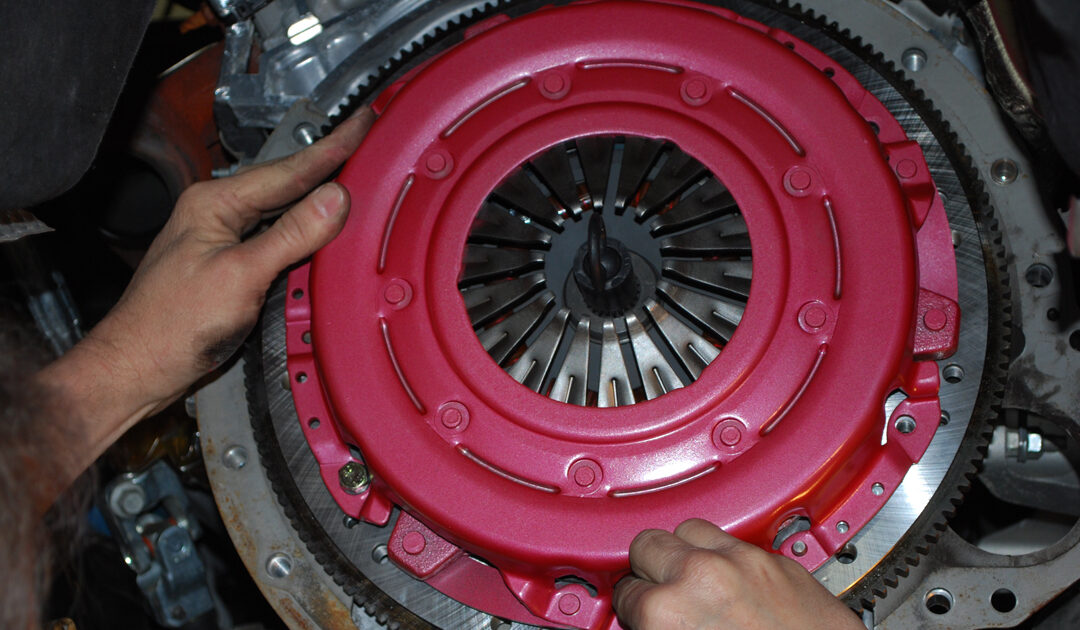
One of our most enjoyable and popular projects was our four-part Industry Week series, which we created during the COVID lockdowns. At a time when people could not attend shows, we tried to bring the show to them in a fun, informative way. I encourage you to check these out if you haven’t yet!

We Need Your Help

We can’t always do it all ourselves, so we enlist a team of local video experts to shoot scenes like rolling car footage and beauty shots that they might produce into ‘hype’ videos or that we may incorporate into our in-house video work.

This is where you come in.  

We’d love to hear from you regarding what videos and topics you would like to see – be it tech info on a certain product we haven’t covered, some specific installation procedure, or a technical issue you have run into in the past that you think might be helpful to our customers.  

Feel free to email us at [email protected].  Also, be sure to check out our complete YouTube library


Do It Right the First Time!

Do It Right the First Time!

When you are doing a clutch replacement, it pays to make sure you do everything possible to ensure a successful installation that will last for years.  

This is definitely not the time to skimp out, only replace specific components, or not do the necessary checks and measurements. And while some of these seem obvious, they’re always good reminders. 

Analyze the Old Clutch System 

If you are replacing the clutch due to a failure of the previous unit, it helps to understand what caused the failure to help avoid the same thing happening again.  

Inspect the clutch fingers for wear that indicates the release bearing was tight and could have caused slippage. 

Look at the friction surfaces for unusual wear or warpages. Finally, make sure you are replacing the clutch with one that is capable of supporting your application—has the power level increased, or is the vehicle's use now more aggressive?

Replace or Resurface the Flywheel 

The flywheel is an integral part of your clutch system since it provides one-half of the mating surface for the clutch disc.  

You need the surface to be flat and clean with a nice surface ground finish so the new disc can properly seat during the break-in period.  

If you install a new clutch on a used flywheel surface, the resins and glazing from the previous disc will not allow the new disc to properly seat and could cause premature wear or slippage.  

Don't assume it is ok just because it ‘looks ok.’ RAM Billet Flywheels provide an optimum surface right out of the box. 

Replace the Release Bearing or Internal Slave Cylinder 

If you purchased a clutch kit for a mechanical linkage vehicle, you should have received a new release bearing.  

Most late-model vehicles that use an internal slave cylinder/bearing do not include this bearing. RAM offers replacement OE-style slave cylinders and our RAM hydraulic release bearings.

Do the Setup Measurements 

Hydraulic clutch systems require extra attention to ensure they are properly set up with your new clutch system. 

Factory hydraulics work on a system of ‘preload’; RAM bearings are set up with a ‘gap.’ 

We offer full instructions for both, including videos, in the instruction area of our website. Do not skip these steps—a few extra minutes here can save a ton of time on the back end if you have any problems!

Break It In 

Do not overlook the break-in procedure! 

Your clutch system requires some heat cycles and easy driving to give the clutch disc the best chance to properly seat to the pressure plate and flywheel friction surfaces. 

We put together an informative video on break-in to help you understand this procedure better, or check out this previous blog.


Use the RAM Tools at Your Disposal!

Use the RAM Tools at Your Disposal!

Answering your questions about RAM clutch options and technical topics has never been easier. Make sure you are utilizing the tools we are providing!

Instruction Sheets 

Whether you need detailed instructions or just want to verify something on your install, the RAM instruction sheet section on our website contains almost everything you would need to complete an installation, including helpful videos for more technical topics like our hydraulic bearing installation instructions.

E-Tech Form

The RAM E-Tech form is a quick and effective way to get answers to your technical questions regarding applications or installation questions.  

By providing the requested information, we can research (if necessary) and provide you with application suggestions or advise on any troubleshooting you may need help with.  

If we need additional information or if it is a topic best discussed by phone, we will contact you quickly and help get you back on track.

Hydraulic Bearing Troubleshooting Form 

If you have an issue getting your RAM hydraulic bearing set up properly, we provide a convenient tech form tailored to the bearing installation.  

By sending us the requested information on this form, we can help you with any questions about setting the bearing gap properly.

YouTube Videos

If you are like us, YouTube is a go-to when figuring out how to do something!  

On the RAM YouTube page, you will find videos on helping to select the proper clutch system and a wealth of shorter tech-related videos covering topics we have received inquiries on from our customers. 

This can be a big help when you are deep in a weekend projec! 

FAQ Page

The most commonly asked tech questions are listed on our FAQ page.  If it is just a simple answer you need, you will probably find it here!

Phone Support 

We are available most weekdays for your phone tech questions.  

It is helpful if you first fill out the E-Tech form, as that gives us most of the answers to the questions we will ask you.  

You can request a call on the form, or rest assured that if it is a topic that is easier explained by phone, we will call you quickly and help you move forward on your project!

Finally, we want to thank you for your loyal business and support in 2023.  

It is an honor to serve you with our products and we look forward to continuing to help you increase your performance, individually or corporately! Merry Christmas and Happy New Year!


What We Did While You Were at PRI and Other Year-End Tidbits

What We Did While You Were at PRI and Other Year-End Tidbits

While we certainly miss seeing our friends at the PRI show each year, we have been very busy during this time!

Last week, we shot footage for seven new videos coming in 2024, and we still have three more to shoot in the coming weeks.  

These will cover common questions we often receive phone calls about and a few new products. 

We’ll also add to our extensive library, which will now have over 100 videos! And we had a fun shoot with some of today’s hottest muscle cars. These will be featured in other promotional videos throughout the 2024 year.

Product development is continuing on our street and drag racing clutch systems. We have refined and introduced several new models in 2023 and upgraded several of our ‘stand by’ models, such as the Red Hat RAM single iron, to improve strength, performance, and reliability.  

You will see some of these rolling out in the next few months, and we will continue to build upon these product platforms as the year rolls on.

Hydraulics continue to be a hot item, and after many requests, we are developing a hydraulic release bearing for the big input 1 3/8-10 Ford Toploader and other race applications that utilize a 1.75” diameter input collar. These should be available by the end of January.

We have refined our street dual disc offerings to include a Concept 9.5 dual disc system that fits in several applications where space constraints do not allow for the use of the larger Concept 10.5 models, such as LT1 and C4 conversions. These expanded models are now available for Mustang and GM LS applications.

In the coming weeks, we will officially announce our sponsorship of another event for the Southeast Gassers for 2024.  

This organization is now under new ownership and looks forward to expanding its reach to racers and fans in 2024. As we have for many years, we will continue to support grassroots stick shift racing organizations such as Pro Stick, Ozark Mountain Super Shifters, Rocky Mountain Super Shifters, and UMTR North and South.  

We will also be adding support for the Classic Gear Jammers and the Carolina Class Racers organizations.

If you still need to dig in on your race car maintenance for the new year, I encourage you to do it soon!  

This is the time to evaluate your existing clutch system and get it to us for any maintenance needed or to decide if you want to upgrade for the new year.  As the new year rolls around, we will begin to get very busy working on these rebuilds, so do not wait; get them in here now!

Finally, we want to thank you for your loyal business and support in 2023.  

It is an honor to serve you with our products and we look forward to continuing to help you increase your performance, individually or corporately! Merry Christmas and Happy New Year!


How Do We Continue to Innovate Our Drag Racing Clutches?

How Do We Continue to Innovate Our Drag Racing Clutches?

The old saying is ‘necessity is the mother of invention.’  

Never is this truer than in the world of manual transmission drag racing. At RAM, we do not sit still on our laurels for very long.  

As the stick shift world evolves, whether for class-style racing or gassers, we see engines spinning higher RPMs and putting more stress on the clutch system. Our job is to keep innovating and developing ways to make the clutch system stronger, more effective, and more tunable; one such improvement is moving to stand-driven pressure rings in the clutch cover.  

You have seen this in the newer units we introduced in 2022-23, including the 10-inch billet three-lever, Lo-Pro 8, and Low-Pro 10 clutch systems.

Many Red Hat RAM clutches in the market have provided faithful service life for many years. We can now produce the Red Hat with this stand-driven ring in our new units and upgrade your existing Red Hat to the stand-driven ring when it is time for your annual maintenance.

That maintenance is critical to your continued success at the track.  You should plan to get your unit out of the car when the season ends and get it to us. This includes any spares you may have if they have been used during the season.  

We will thoroughly inspect the unit, resurface the friction surfaces or replace heat shield segments as needed, and get you into a fresh disc so you are ready to go once the cold weather ends.

As you do this, consider upgrading to the stand-driven pressure ring. The increased stability of this pressure ring will give you an extra boost of confidence that as your engine combination evolves and gets more aggressive, you will have an updated clutch system that can handle whatever you decide to throw at it!

Start Thinking About 2024 Now!

Start Thinking About 2024 Now!

Maintenance, Updating & Upgrading

Racing season is winding down, and you may be a little tired and ready for a break.   

You’re probably planning to roll the car into the shop corner, but this is a great time to disassemble and evaluate which areas need maintenance over the winter break.  

If you want to improve your performance in 2024, this is your opportunity to lay the groundwork for the upcoming season.

Clutch maintenance is critical to consistently achieving high performance and safety in your racing program. The clutch system is a wear component that sees extreme heat and fatigue over time. These components must be inspected, repaired, and replaced regularly, as fatigue or normal wear takes its toll.

The early off-season (November and December) is a perfect time to take advantage of rebuilding service here at RAM or for any other race car components that need attention, updated, recertified, or upgraded.  

We encourage people to get these parts to us early to avoid the early spring rush (you know, that friend of yours who waits until the week before the race and decides he needs to send his clutch for rebuild and needs it back yesterday!)

Purchasing a Used Clutch System

Caveat Emptor… “buyer beware.”  

There are many used clutch systems units out there floating around, and some of them are very old.  

Don’t just assume that because an ad states they are selling a RAM clutch in ‘new’ condition or ‘just serviced,’ it’s ‘in tip-top condition.’

Ask the seller some very specific questions, like: 

  • Are you the original owner of the unit?
  •  When did you purchase the unit?
  •  What is the application being used in?  Is this combination similar to yours?
  •  Which flywheel crank pattern and balance is the unit?  If you have to change the flywheel out, it might not be a good value.
  • What is the condition of the clutch discs? How many runs? Overall thickness?
  • When were the heat shields (inserts) last replaced?

Ask the seller for the SFI dates or certification card details of the assembly if available.  

If the unit is over five years old, we recommend avoiding it regardless of the price. When you send it to us to be recertified, it will likely need significant repairs or upgrades that exceed the value of purchasing a new unit. 

As technology advances, we are constantly improving all our racing clutch systems.  You wouldn’t purchase a 15-year-old computer to run your business; why do that with a critical part of your racing operation?  


Why You Should Select an Engineered Clutch Package for Your Late Model Car

Why You Should Select an Engineered Clutch Package for Your Late Model Car

We’ve talked before about how we design and build clutch systems for today’s performance vehicles like Dodge Challenger, Ford Mustang, Chevrolet Corvette, and Camaro.  

It is critical to look at the existing clutch setup, then develop a package that makes the most sense to hold power, drive nicely, and offer a trouble-free installation.

Take, for instance, the Dodge Challenger and Hellcat

Chrysler has used a dual disc clutch from the factory in these cars since the car's rebirth in 2008. The clutch is 9.5 inches in diameter, which does not provide much surface area for the discs to provide clamping load and does not dissipate heat well.  

Additionally, the flywheel is quite bulky.  After designing and building several styles of Force 10.5 and Pro Street units for the car, we settled on a Concept 10.5 modular dual disc that bolts up directly to the factory flywheel or can be used in conjunction with a RAM aluminum flywheel to free up some rotating weight.  

The resulting package provides more surface area to disperse heat better, offers more clamp load, and is fully compatible with the factory hydraulics (or one of our aftermarket hydraulic bearing kits).

Chevrolet moved to the dual disc clutch in 2014 for the Corvette and in 2016 for the Camaro.  Again, the resulting package was smaller in diameter and bulky overall.  

A RAM Concept 10.5 dual disc and accompanying aluminum flywheel for these vehicles provide the same increased surface area, higher clamp load, and compatibility with factory hydraulic systems as the Challenger units.  

Ford started using a dual disc model in 2018 for the Mustang GT model, and once again, we followed along with a package that improved the factory design. These systems give our customers a more enjoyable and driveable clutch package.

Another advantage for the Ford and Chevy customers is that the RAM aluminum flywheels we produce for these applications can handle a single disc clutch set. They’re ideal for situations where the vehicle may be stock and only require a quality replacement clutch unit.

If you are in the market for a clutch system for your late-model muscle car, you owe it to yourself to research the RAM clutch system offerings before deciding based on what your friends or the internet say. 


Evolution of Dual Disc Clutch Kits for Street Use

Evolution of Dual Disc Clutch Kits for Street Use

For many years, racers have known that optimizing a high horsepower combination requires a capable clutch system and using multiple discs. That’s how such a powerful application can transition smoothly, thus providing for that optimized performance.  

It wasn’t until the late 2000s that the OEM manufacturers figured this out and began introducing dual disc clutches to their street-driven vehicles.

Aftermarket racing clutch companies had known this for years. When Chrysler introduced the 2008 Dodge Challenger with a dual disc clutch kit, it was the first manufacturer to use this technology in passenger cars.  

Ford followed with an aggressive metallic dual disc in the Mustang GT500, but this unit suffered from horrible driveability.  By then, companies like RAM had already produced street dual disc clutch kits for nearly 10 years.

The first street dual disc clutch kits were ‘harsh,’ to put it lightly. 

Our units had a stand-driven floater plate that was loud and rattled when the clutch was disengaged. Other manufacturers used (and still do) two solid center clutch discs, which do not allow driveline shock absorption on initial engagement or while driving under light throttle conditions, causing gear rattle in the transmission. 

Smaller diameters did not help this situation, as the lack of inertia required more slippage on takeoff and accelerated wear.

What did RAM do to design and refine our dual disc clutch kits over the years to the point we are at today?  

We looked at the features of factory and other units on the market and relied on our experience at the race track to try and improve in every area. 

The basis of any good street dual disc clutch kit is making the unit as drivable as possible. Customers today want to have big horsepower and still have the car drive like it came off the showroom floor. This is a big challenge for us as manufacturers.

The first feature is size.  

While building a smaller diameter clutch with aggressive friction materials to hold big power would be easy, this doesn’t make the clutch drive well.  

Using a 10.5-inch diameter system, we can incorporate more clampload with reasonable pedal effort, provide a larger surface area that dissipates heat better, and allow the clutch to maintain its flatness and life over time.  

A smaller diameter clutch may be great for a road race or autocross use, but the inertia provided by a larger unit means less slippage on takeoff to get moving and less wear and tear in the long term.

Clutch disc design is also important. 

While many companies offer disc materials and designs that will ‘hold,’ we always aim to provide a good driving experience.  

Using a sprung hub top disc with a high-capacity spring design, the shock of initial engagement is absorbed by this top disc as the clutch is initially engaged. A design using two solid center discs cannot provide this dampening effect when taking off from a stop.

Finally, fitment comes into play. 

You can have the best dual-disc on the market, but if it isn’t compatible with modern internal hydraulic release mechanisms, it just creates a headache for the installer.  

In most cases, RAM street dual disc clutch kits are designed as a bolt-in, with minimal measuring and compatibility confirmation.  Of course, we always recommend checking these specifications and verifying the setup so that you won’t do the job twice.  

That extra 15 minutes of measuring can save you hours of work down the road.

RAM’s newest dual disc options include the Concept 10.5 dual disc clutch kit, which is designed to be compatible with almost any flat flywheel; it’s essentially our Force 10.5 dual disc clutch kit that doesn’t require the flywheel to be purchased.

The top-of-the-line Pro Street dual disc clutch kit is a complete package with a state-of-the-art billet cover design that mimics many of our high horsepower race units.  

For severe duty use such as Drag and Drive, RAM can provide custom racing dual disc systems that stand up to race abuse and the grind of getting from one track to the next.

We have come a long way from the original RTrack dual disc clutch. It may be time for you to take a closer look at RAM dual-disc clutch kits!


Top Reasons to Use a RAM Concept 10.5 Dual Disc for Dodge Challenger Upgrades

Top Reasons to Use a RAM Concept 10.5 Dual Disc for Dodge Challenger Upgrades

How should you select a dual disc for a Dodge Challenger clutch upgrade?  Let’s just say size does matter. And that’s why you should look at some features of the RAM Concept 10.5.

The Concept 10.5 includes all of the features of our popular Force 10.5 dual disc and improves many aspects of the 9.5-inch factory and other brands in the aftermarket.  

The Concept 10.5 (50-2370N) utilizes a larger sized 10.5-inch disc versus 9.5-inch discs; the 10.5-inch diameter friction mat

erial has more surface area and can achieve more holding capability and better dissipate heat without wearing or glazing the friction material. 

Size matters!

The higher clamp load of the larger-sized 10.5-inch pressure plate is 2,400 pounds versus 1,800 to 2,000 pounds on smaller 9.5-inch units. In simpler terms, more holding power and longer life.

Again, size matters!

Another key feature is the sprung hub top disc. Many dual-disc systems utilize two solid center discs. The sprung center top disc allows the clutch to absorb more shock as the clutch initially engages, relieving some of the stress and shock to the transmission input shaft and the rest of the driveline. 

The clutch system can be bolted to the factory flywheel or used with our part number 2586 aluminum flywheel.  The setup height of the clutch system allows utilization of the factory slave cylinder, or a RAM aftermarket hydraulic bearing/slave cylinder 78183 may be used.

As with all RAM street dual disc systems, the Concept 10.5 features a strapped floater plate design that is quiet on disengagement, rather than driving off stands that create a ‘rattle’ when the clutch is disengaged.

When doing homework on a Dodge Challenger clutch upgrade or any performance clutch kit upgrade, remember that size matters.  

Don’t just go with what your buddy suggests or what people on social media say you should use. 

Be sure to look at all the features for yourself to make an informed buying decision.  And as always, we are here to help or answer any additional questions you may have.

Check out this short video to see how the concept 10.5 mounts on the RAM 2586 billet aluminum flywheel.

Do You Want Quality or Do You Want Cheap?

Do You Want Quality or Do You Want Cheap?

There is nothing wrong with looking for a bargain.  

Certain things we purchase might not matter if it is name brand or generic. If I have to do a quick job in the garage and need a tool that will only get used once, I might opt for the ‘discount house’ tool.  

But if that tool stays in my toolbox forever, I will think twice about buying the higher quality one the first time. I’m sure this is why I still have Craftsman tools I got in high school!

Figure 1

When designing and building a new clutch system, we can use component parts that are cheaper, ‘knock off’ components. Or we can use the tried-and-true premium components that you find in RAM Clutches. 

Take clutch facings, for instance.  

On our Powergrip Clutch sets, we use premium Miba metallic facings paired with steel-backed organic facings. Of course, we could opt for the same knockoff metallic facings and non-steel organic facings that our competitors use.


But we know from trial and error that using the premium clutch facing will provide our customers with a better clutch life and driveability over time.

The same goes for the clutch carrier and center hub assembly.  

Figure 2

Look at most any competitor’s clutch hub assembly and you will find a six-spring, single spring hub assembly using regular springs. This probably works fine in your everyday grocery-getter.

But when you couple that weaker hub with an aggressive friction material, it can become a recipe for disaster as the hub is worked harder and harder over time and potentially breaks that center or the springs right out of the disc.  


So, we opt for an eight-spring hub in almost every case, and in the Powergrip disc, we add a series of urethane-coated springs to increase the absorption capability of the hub and provide a robust, stable platform for the disc.  

Figure 3

It is a bonus for us to have the capabilities in-house to machine our own parts.  

Over the years, component parts for many clutches have become extinct. To keep supplying units like our three-lever Borg and Beck clutches, we have to either make these parts ourselves or commission them to be made by one of our outside partners. 

By doing this ourselves, we can continue to offer hard-to-find clutch parts and top-notch quality ones. 

Figure 4

Does it cost us a little more to include the quality parts?  You bet.  Does it cost you more to purchase our products than other clutch manufacturers?  Probably not that much in most cases.


So, the question is, when you are building your dream car, do you really want quality, or do you really want cheap?


Fig. 1 – RAM Powergrip disc utilizing 8 spring hub and steel backed facings

Fig. 2 – Competitor’s 6 spring hub configuration

Fig. 3 – Steel backed versus non-steel backed organic facing


We Are Only as Good as the Information You Give Us

We Are Only as Good as the Information You Give Us

Recommending a clutch system for a specific application is not as simple as it seems.  

We've talked many times before about all of the essential factors in selecting a clutch. While it is important that you send the most important details to us, it's just as essential to make sure we know how you intend to use the vehicle and what your expectations for the clutch are. 

How do you want the car to drive? Are you okay with an aggressive engagement? Or, do you expect a perfectly smooth engagement? 

We need to know these details to make a reliable recommendation so you're happy with your clutch system.

If you are building a high-horsepower street car and you intend to drive it like you stole it, tell us that! We will make a different recommendation for you in this situation than if you tell us you are just building a cruiser with a big power engine to go to shows and never intend to drive it hard. 

If you tell us it's a street/strip car, we'll ask if you are more concerned with track performance than how the clutch drives on the street. In some cases, it may be hard to satisfy both desires, and compromise may be necessary. 

Your honesty about vehicle usage is crucial to ensuring you are satisfied with the clutch system you purchase.

On our E-Tech form, put this information into the block 'type your e-tech question here.'

Don't be shy about including as much info as you can for us to give you the best answer. This really goes for all the information we request on the form! Know that if we have any questions, if the application is complex, or if we need additional details, we will call you to make sure we both get it right. 

And you can always request a phone call if that makes you more comfortable.

While we are on this subject, let me mention tech questions or problems. If you have an issue with a RAM product, it is also imperative that we get as much information from you as possible to help you diagnose your issue. 

Please don't hold back any info that might help us troubleshoot for you using the E-Tech form. This is especially important when answering hydraulics questions. 

We need the setup measurements to help you use the hydraulic bearing tech form.

Just like most things in life, taking your time and providing good information will create the best possible outcomes.   

How Was 2022 for You?

How Was 2022 for You?

It is hard for me to believe that this installment of the RAM blog is our 40th since we began writing them in 2019!  

I am glad many of these articles are often accessed and continue providing valuable insight and technical support.

Reflecting on 2022, I am very thankful for our customers and industry friends, new and old.  Many of you have been RAM supporters for all 50-plus years we’ve been in the clutch business, and some are new to RAM just this year. 

No matter when you found us, know that you’re valued, and we appreciate the input and suggestions you make to help us improve.

Many of our race teams enjoyed great success in 2022, winning championships in PDRA, SEGA, Pro Stick, Ozark Mountain Super Shifters, Rocky Mountain Super Shifters, and lots more.

What to Expect from RAM Next Year 

We are busy now preparing for 2023.  Our marketing department is developing a bunch of new video content to cover often-asked technical questions and highlight featured products that are up and coming.  

Our engineering department is working on tweaks to our dual disc clutch line, and you can expect some new arrivals in that segment in early 2023.  

We continue to refine and improve our hydraulic bearing kits to make them easier to install, maintain, and operate. In addition, RAM introduced a new 8-inch and 10-inch single disc racing system for class and gassers racers this year and several are making their way into the field for the upcoming race season.

Since we make parts at our facility, there is always a need for more projects and production runs and our engineering production team keeps busy scheduling this work efficiently.

Share Your Wins 

Did you have any big moments racing in 2022?  We would love to hear from you! Email us a high-quality image of your race vehicle along with what made the year great for you and we’ll include you in our upcoming social media posts!

On behalf of the entire RAM staff, I wish you the Merriest of Christmases and a happy, race-winning New Year! 

Don’t Neglect Year-End Clutch Maintenance

Don’t Neglect Year-End Clutch Maintenance

So, you have made it successfully through another season of racing.  Are you going to put the car in the corner of the shop and forget about it until spring?  We sure hope not!

Now is the time to inspect your clutch to see if any refurbishing or replacement is necessary for the 2023 season.  

We get VERY busy with rebuilds in the off-season and if you plan to start working on the car in late February for an early March race, you may find yourself on the sidelines waiting for your rebuild or even purchasing a new unit.

What to Look for on Your Clutch 

Start by inspecting the pressure plate surface.  Does it show any shiny or blue hot spots?  Is it warped when you lay a straight edge across the surface?  

If these conditions exist, the pressure ring should be resurfaced (steel segmented models), or the ring may need to be replaced (steel ring models).  

Likewise, inspect the flywheel for signs of slippage or grooving.  This surface should also be freshened so the clutch disc will properly sit when you take the car out again.  If the clutch disc is sintered iron, it should be cut and trued or replaced to provide that flat mating surface and help you get the clutch dialed in quickly when you head back out.  

Paddle-style or organic disc models can also be relined with new friction materials for a fresh start. If you carry a spare backup clutch unit, don’t forget to look this over too!

If you need help, send the entire unit to us for rebuild and we will inspect it closely, then call you with the needed repairs or upgrades before we begin the work.  

RAM will never suggest upgrades or extra work unless needed or if we think it may help you improve the performance of your car.  Make sure to use the return form when sending anything to us to ensure we have all your pertinent vehicle and contact info.

Please pay attention to your current SFI date on each clutch component and confirm it’s not time for recertification, especially on multi-disc clutch systems.  It would suck to get to the track and have tech tell you that you cannot compete since your clutch is out of date!

Take this opportunity to inspect all of your driveline-related components as well.  Driveshafts, rear-end gears, u-joints, transmissions, and pilot bearings need regular maintenance to keep you consistent pass after pass.

The last piece of advice – send it in asap!  As mentioned, we get very busy with rebuilds in the off-season. The longer you wait, the more time it will take to receive your clutch.  Don’t be ‘the guy’ who calls me one week before the first race in March and says they need to rebuild their clutch!  We hate to disappoint anyone.


What Should You Look for When Choosing an Installer?

What Should You Look for When Choosing an Installer?

We receive numerous questions on our tech line or with the E-Tech form about installers and installation.     

Here are three commons themes: 

  • A customer asks for a recommendation on an installer for their clutch system. 
  • We get a call because there’s a problem with a clutch put in by an installer.  
  • Finally, an installer calls who ‘inherited’ a job from another installer who botched the job.

Just like when looking for a doctor or lawyer, it is important to look for the best installer based on your vehicle and how you intend to use it.

Today’s vehicles are highly technical and require a good understanding of the drivetrain to install an aftermarket clutch and hydraulics system.  

Good working knowledge of the clutch and release systems is vital when installing an aftermarket part.

A dealership installer may have a great deal of knowledge on a specific car or truck, but their experience is often limited to using factory parts.  

This is in no way a knock on dealerships; I know many qualified technicians at these establishments are performance savvy.  But honestly, I’ve spoken with many over the years who I would not put into that category.

If you have a specialized vehicle that is even slightly modified, I advise you to seek a reputable shop that specializes in your type of vehicle.  

In other words, if you are a Mustang, Challenger, Camaro, or Corvette guy, look for someone who specializes in modifying these models. 

You will get the knowledge needed on your specific car; chances are they have already run into any of the minor concerns associated with an aftermarket clutch or hydraulics installation.

As you evaluate the installer, you are really looking for someone who will take their time on the installation and do the job right the first time.  

These folks tend to stop when there is an issue or question and evaluate the best path for resolving the concern.  They understand that things happen and that it may be necessary to take time to do extra measurements or make a phone call when they have a question.

They should also take the time to review the products with you and discuss any additional items or modifications that may be needed as the installation proceeds.

Often these specialty installers are a dealer for RAM and many other product lines. That means they’re familiar with the products and the techniques necessary to perform a successful install.  

A RAM hydraulic bearing or Dual Disc clutch system install requires proper measuring and fitting to ensure a successful installation the first time. A good installer will (or should) also walk through the proper break-in procedures and be able to answer any questions you may have about what to expect from the clutch or hydraulics system.

The bottom line is, while RAM Clutches or any manufacturer does their best to provide products that are easy to install and troubleshoot, the benefit of having a specialist perform the work should make your experience much better in the end.

Is the Dodge Challenger Market Slipping Through Your Fingertips?

Is the Dodge Challenger Market Slipping Through Your Fingertips?

If you are like me, your daily commute probably has you seeing multiple Gen 3 Dodge Challengers running up and down the road.  

These cars come in many configurations, from V6 to the basic V8 R/T up to high horsepower Hellcat and Demon versions. Go to any local car show or cars and coffee, and you will see tons of these cars lined up in the lot.

Amazingly, this platform utilizes the same basic dual disc clutch system from model years 2008-2021, with Hellcat and Demon models using a slightly larger 10-inch diameter clutch. 

Dodge was the first of the big three automakers to embrace dual disc technology platform-wide. Ford and GM used these clutches sparingly in specialty vehicles like the GT500 and ZR-1 Corvette. 

When I talk to customers in the field who own these cars, most have no idea it even has a dual-disc clutch!

With this many Challengers running around, it is undoubtedly a market for clutches that should have your attention. Additionally, many models are in the secondary and third market due to clutch changes and performance modifications as the cars become easier on the pocketbook for the younger crowd.

Fortunately, RAM saw this coming early. We have been busy developing Challenger clutch systems that address levels from basic replacement upgrade up to race only and three-disc models that address power levels beyond 1000 hp.

Our newest and most affordable systems feature our Concept 10.5 dual disc clutch in a package designed to work with the factory flywheel via a friction plate attached directly to the factory flywheel surface. This provides a flat and stable platform for the clutch system and makes it compatible with the factory hydraulic system without needing any slave spacers or shims. 

In addition, our optional billet aluminum flywheel is designed to work with this package and even accepts the factory clutch for those that insist on ‘keeping it stock.’

For those looking to step up their game in performance and power even further, Force 10.5 and Pro Street dual disc models are available, including the flywheel and using organic or metallic friction materials. 

You can even round out the package with our aftermarket hydraulic release bearing kit and get easy adjustability, setting up the bearing height for most clutch systems.

Check out the full RAM line of clutches and hydraulics for the Gen 3 Challengers, and get in the game on this lucrative market!


The Ideal Measurement for RAM Hydraulic Bearings

The Ideal Measurement for RAM Hydraulic Bearings

Part 2 – Aftermarket Bearings


Last month we discussed the importance of properly setting up the factory internal hydraulic bearing with your new clutch system. The few extra minutes it takes to measure and set up these bearings correctly is just as important with an aftermarket release bearing like our RAM units.

Most aftermarket bearings are built on a principle of 'gap' or bearing 'freeplay'. In comparison, factory slave cylinders are set up based on 'preload.' The measurements are just as essential to ensure your clutch system will operate correctly and provide a long service life.

RAM delivers an assortment of shims with each kit to help you. Keep in mind that clutch and transmission packages vary widely in their setup heights. It is not uncommon to need extra shims or a longer anti-rotation stud. These parts can be found in our store when you search for 'hydraulic accessories'.

The ideal gap for a RAM hydraulic bearing is .150-.200". As your clutch wears, the fingers will get taller and this gap will diminish. So you want to have enough to allow for wear over time without the bearing bottoming out on the fingers and causing the clutch to unload or slip. I prefer to target the .200" number in your setup, especially with a dual-disc clutch.

Some things to watch out for as you do this install:

Once you have completed all of your setup measurements, manually extend the bearing to its full travel, then check the stud length. It would be best to trim the stud so the tip is engaged in the bearing anti-rotation slot but not protruding far enough to hit the clutch cover.

Make sure you leave slack in your hydraulic lines to allow the bearing to move forward and back.

Also, ensure the lines will not contact the clutch fingers or cover. Some installs require a 45-degree fitting to angle the lines back away, especially with three-finger clutches.

When performing the bleed, leave the system closed and pump, pump, pump! Make sure you have an assistant keeping the fluid reservoir full. You will need to pull the pedal back up as you do this with your toe. Expect to get a pedal 'feel' about halfway up before continuing to bleed like a conventional set of brakes.

We provide a handy setup instructional guide and a video of an install on a 6-speed transmission to help you understand the process. Once you have completed this the first time, you will have an easy time with any additional installs you may do in your shop or helping a friend with a similar installation.


Why It’s Important to Measure During Hydraulic Bearing Installation

Why It’s Important to Measure During Hydraulic Bearing Installation

Part 1 – Factory Hydraulics

It used to be pretty easy to do a clutch change with mechanical release mechanisms.  

Simply grind the flywheel, install the new clutch, then re-adjust your linkage to position the release bearing for proper release and pedal position, and you are back on the road. Unfortunately, it is not as easy with today’s factory slave/internal hydraulic release mechanisms.

Ford was the first to use an internal hydraulic release bearing or slave in their pickup trucks during the late 1980s.  These early models were limited in travel, very finicky to bleed, and often failed.  The designs have improved over the years, and almost any new manual transmission vehicle sold will have this type of system.  Beyond this, installers did not completely understand how they worked and often got in trouble when installing non-stock clutch components.

Internal slave bearings start in a ‘sprung outward’ position and work on the principle of preload.  The bearing has a set travel length, and as the transmission is installed, the bearing is compressed or preloaded a certain amount to provide the forward movement needed to disengage the clutch.  The trick is to have enough preload to achieve adequate bearing movement to disengage the clutch yet still leave some room for wear in the clutch system.

For example, let’s assume a slave bearing with a total potential travel of 1 inch.  We ideally want this bearing to preload .600-.700” when the transmission is installed. This would leave .600-.700” of travel available for the master cylinder to move the bearing forward and disengage the clutch and still leave .300-.400” of travel for wear of the clutch disc.  

As the wear occurs, the fingers of the clutch get taller and decrease the amount of travel available for wear in the slave bearing.  When the system is entirely out of this ‘wear room,’ the bearing will bottom out on the fingers and eventually cause the clutch to slip.

Most aftermarket clutches will have a ‘clutch height’ (the distance from the backside of the flywheel flange to the fingers of the clutch, fully assembled) that is different from a factory clutch.  

This measurement is so critical when you make a clutch change, regardless of the brand.  

We strongly recommend checking the preload on any install, even if you are just replacing a stock clutch with a stock clutch.

We have developed a great video explaining this procedure, along with documentation and a worksheet to help you.  Changing a clutch in a later model vehicle is usually no picnic – it is more than worth the extra 15-20 minutes to run these measurements, and make sure when you finish the install, it will be the last time you have to do it!


When is Centrifugal Clutch Pressure Effective?

When is Centrifugal Clutch Pressure Effective?

Centrifugal clutch pressure, or ‘counterweights,’ can be a tremendous aid to achieving the optimum clutch combination for high power drag racing applications. In racing situations, some ‘slip’ is required on the initial launch, and the clutch needs to be progressively locked up as the car accelerates down the track. But is it effective in a streetcar application?

First, we need to understand the method for increased holding power in a clutch. This can be done three ways – additional static or clamp pressure, increased coefficient friction clutch disc materials (with higher heat and holding capacities), or using centrifugal pressure. 

The first two methods – increased clamp load and more aggressive friction material, are constant. If you have this increase in holding capacity, it doesn’t matter if the engine is turned off or spinning 7000 RPM.  

Centrifugal pressure, on the other hand, is dependent on engine RPM. So if you look at a graph on centrifugal pressure, the curve starts off very shallow at around 5500 RPM. Then, as the engine RPM increases, this increase in pressure goes up by the square of the engine RPM. Around 7500 RPM, the curve would be roughly 45 degrees upward, and at about 9000 RPM the curve is shooting virtually straight up.

Herein lies the problem with centrifugal pressure in a street application – most street engines make the bulk of their torque at RPMs much lower than 7000, some as low as 2500! 

Centrifugal pressure cannot address this high torque in a low RPM situation. The only way to handle it is with a higher clamp load, more aggressive friction material, or a combination of these two. 

If you look at a pressure chart for a RAM 11 inch diaphragm pressure plate like those found in an Musclecar, HDX, Powergrip, or Powergrip HD set, and compare it to the pressure curve of an aftermarket centrifugally assisted pressure plate, the centrifugal plate application will have to operate up to 9000 RPM to reach the equivalent holding capacity of the RAM pressure plate. 

How many street engines are going to see this kind of use?

A fourth method of increasing holding capacity has emerged in the last ten years – the street dual-disc clutch. The beauty of these clutches, such as the RAM Concept 10.5, is that you can have your cake and eat it too – a high capacity clutch system that does not require extreme static pressure or too aggressive of friction materials to achieve the same holding power.

What is the takeaway? 

Be knowledgeable about your application and what you expect from your clutch system, and don’t fall for sales hype for your street or street/strip vehicle’s clutch system.


How to Avoid Clutch Chatter

How to Avoid Clutch Chatter

Clutch chatter is one of those subjective topics – what is 'too much' chatter to some folks may be 'just a little' chatter to others.  It really boils down to your driving experience.  Chatter usually happens as the clutch is engaging. It occurs when the pressure plate is alternatively grabbing and slipping the clutch disc, making the car shake as the engagement is occurring.  

So what are some of the factors that contribute to making a clutch chatter?

Aggressive friction materials – metallic clutch discs have a much higher coefficient of friction and, in turn, are ‘grabbier’ or more likely to chatter.  Much like metallic brakes versus organics, you can feel the difference.

Lack of marcel, or ‘squish’ in the clutch disc carrier – When you look at most clutch discs from the side, you will notice a small wave in the metal carrier between the facings.  This is called the marcel spring. It can vary in thickness from as little as .010” to .045” when the clutch disc is engaged or compressed.  The more marcel a disc has, the better it can absorb the shock of engagement and resist chatter.  

Alternately, more marcel translates into more finger travel or release length to achieve disengagement.  So it takes a gentle balance.

Improper gearing – If a vehicle has a high rear-end gear (lower numerically) or a very high low gear in the transmission, the ability to get the clutch engaged smoothly is more difficult. The clutch needs to be slipped more initially to get the vehicle moving.  This builds heat in the disc and can cause the clutch to chatter.  In most cases, you are looking for a minimum of a 10:1 low gear to rear gear ratio to help optimize your initial take-off (low gear X rear gear.)  This is especially critical if you prefer to let out the clutch from an idle!

Solid or poly engine or transmission mounts – Any time you stiffen the drivetrain mounting, it is more likely to transmit pulses that can turn into chatter on takeoff.

Bent or excessive run out of the clutch disc – If the clutch disc becomes bent, perhaps by rocking the transmission on install, letting it hang from the disc without support, or using the bolts to draw the transmission onto the bellhousing, the clutch disc can easily become bent and will chatter excessively, if it disengages at all.

Vehicle weight – When combined with any of the above factors, the heavier the car is, the more chance you have of experiencing chatter on initial takeoff. NOTE: See improper gearing above.

It can be very challenging to select the proper clutch for your application. You must be mindful and honest with yourself as you make your clutch selection. By keeping the factors above in mind, you can avoid or minimize the amount of chatter that you may experience in your particular application.  A dual disc clutch is always a great option to help avoid chatter in higher horsepower vehicles since you can get great holding power without using aggressive friction materials. 


Miscellaneous Ramblings of a Life Long Clutch Guy

Miscellaneous Ramblings of a Life Long Clutch Guy

Beginnings in the Clutch Business 

My earliest memory of a street customer using one of our clutches was around 1972. He was a local guy with a Gremlin X, and he lived near our house. 

One night, shortly after installing a three-paddle metallic disc, he drove by our house, stopped and told my dad, “watch this.” He revved it up, dumped the clutch, and picked the front wheels up about two inches.  It was the first time I had ever seen that on the street, and I’m pretty sure the neighbors did not appreciate it near as much as I did!

We started working in the family business early in life.  At age 13, I worked at the shop full time in the summer.  My brother Pat did not want to miss out, so when he turned ten, he also started working half days.  I could never thank my parents enough for instilling a strong work ethic in us early on.  We actually had money and learned how to save it!  My kids complained up and down when I ‘made’ them work during high school, but as soon as they got out into the real working world, they thanked me.

Memories Around the Track 

Very quickly, our annual family vacation became the US Nationals at Indy.  One of our favorite things to do at night after dinner was to ride around the parking lots of the motels and watch the racers working on their cars.  It was not unusual for fuel cars or Pro Stockers to be serviced at night, changing engines, or doing other work right there in the lots.  Once in a while, they even started them up. However, there was probably a lot more than just working on cars going on out there, looking back now!

One year at Indy, almost every funny car racer was getting clutch discs from RAM.  One of my biggest heroes was (and still is) Tom ‘The Mongoose’ McEwen.  He would invite me into the trailer, walk me all around, fill my arms up with Mongoose swag and then say, “go tell your dad I need some clutch discs!”  I still have a small notepad that I used to get autographs from almost every fuel racer at that race.

Lessons Learned from My First Car 

My first ‘clutch car’ was a ‘67 Camaro RS.  The first clutch we put in was a 3200 pound Borg & Beck pressure plate and a six-paddle metallic disc.  It would chatter so badly at times you would think the dashboard was going to fall right out, and the pedal was so stiff your left foot would start shaking at a long stoplight!  Only one person other than me could ever figure out how to take off smoothly.  It never slipped, though!  44 years later, I still have this car.

One of the first things my dad told me after getting the Camaro was, “your daily streetcar can’t be your race car.”  After three engines and two transmissions over 4 years, I finally believed him! 

Everybody I grew up with who drove hot rods also had a ‘winter beater’ car they drove daily.  Mine was a ’69 Impala with a 327 two-barrel.  During cold winter mornings on the way to school, it would tend to stall out after about half a block of driving.  I’d have to get out, remove the air cleaner, prop the choke open with a pencil, and then it would start right back up.  We called it ‘the hovercraft.’  It felt like the whole body moved in the opposite direction when you went around a corner. I sold it to one of my best buddies, and he drove it for many years.

How RAM Clutches Came to Columbia 

In 1983 RAM moved from Canton, OH to Columbia, SC.  I had just graduated college and moved here in the fall.  People often ask how we ended up in Columbia.  The real answer is that my Mom and Dad missed a turn on the way to Myrtle Beach and ended up in downtown Columbia, and they decided they liked it here!

A Lifetime of Learning (and loving) the Business 

I started learning the technical assistance side of RAM during college. I would answer the phone, get all the customer info, place the call on hold, and discuss it with the current tech guys. Then I would get back on the line and pass along the advice.  It seemed very cumbersome at the time, but little did I know how much knowledge I was gaining and how many of those same folks I would still be talking to today.

When you do something for so long, you gain more knowledge than you ever realize. For example, one day before leaving for a show in Ohio, a friend was sitting in my office waiting to leave and listening to me answer some tech calls.  When I got off the phone, he was just shaking his head.  

 “What?,” I said  

He said, “I can’t believe you can just spiel all that info out off the top of your head.  You never even looked at a catalog or anything!”  

I guess that was the day I realized I knew a lot more about clutches than most anybody that was ever going to call me for assistance, let alone most of my competitors.

I know I spoke of it a few months ago, but something that has always driven me crazy are companies that have ‘customers’ running their product decal on a car, and they don’t use that product.  Some of our competitors like to do this, often in cars that they don’t even remotely make a product for.  We don’t require a customer to run our decal and consider it an honor if they decide to do so. So if you see a car with a RAM decal on it, you can be damn sure that car really has a RAM clutch in it. 

2021 marked my 38th year full-time at RAM and 46th year working within the company.  I would not trade my life in this industry back for anything.  It is a huge blessing to work with your family every day, and the friends, acquaintances, customers, reps, and yes, even competitors I’ve gotten to know. One of the greatest accomplishments in life is to love what you do and grow with it each passing day.

Wishing you and your family the best through the Christmas holidays!

“Will You Sponsor My Race Car?”

“Will You Sponsor My Race Car?”

Like any good racer, you probably do your best to secure whatever levels of sponsorship you can for your racing operation. Maybe you partner with local establishments to help give them exposure at races and events. You could develop contingency deal programs with your sanctioning body. And perhaps you even have corporate-level sponsorships.

We often get asked if we will ‘sponsor’ a racer.  Most of the time, the person is seeking product in exchange for exposure for RAM on their car.  As a racer, you typically do not see many ‘full’ sponsorships given by product-specific manufacturers.  

Our take on this is fairly simple – we cannot play favorites.  In many classes where our clutches are popular, multiple racers are using the same product, and for us to ‘sponsor’ one of these racers and not the others is not fair, in our opinion. 

What we do offer to all RAM customers is a high level of support through technical assistance and advice wherever and whenever possible.  We have many years of experience at the track, so we can often answer questions that go well beyond the clutch system itself – including rear end and transmission gearing that go hand in hand with putting together a successful racing operation.  

When you look around today, not many companies have this experience to offer.

RAM supports several drag racing and circle track sanctions throughout the country and remains very active with almost all grassroots ‘stick shift’ groups and IMCA in the circle track market. We feel this is the best way we can give back to those who support RAM.

Some racers graciously decide to put a RAM decal on their race car.  

This is not something we ever require. 

If you see a RAM decal on a racer’s car, it was their choice to put it there, and you can be assured they are using RAM products.  

One of my pet peeves is companies with their logo or decal on race cars that do not or cannot even use their products.  Sometimes you see the companies promoting these relationships in a way that would falsely lead people to believe that that racer is actually using their product.  

Trust me. You will never see that happen with RAM.

Selecting a clutch company goes beyond the product itself.  Make sure you will get the support you need and deserve once you do purchase that part from the company of your choice, be it a clutch or any part for your street or race car.

Don’t be Intimidated by a Transmission Swap!

Don’t be Intimidated by a Transmission Swap!

Driving your muscle car can be an awful lot of fun!  What's not fun is buzzing the engine at 3000+ RPM driving down the highway or backroads for long periods of time and watching the gas gauge needle make a more rapid descent down to zero. Or seeing the wear and tear on your engine from extended high RPM outings.

A transmission swap may be just the thing for you.

Moving into a five or six-speed transmission affords one or two overdrive gears, which will help reduce your cruising RPM and make your drive much more enjoyable.

The transmissions of choice right now are the Tremec TKX five-speed and T56 six-speed models. There are many reputable companies out there selling these transmissions and complete transmission packages. RAM works with several of them to provide the clutch system.

When it is time to make your clutch selection for this package, don't just settle for whatever clutch package the distributor offers.  They may have their 'own' brand clutch systems.

RAM has been working on and building clutch systems for transmissions back into the early 2000s. We have several packages tailored for these applications based on your anticipated use of your vehicle.

Don't Forget the Flywheel

The flywheel should never be overlooked when setting up a new drivetrain system.  Don't just reuse that factory cast iron flywheel that may be thirty or more years old! Instead, make sure to use a quality billet steel (street use) or aluminum flywheel (track use).  New flywheels such as RAM billet models are typically a bit thinner overall than factory flywheels. As a result, they can allow more space to fit the clutch system with an internal hydraulic release bearing.

Pick the Right Kit

Most of the transmission distributors use some version of the factory internal slave cylinder or hydraulic release bearing.  RAM has hydraulic bearing kits specifically designed for Tremec five and six-speed transmissions.

Five-speed kits include a billet replacement front bearing retainer that allows for more space in setting up the release mechanism with whatever clutch you decide on, whether it is a single or double disc.

Bottom line?  Do your homework on a transmission package that is best suited to your needs and the use of your vehicle, and don't be afraid to select a different clutch, flywheel, and hydraulics package than just what they 'happen' to offer.


Fine Tuning Your Drag Racing Clutch Combination

Fine Tuning Your Drag Racing Clutch Combination


Does this sound familiar? You just received your brand new drag race clutch system, and you can hardly wait to get it put in and fire up the engine! You have a baseline starting point for the clutch static pressure and counterweight settings. Everything should be fine to just head to the starting line of the next big event and let ‘er rip, right? 

Probably not! 

While we typically recommend starting points higher than we think you will ultimately need, that does not mean that your unique combination of gearing, engine, tire size and driving will be right on the money every time. 

But, like most anything else with your race car, taking your time and having patience will pay off in more consistent performances and success with your new system. 

What do we recommend? 

Testing runs will be most beneficial to make sure you have the clutch adjustments correct before heading to your next event. Keep in mind that the base or static pressure will control what the car does on the launch, and the counterweight adjustments will regulate the lockup of the clutch through the gears. 

Start by working with the launch and dialing in the base pressure setting. Just leave the starting line a few times and note how the clutch is feeling and what your crew members are seeing (if you have a data recorder, this is where it will be helpful!) Getting a lower RPM will give you a better indication of whether you have the static pressure right or not. ‘Soft’ or ‘lazy,’ or no wheel speed at all on launch will usually indicate the need to increase the static pressure. Continue to adjust and make hits off the line only until you are satisfied with the performance. 

Once you have the launch down, it’s time to see what is happening with the gear changes. Go ahead and leave and pull a gear or two only. What is the car doing on the shift? Is it soft, or is the clutch not locking up? What does the data recorder show is happening? You may need to increase the counterweight on the fingers. Add a gram or two and retry. If it hits too hard or spins wildly on the shift, you will need to take some counterweight off the fingers. A gram or two on each finger can make a huge difference during shifting, depending on your RPM. 

What are the ‘ultimate’ settings? 

When you can get the car to launch with controlled wheel speed and have just enough counterweight for the clutch to hold in high gear on the big end of the track, you are there! 

Keep in mind if your clutch setup is brand new or freshly serviced, it will be a little soft on the first hit or two, so tuck that info away as you make your fine-tuning adjustments. Then, with a bit of patience and an afternoon of testing, you will be on the way to optimizing your clutch combination and turning on those win lights!

Differences Between Clutches for Circle Track Applications

Differences Between Clutches for Circle Track Applications

Circle track racers face different challenges when selecting a clutch for their race car.  The biggest is the drivetrain rules package for the sanction or specific track.

You can set your car up to legally race at one track and go down the road 50 miles and the next track will have a completely different set of rules.

It takes careful investigation to determine what will be legal for your car and select a proper clutch system to meet those particular rules.  Some tracks will specify a certain flywheel weight and that’s it. Others state you need 'stock style 10 or 10.5-inch clutch' but nothing more.

Learning how to apply these rules to your car is the trick!

To accommodate a wide variety of rules packages for 'street stock' style classes, RAM offers billet steel flywheels in several different weights: 10, 12, 14, and 16 pounds.  We make the ultimate lightweight pressure plates with billet machined pressure rings under 12 pounds, modified factory pressure rings around 14 pounds, and stock weight at about 17 pounds.

For disc selection, you can choose between solid center hub organic or metallic clutch discs.  You can evaluate these products and watch some informative videos here.

The key is to evaluate the rules for your particular sanctioning body carefully, or if you run independently, the requirements for each track at which you plan to compete.  Select the components that fit within these rules packages.  You'll now run the lightest possible combination and still work within the guidelines.

If the rules allow for the use of a multi-disc clutch, you can select from RAM Assault Weapon 6 ¼ inch dual or triple disc models or the RAM 7.25 series units.  Each of these are 'button style' clutches and will work with a factory-style automatic transmission flexplate that matches the balance of your engine and ring gear tooth count requirement.

Multi-disc clutches are smaller in diameter, allowing the motor to accelerate and decelerate quicker, which lets you drive further into the turn before letting off and get back into the throttle quicker coming out.  Your engine will maintain its peak operating RPM range for more extended periods.

We are always here to help you make the best selection of clutches for your circle track application!  Use the convenient E-Tech form to send us your vehicle details, and include any rules relevant to your track.

We'll reply or call you with a package that will meet your needs, give you long service life, and most importantly, help you optimize your engine and driveline package!

Answering Frequently Asked Questions About Clutch Adjustment

Answering Frequently Asked Questions About Clutch Adjustment

A common tech question I receive focuses on adjusting the mechanical linkage on a clutch system. Many folks have a problem getting ‘enough’ adjustment or are having hard pedal and release issues. Fortunately, there are a few things you can try to get things working properly again. 

If you are having trouble getting enough travel to disengage the clutch and your clutch rod is maxed out, disconnect the rod and manually pull the fork up until the release bearing is just touching the clutch fingers.  At that point, your fork should have a forward angle in the bellhousing window (driver’s side pivoting forks) or a rearward angle (passenger side pivoting forks).  

If your fork is sitting in the middle or opposite of the optimum angle listed above, you could easily have a leverage or travel issue.

So what exactly causes an adjustment problem?  

It could be that your pivot ball or bellhousing has been changed at some point. Maybe your car had a different style diaphragm or previously used a lever style clutch and the finger height is different on the new one.  Some GM applications in the mid to late ’60s, such as the Corvette, used a long release bearing from the factory in conjunction with a ‘flat’ fingered diaphragm. Now, the clutch you are replacing it with has a high cone and comes with a short-release bearing.

Your solution is to either change the pivot ball out for a longer one or use a longer release bearing which will correct the fork angle and kick it back into a higher leverage position.  Usually, this also addresses the insufficient rod adjustment length.  If you are using a scattershield, the best method is to use an adjustable pivot ball.

RAM offers release bearings in short, medium, and long lengths to help you correct these fork angles.  

Another common question is, ‘how much freeplay should I adjust for’?  The most important thing to know is that freeplay at the pedal is NOT the same as freeplay at the fork.  When checking for bearing clearance you need to be checking it at the fork.  We usually recommend a minimum of ¼” bearing clearance between the bearing and the fingers.  Remember that as your clutch wears, the fingers get taller, or closer to the bearing.  It is better to adjust for maximum free play (or, minimum release), so you are only traveling the fingers of the clutch as much as needed for full disengagement. 

Getting your fork angled correctly and the bearing adjusted properly will allow you to experience much easier pedal effort and require less travel to achieve full disengagement of the clutch system, making your drive much more enjoyable!

Have more equations about proper adjustments? Send us a message through our e-tech form!

How Our E-Tech Form Can Answer Your Questions Faster

How Our E-Tech Form Can Answer Your Questions Faster

Getting Answers to Your Questions Using E-Tech

We receive a lot of feedback on our electronic tech support or E-Tech. It's a way many customers get answers to questions or problems they're having. If you're someone who prefers to make a call, there are some specific reasons why using our E-Tech form helps you receive answers to your questions without waiting on the phone.

Provide Your Information All at Once

By using the E-Tech form, we can get you answers to your questions quicker. It allows us to gather all of the information we need and recommend a solution or help you troubleshoot your problem.  Often when a customer calls in, they need to go back and find important information. Utilizing our online form will eliminate multiple phone calls to determine what we need to help you the first time.

E-Tech Gives Us Time to Consider Your Questions

When you are having an issue, sometimes it requires us to think about what is going on.  We may need to physically check some part or dimension or research a combination that is out of the ordinary.  On the phone, this might mean giving you a quick and possibly incomplete answer. We may have to call you back (perhaps multiple times), or worse, think of something else we need to check after you've hung up.

Our Online Form is Available at All Hours

We often look at these E-Tech forms during off-hours or over the weekend.  If it is a question that we can answer without physically looking something up or measuring at the shop, you'll usually receive an answer faster than waiting on a call during work hours.  And most likely, you’re working on your project over the weekend anyway!

You May Answer Your Own Question

Providing information to us about a problem forces you to think more about the issue you are experiencing.  Customers tell me that filling out the E-Tech form turned on a light bulb and helped them solve an issue before even sending it to us!

E-Tech Helps Us Manage Technical Support

We all wear many hats around RAM.  We thoroughly enjoy helping our customers with application questions and support, but doing so takes up a lot of our time.  Using E-Tech helps us better manage our day. It ensures orders are shipping quickly and efficiently, and rebuilds get handled in a reasonable timeframe. And we'll have time to address other customer service issues throughout the day.

There are Many Ways to Get in Touch With Us

Maybe you or someone in your circle is not an 'Internet person' and still prefers the phone.  You can always request a call back once you have provided us with the basic info we need to help you with your situation! Many requests and issues can only be handled by phone, and rest assured this service is still available.  And you can always shoot a quick email to [email protected].

Now that you know all the different ways to get in touch with us, send us your questions so we can help you with your build!

True or False-Hydraulic Bearing Myths Debunked

Adding hydraulics to early model cars has become very popular, with many people doing swaps of late-model engines and/or five and six-speed transmissions.  There are several positives to making this switch and a few falsehoods to remember.

TRUE– Switching to a hydraulic bearing will free up space in my engine compartment.

Making a change to hydraulics eliminates all of the factory mechanical linkages. It frees up space for later model engine swaps, big block or tall deck motors, and the use of simpler header systems without worrying about clearing the factory linkage.  Additionally, most late model blocks do not have the mechanical Z-bar pivot facility to attach to the engine block.

FALSE– Hydraulic bearings are not reliable for street use.

At one time, this may have been the case, but with refinements in RAM hydraulic bearings’ design to incorporate larger o-ring seals, the overall life of these systems has increased significantly.  Proper routing of the feed line and insulation from heat are also key factors.

TRUE– Installing hydraulics is easier than you think.

Many companies now offer exact fit master cylinder systems that will mount to your firewall correctly and attach properly to the pedal. They’ll provide the correct push angle and ratio to keep pedal effort down.  Watch for RAM to introduce these master systems in the coming months!

FALSE– Setting up a hydraulic bearing is a pain in the butt.

RAM has made it simple to properly set up a hydraulic release bearing by providing in-depth videos and instructions that walk you through the process of installing these units.  Do you have to take measurements?  Yes!  Do you need to take your time and do it right?  Yes, especially if you are like me and prefer to only do things one time.

TRUE– Hydraulic bearings can be used with earlier lever-style clutches.

By simply changing out the snap-on bearing face on RAM hydraulic bearings, you can install a wide face bearing that will accommodate Long Style and Borg and Beck clutches.  It is required to use 45-degree fittings coming out of the bearing to route the lines back in the bell housing away from the clutch cover and avoid contact.

FALSE– Pedal effort will be lower with a hydraulic bearing.

Pedal effort encompasses several factors.  The size of the master cylinder has the greatest effect on pedal feel.  Larger masters will have heavier effort.  Getting the sizing correct will minimize effort and get the proper bearing travel to disengage the clutch correctly without over travel.  The other major factor is the pickup point of the master cylinder rod on the clutch pedal.  Maintaining the proper pedal ratio will minimize the pedal effort.

Send us an email at [email protected] with any questions about our hydraulic bearings or fill out our tech form! 

Selecting the Right Clutch System to Avoid an Overload

Selecting the Right Clutch System to Avoid an Overload

I talk all the time about the load factors that affect the clutch system on your street or race vehicle.  One of those is ‘use of the vehicle’.  Let’s dive a little deeper into why this is important when you make your clutch choice.

Use of vehicle may be something as simple as driving your car to car shows on the weekend or heading out to the local dairy pop for a quick snack.  It also might mean that the same vehicle gets slicks bolted on it and heads to the race track five times a year.  In the first case, the driveability of the car is most important.  Funny thing is, it is still important in the second case, but we have to be mindful of the much higher load the clutch system will see at the race track.

A vehicle that will see higher loads at the track will have to be clutched adequately to hold against that load, so you are going to have to use a setup that may be a level or two higher than you would normally use for your weekend pleasure car.  In some cases, this may mean a bit of compromise in the driveability you get for everyday street driving. Of course, the best solution to this situation is to use a dual-disc clutch system, where you can essentially have the best of both worlds, the smooth street engagement, and the higher torque load handling capabilities.

So what about that regular weekend car show cruiser?  Assuming this car will only see some ‘spirited driving’ or an occasional stoplight blast, and otherwise is used for pleasure driving and shows, selecting a system that is right on your power level will be the best choice.  Additionally, if this happened to be a restoration or vehicle that has skinny ‘factory style’ tires, the load on the clutch will be minimal since the tires will tend to spin before you overload the clutch. In this case, you may want something as simple as a Musclecar clutch set which provides the best street driving experience short of a stock replacement clutch set.

As always, we are here to help you make these critical decisions.  Hit me up at [email protected], or use our convenient tech form for a detailed recommendation based on your vehicle’s specifications.


6 Internet ‘Tips’ That Will Destroy Your Clutch System

The internet can be a great thing. If I need tips on how to cook my steak properly or paint my bathroom, a quick Google search will deliver the information I need. On the flip side, you can find bad information in your search as well. This especially applies to your vehicle. Be cautious on what you read about selecting or using your clutch system based on "tips" found on a forum or social media page. In many cases, the people offering advice have no experience and are really trying to look important!

Here are some of our favorite bad tips found online:

  1. 'Take off in second gear at the drag strip. It will cut down on your tire spin'. Well, yes, it probably will. It will also bog the engine (if the clutch is up to the task), and if not, the clutch will slip horribly. Expect to see a plume of smoke from under the car of your buddy who tries this trick.
  2. 'Don't worry about breaking the clutch in, just let 'er eat!' A clutch needs to seat properly to give you maximum performance and life. If you back out of the garage, put it on 5000, and dump the clutch, expect slippage, failure, or at the least, greatly reduced clutch life. If you want to learn more about properly breaking a clutch in, check out our blog post.
  3. 'I hooked my truck up to a tree, then just slipped the clutch to break it in'. Or, 'Just pull up against a wall and slip the clutch to get her seated'. It is hard to even comment on these two, but suffice it to say that proper break-in is critical to the clutch's life, and trying to shortcut or cheat this procedure will cost you down the line.
  4. 'Use your traction control at the drag strip to cut down on tire spin.' Will this work? Maybe, but most traction control systems cycle the brakes and/or engine RPM to do their job, putting an extreme load on the clutch system. Turn off all the engine controls when racing.
  5. 'I just slipped my clutch a whole bunch to put heat in it and break it in.' The process of breaking in a clutch is about systematically seating the friction materials on both sides of the disc to the flywheel and pressure plate, similar to bedding in brakes. Introducing extreme or quick heat to these unseasoned components will cause the components' to warp, and from there, watch for premature slippage and even non-release from your new clutch system.
  6. 'Race cars don't break in their clutch, and I don't need to either.' It's correct that race cars don't break in their clutch, but a race clutch is typically seated with higher initial pressure on the first few runs, and then the pressure is backed off to optimize the combination. Also, race clutches get constant maintenance to keep surfaces flat and consistent and maintain repeatable performance. This doesn't happen with a typical street vehicle.

Do you have any doozies to share? Let us know!

New Year, New Start, Maybe?

New Year, New Start, Maybe?

Here we go kicking off a new year with much uncertainty still surrounding our daily lives. For many of us our respite is our passion for all things automobile and racing, and that is what kept us going through the last year. ‘Staying at home’ found tons of folks dusting off project cars that have been sitting in the corner for weeks, months, or years. This was obvious due to the volume of interest in products that were being discussed and sold in 2020. From a manufacturer’s perspective, it kept our nose to the grindstone making our products and company continue to grow and be better at what we do.

We are cautiously optimistic about how we work towards our ongoing lives, but at the same time we are full-bore ahead on creating and bringing to market new products for 2021 that will continue to help everyone make their race cars a little faster, their street cars a little more driveable, and their dual purpose vehicle perform better both at the track and on the street.

2020 saw the introduction of our billet 10 inch single sintered iron systems, designed to fit in more applications and give racers a stronger, longer living clutch system than the older long style based systems. We introduced new bolt in dual disc systems for Challenger and Mustang that makes those installations easier to complete and the cars more fun to drive. For 2021, we are continuing down this path and plan to introduce several new products for both racing and street. Additionally I see our hydraulics line growing with some dramatic additions coming as early as spring.

I hope you had a chance to watch our Industry Week 2020 video series. This provided a good look at our street and race systems for vehicles such as Mustang, Challenger, Camaro, and Corvette, as well as a couple of deep dives up close with race cars that many folks see on the track, but never get a close up look at. If you haven’t checked these out, I encourage you to watch them!

So my simple message is this – keep up your faith that life is moving towards more normalcy, and dig in hard on those projects to get ready for spring! It will be here before we know it!

What a Long, Strange Year It’s Been

What a Long, Strange Year It’s Been

2020 certainly won’t be a year that sticks in our memories for all the good things that have happened, but it should, because there are quite a few!

Who would have thought 12 months ago that we would all be walking around wearing masks and worried about how many people we were inviting over for holiday dinners?  Yet here we are, learning to adapt and how to keep moving forward in what has become my least favorite words… such uncertain times.

For RAM, this has been a year of change and most of it has been for the good.  We have been able to stay the course and continue to move our company forward in the market, refining systems and working on new products through it all.  Our employees have been models of consistency and dedication, working in smaller crews though the early months and maintaining necessary safety protocols, all the time keeping good attitudes and helping us exceed our goals every single month since the start of the pandemic.

I have sorely missed traveling and visiting our customers as well as working with our sales team in the field.  For the first time ever we have seen our annual industry trade shows cancelled along with several consumer and customer shows already being cancelled for 2021.  Zoom meetings are now the new way to communicate with our large customers as many continue to work from home.

This month we are continuing to make lemonade as we transition towards 2021.  One way is the introduction of a 4 week video series titled ‘RAM Industry Week 2020’.  In this series we are highlighting some of the products and people that have made 2020 a success on the business front.  I encourage you to follow us through this series and, we hope, be entertained as well as informed.  These will be running concurrently on social media and we encourage you to share these videos through your own social media!

On behalf of our entire staff and my partner Pat, we sincerely wish each and every one of you a blessed Christmas season and a Happy New Year.  I look forward to getting back on the road and seeing many of you in 2021!

The Importance of Clutch Break In Explained

The Importance of Clutch Break In Explained

If you ask 100 people about how to break in your new single disc or dual disc clutch, you will get about 99 different answers.  We have heard some crazy ones over the years! 

“Pull up against a solid object and slip the clutch until you smell it.”  

“Take off in third gear a couple of times to get it good and hot.”  

“Drive 20,000 miles.”  

“Break in is not necessary, just let ‘er rip!”  Ugh!

What is really important to know about breaking in your clutch?

The act of breaking in a clutch is really about seating the friction material of the disc, or discs, to the metal surfaces that they contact when the clutch is in the engaged position, and making full contact across these surfaces.  We surface grind our friction surfaces on higher performance pressure plates and RAM flywheels to ensure that you have a perfectly flat mating surface for this to work properly.  This surfacing is critical to proper break in – flywheels that have a machined or lathe turned finish are much harder to get an initial seat of the clutch disc against.  Yes, there are performance clutch companies out there that skip this critical step.

Once you have those perfect surfaces, you can achieve the proper break in and seating.  Think of breaking in your clutch much like you bed in a set of brakes – you want to achieve a couple of complete heating and cooling cycles to help set the fresh metal surfaces without overheating them, which can cause uneven seating, distortion, chatter, or warping of the pressure ring or floater plate on dual disc units.

How to Break In Your Clutch

To begin, take the car out on a ride around the neighborhood or local area.  You want to have lots of engagements and disengagements as you drive to bring the engine and drivetrain completely up to temperature.  Next take the car back home or to the shop and let it cool down completely.  Repeat this cycle 1 to 2 more times.

At this point you should have decent contact with all the metal and facing components.  Time to put some miles on the unit, driving in a fairly conservative manner for a couple of hundred miles with lots of shifting before you really pour the steam to your combination.  Driving 100 miles down the highway to Aunt Nancy’s house and back is NOT what we mean here!

And finally a note about chassis dynos – this is the hardest load you can possibly submit your clutch system to.  Do NOT take the car directly off the installation lift and onto the chassis dyno unless you plan to be replacing the clutch again soon.  Complete the break in process first, or even consider making your tuning pulls with your old clutch system just in case there is a problem that subjects the clutch to an extreme torque load.

Taking care to properly break in your clutch system will ensure a longer life, smoother engagement, and better long term performance.

Size Matters! Selecting the Proper Clutch for your Application

Size Matters! Selecting the Proper Clutch for your Application

Often overlooked when comparing clutch systems in single and dual disc is the clutch size, diameter, and mass.  The simple fact is that a larger diameter clutch is going to give you better holding power. As added benefits, the increased surface area of a larger clutch will dissipate heat better to keep the clutch surfaces flatter, and the increased mass of the clutch is going to require less slippage to take off from a stop. All these points are essential to consider in selecting a street clutch system.

Let’s look at 4 clutch sizes – 9.5 inch, 10.5 inch, 11 inch, and 12 inch. If all clamp pressure specifications were equal on these units, the largest unit (12 inch) would have the highest holding capacity, followed by the 11, 10.5, and 9.5 inch units. 

A good example is RAM LS single disc clutch systems. These packages include a steel flywheel and feature a 12 inch pressure plate and disc, which gives you a nice increase in clamp load yet easy pedal effort. The mass of this unit is going to allow a driver to slip the clutch less on takeoff to get the car moving, and the surface area will wick heat away to keep the pressure ring flatter and less susceptible to hot spotting. Without this, the life of the clutch would be reduced over time and also can lead to premature chatter and ultimately, inability of the clutch system to hold.

The same goes for selecting a dual disc clutch system. While some of our competitors tout smaller diameter systems, we have learned that for street use, especially in heavier late model musclecars, there is no substitute for using a 10.5 inch clutch over a 9.5 in terms of both driveability and longevity in the clutch system. Additionally, the larger clutch systems offer increased clamploads, which can only further increase the life of the clutch system. Think about a Dodge Challenger at 4400 pounds weight - is it going to like a larger/heavier or smaller/lighter clutch better for street use?

There are certainly situations where a lighter clutch system is better. These center around applications where you want to have faster acceleration and deceleration of the engine such as autocross, road racing, circle track, or drag racing where gearing can be optimized. In a drag car, smaller can be quicker. The tradeoff here is that the ‘window of adjustment’ on these sophisticated systems becomes smaller, sometimes making it more difficult to hit on the exact setup that will optimize the performance of the car.

Not sure what you really need for your car? Use our E-Tech tool to send us specs on your car and we will be glad to help you select the best system for your application. 

Think carefully about your application before selecting the clutch system that is best. Smaller is definitely not always better, and as they say, size does matter.

The Mysteries of Factory Hydraulics Explained

The Mysteries of Factory Hydraulics Explained

Back in the day, installing a clutch in a vehicle was much simpler. Mechanical linkages made it easy to readjust the release of the clutch, and if your new clutch was a slightly different height from the old one, it was simple to compensate for the difference.

Not so with today’s modern hydraulic release mechanisms. Most of the newer vehicles utilize an internal hydraulic bearing (often called the CSC, or concentric slave cylinder.) These slave bearing assemblies work on the principle of preload, or a certain amount of push back on the bearing as the transmission is slid back in place. There is a limit to this total amount of preload, and a delicate balance between getting enough preload for the clutch to disengage properly, and having enough remaining room for the bearing to retract to allow for wear in the clutch over time.

Clutch manufacturers must keep this variable in mind when designing new clutch systems such as our Pro Street dual disc. We have to carefully evaluate the stock clutch system and measure for overall height constraints as well as examine and test the factory slave cylinders to insure compatibility with the new clutch unit.

If you have ever purchased a RAM clutch system for one of these later model vehicles, you no doubt read your instructions (you did, right?) and saw the setup height measuring charts and instructions. Then you probably said, “Do I really need to do this?”

The answer should be yes. While double checking these setup measurements might take a few extra minutes, the time it will save you if there is an incompatibility or oddity with your application will be minor in relation to the time it takes to completely disassemble the car and start over.

The easiest way to understand how to do these setup measurements is to watch our detailed video on factory hydraulics setup, also see below. It will give you a good visual on how the process works and what you are actually looking for.

Are there situations where a RAM clutch may not work with factory hydraulics? Absolutely. In those cases there will be a RAM aftermarket hydraulic bearing assembly that will facilitate your install. And if that factory slave is worn out, this might be the perfect time to upgrade to our bearing unit.

Take your time, take the measurements, and ensure that you will not have any issues with your clutch install down the road.

Heavy or Lightweight Clutch? The Great Debate

Heavy or Lightweight Clutch? The Great Debate

There seems to be a common misconception that a lighter weight clutch and/or flywheel is going to make your car faster or perform better.  We even have one manufacturer in our industry that tells you “put in an aluminum flywheel and make more horsepower!”  The fact is it depends on how you use your car or truck that determines whether you can benefit from a lighter weight clutch or flywheel.

Remember the job of the flywheel – to transmit inertia to help you get your car moving.  On the street, this means slipping the clutch less on takeoff to get rolling and make a smooth transition.  At the drag strip, balancing flywheel weight with gearing will allow you to launch most efficiently without excessive tire spin or bogging the engine.  This is especially true in heavier vehicles!

It Depends...

In general, a street car benefits most from a moderate weight flywheel and clutch package that provides the best driveability, both on takeoff and at low speeds driving along.  If you have ever been in a heavily cammed car and driving along at lower engine speeds, you may have noticed a ‘bucking’ or ‘jumping’ that occurs when the RPM drops too low.  Having more flywheel and clutch weight in this case helps to smooth out the lower RPM engine pulses and keep the driveability smooth.

Drag cars of all different power levels can use lighter weight units IF the proper gearing can be used in the transmission and rear end.  If these gearing options for the transmission are not available, some extra flywheel weight may be needed to achieve a proper launch.

When Lighter is Better...

Applications that can really benefit from lighter weight clutch and flywheel combinations are in circle track, road race or autocross vehicles.  These applications require the engine to accelerate and decelerate quickly to make the most of the combination.  A lighter assembly allows you to drive further into the turns and have the engine decelerate quickly, and accelerate quicker out of the turns to get the engine back up in the peak operating RPM range.  This is why circle track clutches are often multiple disc and smaller diameter.

Balance is Key

So for street, balance is the key.  To that end, RAM introduced a line of lighter weight steel flywheels over the last 2 years that help provide the inertia needed for good driveability, yet allow for a crisper throttle response than you would get with a heavier steel flywheel.  Pair these with the Concept 10.5 dual disc for a great combo of holding power and driving experience!

As with most decisions you make about what parts to use in your vehicle, it pays to carefully consider what you expect from it in the situations you encounter daily.  Do I need this system to allow me to comfortably cruise around, or do I have a different performance objective?  Carefully considering these ideas will help you make the best choice for your car or truck.

How Our E-Tech Form Can Answer Your Questions Faster

Navigating RAM’s New End User Technical Support

During the crazy period of Covid 19 ‘lockdown’, we have taken the time to revamp many of our internal procedures at RAM in order to faster and more efficiently support our RAM end users.  One of these is revising how we handle technical support questions and issues.

Clutches and hydraulics are some of the most technical products to recommend and troubleshoot.  There is a variety of information we need in order to either recommend a clutch system for a specific application, or to troubleshoot problems.  Having all of this information up front helps us to not only make the best recommendation for your specific application, but also to more easily and quickly help solve any problems or answer any questions that may come up.

To achieve this goal, all future end user technical support will be initiated from the website ramclutches.com.  By clicking on the ‘Get Technical Support’ button at the top of all the pages, you will be able to submit a support request that will provide us with all the necessary information to help you with your application.  This saves numerous phone calls back and forth just to get the initial information we need to best assist you.  Once this information is received, we will be able to quickly analyze the questions or issues, do any research that is necessary, and get back to you with good answers to your questions.  Additionally, you will have a hard copy of these answers that you can refer back to in the future.

Once you enter this technical support space, you will find many other useful documents.  All of our instruction sheets are available from this section, as well as many helpful videos that cover subjects such as ‘How to set up your RAM hydraulic release bearing’.  We also offer a large FAQ section, which may answer your questions without ever having to submit a support request.  We will continue to build on this section to help make it easier for you, our customer, to find the information you need to solve a problem, even on the weekends.

And speaking of weekends, we often check these support requests during off hours, as we are able.  So even though it may be Saturday when you are working on your project, you may be able to get the help you need without waiting until Monday.  More involved requests that require us to check or measure parts will be handled the first following work day.

Digital technical support is not going to solve all questions and situations, but by providing the initial information, we can then call you with additional questions or recommendations as needed, or if the questions or recommendations are just too detailed to be handled electronically.

We are excited about these changes and keeping RAM Clutches on the forefront of technology, not only with our products but also with our procedures to better serve you, our valued customers.

How Do We Design a New Clutch System for a Specific Application?

How Do We Design a New Clutch System for a Specific Application?

When we decide to create a new clutch system for an application, there are many factors that need to be evaluated before the chips start flying!

The first thing we do is evaluate the clutch that came in the vehicle.  How is the pedal effort?  Where is the engagement point on the pedal?  Does it take much RPM to take off right now?  Is there any chatter?  Does the car accelerate well or feel like it lags?  By evaluating these ‘driveability’ factors, we are better able to decide what the features and benefits of a new clutch system will be.  This helps guide the R&D process.

For instance, the first time we drove a fifth gen Camaro, we immediately noticed that the clutch engaged right at the top of the pedal, and that the release length (point when the car begins to move on the pedal stroke, to the point when it is fully engaged) was very long.  This actually led to the creation of another product that has become very popular, our Pedal Height Adjuster system.

The next step is to disassemble the car and evaluate the factory unit.  Later model vehicles utilize internal hydraulics, so it is critical that we design our package to fit not only within the constraints of the bellhousing, but also within tolerances that will make it compatible with these factory hydraulics.  We also look closely at the unit overall weight, and try to determine if making the clutch either lighter or heavier would be an advantage in driveability for our new unit.

Many of the later model clutch systems are much heavier than most people realize.  The clutches in newer Mustangs, Challengers, C7 Corvettes, and Camaro’s are upwards of 55-65 lbs.  These units are roughly 20-30% heavier than the assemblies found in earlier generations of these vehicles.  The additional mass can greatly improve the low end driveabililty in today’s performance cars.  Coupling this increased mass into a dual disc clutch system and you now have a setup with a relatively light pedal effort, great holding capacity, and nice smooth engagement and street manners.

Once the system is designed around the factory hydraulics, holding capacity, and pedal effort we then begin the process of machining the components and doing the installation.  After the clutch system is assembled and tested in the shop we do the initial installation and begin testing the unit’s performance – in other words the fun part of our job!

So as you can see, we put a lot of thought into what we want a clutch system to be based on the vehicle itself.  It is not enough just to take your last great design and adapt it, we must always be thinking ahead to the next great design!

What You Need to Know About Shipping Charges

What You Need to Know About Shipping Charges

Over the last year we have seen a pretty good spike in shipping charges from both FedEx and UPS. Shipping companies know EXACTLY what it is costing them to ship these packages based on weights and dimensions. We certainly deal with this increase on our end when we ship products to our customers.

But very often, customers ship us parts for repair, and we know everyone wants to pay the least amount for shipping as possible. Here are some things that we’ve learned, and you should know, to minimize these shipping charges.

How to Save Money When Shipping Packages TO RAM Clutches

Heavy Packages Get an Extra Charge – FedEx is now placing surcharges on shipments over 50lbs. This is pretty easy to achieve when shipping clutches and flywheels. UPS does this also but it is not shown on the shipping label detail and thus ‘hidden’. Breaking up your packages into multiples under 50lbs may save you money.

Package Dimensions Matter – When shipping parts, it can pay to keep dimensions to a minimum. Of course you need to package your shipment well, but using a huge box may cost you more than you need to be spending. Try to use a box that best fits your needs instead of just any old box that might cost you more in the long run.

How to Save on Shipping Charges When Ordering FROM RAM Clutches

Home Delivery – A bonus of FedEx shipping home delivery is that now your package can get delivered up to 7 days a week. The downside is that they apply a special fee for home delivery versus a business.  We are checking all shipping addresses prior to shipment to make sure we are using the correct service.

Ship to Your Place of Work – Having your package sent to your place of work/business will save you shipping charges versus home delivery. Keep in mind, if you ‘work’ at home or your shop is located at your home, for shipping purposes UPS and FedEx MAY treat your location as a home delivery.

Ship Using Your Account – You may receive a special discount or perk if you regularly ship from your business. We can ship your order using your UPS or FedEx shipping account on request.

By being aware of these tips, you can help save yourself some extra cash! If you have any questions about packages being shipped from RAM Clutches, or need to make a special shipping request, email us at [email protected]. We’re here to help!

What We Need to Know to Build your Race Clutch

What We Need to Know to Build your Race Clutch

When putting together your race car, the clutch is often one of the final pieces that brings everything together. For a clutch to perform well it has to have enough capacity to handle your combination – the engine, chassis, gearing, and tires. Too little capacity and your clutch will have a very short life with disappointing results and elapsed times. As a general rule, it is always better to have a little more capacity in your clutch system than you need. Always consider the load factors below in selecting a clutch system:

  1. Engine – we need to know a little about your engine. How many cubic engines is it? What is the horsepower and torque of the engine? Even if you do not have precise dyno numbers, a solid estimate will help. Lastly, we need to know the intended operating RPM of the engine – what the RPM will be when shifting and leaving the starting line.
  2. Chassis – it is important to know how much the car weighs (with driver) even if it’s a close estimate. Is this a complete tube chassis car or a back half car?
  3. Tires – what size tires are you planning to run along with the rollout of the tire? The tire is what is applying the grip to the racetrack, and ultimately provides the load back through to the clutch system.
  4. Gearing – what are the rear end gear and the transmission ratios? Ultimately, the rear end gearing should be determined through the engine operating RPM, car weight, and tire size so that you cross the finish line at the upper limit of your desired RPM range. The transmission should then be geared to optimize acceleration and traction through low gear with the subsequent ratio drops in each gear keeping the engine in the optimum RPM range.
  5. Other factors such as rear shocks, struts, four link settings, and tire pressures will also affect your clutch system, but they should be able to be worked around in the clutch adjustments if you have properly applied the information from the engine, chassis, tires, and gearing above.

Lastly it is always good to understand your expectations of the clutch system as well. With a clutch system that is frequently serviced like a Pro Stock Car, you can push the capacity harder (smaller size, less plate load) because it is constantly being maintained. In other applications where the clutch is serviced periodically, you need more capacity (larger size, additional pressure) so the clutch system will provide a more consistent and longer period of use between servicing.

If you have further questions about selecting the right clutch system for your race car, please reach out to us at [email protected].

8 of the Slowest Ways to Resolve Your Tech Issues

8 of the Slowest Ways to Resolve Your Tech Issues

We receive many technical phone calls with questions on our products, and at RAM Clutches, we’re always here to help. But like you, we want the quickest answers to our questions, and the quickest way to resolve our problems. There are many things that are a big hindrance to us helping you quickly and efficiently, but these are a sure fire way to slow down that process. Here are our tech line’s greatest hits:

1. I didn’t read the instructions

Yes, we always think we know exactly how to put things together and don’t need to read instructions. Some products are simply more involved to install than others. Just like IT support will ask if you’ve turned it off and on again, we’ll ask if you’ve read the instructions first.

2. I don’t have the part number

If you really want us to be able to help you with your application or part, we really need to know what you have. Just describing it makes it very difficult to diagnose any problems or help you deal with an issue.

3. I haven’t checked the website for more information

Every RAM instruction sheet is available on our website.  Additionally we have product install videos that help you step through the installation of items such as our hydraulic bearings.

4. I don’t have the setup measurements

To help troubleshoot any hydraulic bearing installation, we MUST have the setup information included on the worksheet with your instructions. You cannot diagnose bearing problems by looking through the inspection hole and guessing. This form gives us the information we need to help you troubleshoot your hydraulic bearing install.

5. I didn’t do the setup measurements

In this case, there is NOTHING we can do to help you until you drop back and follow the instructions to set the hydraulic bearing up properly. Chances are pretty good that if you do this, you will solve your own problem.

6. I didn’t measure the factory bearing preload before installing my hydraulic clutch

Perhaps it seemed like a pain to do, but the extra 15 minutes to verify preload when installing a clutch with factory hydraulics may have saved you hours of work later if you have a disengagement issue. We provide very detailed video instructions for this procedure in the hydraulics section of our instruction pages on the website. We WILL ask you for this setup number information if you contact us and say your clutch won’t release.

7. I bought a used clutch, it’s red

There are many used clutches out there floating around. These can range from 1 to 45 years old.  We cannot possibly tell you what clutch you have by describing it, let alone know what the static pressure is. We can POSSIBLY help you partially identify it if you take pictures and email them with your question to [email protected].

8. I bought a used billet race clutch. How should I set it up?

This is similar to the above except more dangerous. There are many of these units floating around and some could be 30 years old or more. Before even thinking about buying a used race clutch, look for the most recent SFI certification date, as well as the first, to determine how old it is. If the unit is out of date, it will have to come back to us for inspection and recertification, at which time we can check the static pressure, what levers are in it, and possibly help you with setup. Remember, if the deal  looks too good to be true, it probably is.

7 Reasons a Dual Disc Clutch is a Better Choice for You

7 Reasons a Dual Disc Clutch is a Better Choice for You

I get asked all of the time, why should I use a RAM dual disc clutch? Or, why should I spend all that money on a dual disc clutch?

Driveability

We work hard to make all of our clutch systems as user-friendly as possible. We have been driving, racing, and tuning performance cars ourselves for over 40 years and know first-hand that trying to drive a clutch that is too aggressive on the street is just not any fun.

Less Static Pressure Needed

When you use a dual disc clutch you are essentially doubling the holding power of the clutch system without adding any extra pedal effort. This allows you to have the extra performance and increased friction surface area without ending up with a left leg that is twice the size of your right from a stiff pedal!

Less Aggressive Friction Materials Needed

By using multiple discs, we can use organic friction material for most street-driven applications and maintain a very smooth engagement and good street manners. The same application with a single disc clutch would require a more aggressive friction material that is more likely to chatter on takeoff.

More Upgradeability

Typical customers do not do their entire build at one time. It may progress over a few years starting with a few bolt-ons, then eventually grow to include forced induction or nitrous. By starting with the dual disc when you are still at the lower power levels, your combination can continue to grow without the need to keep stepping up clutch levels every time you make an improvement.

Affordability

When you price everything out, the difference between a single disc and dual disc is minimal, and taking into account the other plusses listed here to using a dual disc, it really starts to make more sense.

Better Clutch Life on the Street

Using a dual disc clutch lets you see an increased clutch life over single disc units due to the overall higher capacities that these clutches give you.

Better Clutch Life at the Track

By using a RAM dual disc clutch with metallic friction, you will see increased clutch life at the racetrack also. Metallic friction materials stand up to the heat much better, and with the increased number of friction surfaces in the dual disc clutch, you will get better heat dissipation which equals increased life.

More questions about using a dual disc? Drop us a line at [email protected]!

6 Ways to Set Yourself Up for an Epic Clutch Installation Fail

6 Ways to Set Yourself Up for an Epic Clutch Installation Fail

Over my 38 years of selling clutches, it seems I would have seen just about every possible mistake that can be made on an install, and then someone out there pops up and surprises me! Many of these may seem painfully obvious to you, but it can’t hurt to review!

  1. Installing the Clutch Disc Backwards
    Often I wonder how this is even possible, yet we receive returned discs for alleged warranty that are virtually turned inside out bent when a customer tries to put the disc in backwards. When you have the flywheel installed on the engine, lay the clutch disc up on the flywheel and rotate it some. It must sit flat the flywheel and not be contacting the flywheel bolts as you rotate it. It the disc does not sit flat, make sure you have it in correctly, or stop until you figure it out.
  2. Using Power Tools to Tighten Down the Clutch Cover
    This is a huge no-no and written in every instruction sheet RAM has ever provided. Tightening down the cover puts a load on the clutch cover flange since you are pulling it down against the pressure of the diaphragm or coil springs. Using powered tools can cause this flange to become bent, which in turn will leave the fingers uneven once the clutch is fully tightened down. This can cause extreme clutch chatter.
  3. Tightening the Cover Bolts Down All the Way at One Time
    Another way to damage the flange of the clutch cover is to tighten the bolts down completely in one shot instead of in a star-shaped pattern. This can damage the flange and cause the fingers to sit unevenly. Tighten the cover bolts ONLY with hand tools, and use a star-shaped or crisscross pattern, a few turns at a time, just like torquing your wheels in place.
  4. Improper Release Bearing Adjustment (mechanical or cable linkage)
    Setting the proper release on your clutch is very important – not only initially, but periodically going forward. A mechanical linkage should be adjusted for minimum release; that is only enough release that the clutch will disengage cleanly for shifting. This will result in a pedal lower to the floor and leave maximum freeplay. As the clutch disc wears, the fingers of the clutch will get taller, and if you have the bearing adjusted too close, it could ultimately unload the clutch fingers and not let the plate put its full load on the disc. This will cause undue slippage and wear.
  5. Not Resurfacing the Flywheel Before Install
    “The flywheel looked pretty good so we just went ahead and installed the clutch.” I can’t tell you how many times I’ve heard this. No matter how good the surface may look, if you want the new clutch to seat properly it needs a fresh friction surface to seat against. Otherwise it would be like installing new brake pads and reusing the old rotors.
  6. Changing Out Only the Clutch Disc
    Obviously the clutch disc is the part of your system that will physically wear the most. Changing only the disc is setting yourself up for problems. As the clutch, disc and flywheel wear in, the surfaces build a taper that the clutch disc will conform to. If you install only a disc, it is going to make contact on just the outer edges and will never properly seat. Ultimately this will cause premature slippage and most likely will also chatter on takeoff.
4 End-of-Season Clutch Maintenance Essentials

4 End-of-Season Clutch Maintenance Essentials

Does this scenario sound familiar? Racing season ends and the car gets pushed in the corner or left in the trailer. Sometime around the middle of February, or in a worst case scenario about a week before the first event, you decide it’s time to start getting ready for the new season. Whoops!  I forgot the clutch was slipping a little on that last pass, or it has been 50 runs since I had this thing out and inspected. Sure enough, you pull it out and it needs rebuilt.

That is the time of year that we get bombarded with rebuilds and RUSH rebuilds. Not only does it put you in a bind to get everything back together in time, it is hard for us to process the unit thoroughly and get it back to you in time.

So what should you do in the offseason?

  1. CLUTCH INSPECTIONDo this sooner rather than later. Now is the time to make sure you have all of your clutch components fresh and make any changes or upgrades to the system to improve performance.
  2. PRESSURE PLATEInspect for warpage and signs of extreme heat. A pressure plate will build a taper to the inside edge over time that grabs the clutch disc only on the outer edge. This can either cause the clutch to get more aggressive on launch, or slip on launch. High heat signs include bluing of the metal, shiny spots on the surface, and heat cracking or smearing in extreme situations.
  3. CLUTCH DISCHere you need to know your minimum thickness and the number of runs on the disc. On sintered iron clutches, you will usually hit the run limit before you wear it out. We recommend no more than 75-100 passes on these discs as the hubs and rivets will tend to fatigue over time, and if this disc comes apart, it will cause major damage in the bellhousing, or worse…
  4. FLYWHEELSteel or aluminum flywheels should be inspected for the same signs of wear as the pressure plate. Many times the flywheel can be resurfaced, but with aluminum flywheels it may be necessary to replace the insert.

Keep in mind that these components wear as a system. As the disc wears and surfaces on the pressure plate and flywheel wear, the disc will conform to those surfaces. Thus, just changing a disc or pressure plate and using other components that are not fresh and flat will not allow for proper seating of the new component. This will throw your combination way off when you hit the track, or worse yet might just fail.

While you are inspecting these components, be sure to check all of your backup parts. There is nothing worse than being at that first event of the season, having an issue, and when you go to change out the clutch all you have is last year’s worn out backup that you forgot to send in for rebuild!

The offseason is also a good time to review your run records and data and determine if other changes to the car may help improve performance. Rear gearing, transmission ratios, tire sizes and types can be modified or changed based on the data you review to help improve your performance for the upcoming season.

If your budget and time allow for it, plan to test over the early months of the year. This track time is valuable to helping improve your performance for the season, and allows you to try different combinations and parts away from the time constraints of big events. Remember that great teams are built in the offseason, so choose to be different and ready for the 2020 season!

Common Mistakes made in Single Disc Clutch Set Selection

Avoid these pitfalls when making your single disc clutch set selection

Previously, we have discussed many of the factors to consider in selecting a clutch for your application. Now let’s take a look at some of the things NOT to do when selecting a single disc clutch set.

Not taking into account your expectations from the clutch system

When we spec out a clutch for your application, the most important thing is to understand your expectations. Are looking for smooth engagement? Is holding power at the track the most important thing for you? What about balance? We always ask these questions when customers inquire about the clutch selection. Understanding your expectations and what you hope for the clutch to do helps us determine the right build for your vehicle.

Ignoring load factors

If you haven’t reviewed our previous blog about load – this is a good time to do so.  Don’t fall into the trap of picking a clutch system solely based on the ‘rating’ of the unit.

Assuming that the clutch rating is etched in stone

This goes back to the load factors (as you can tell, this is important).  We have seen plenty of situations in which a customer selects a clutch rated for up to 650 horsepower and it slips at 500. We also see the opposite happen. A customer is using a clutch with a rating far below the power level. Be sure to take into account the load factors, use, and driving style in your selection.

Reading the wrong information online

There is good information on the Internet and you can learn a lot about clutches and your system. But beware of “keyboard jockeys” who post and may not have any experience with a particular clutch (but they do have a lot of opinions). Do your research on who’s writing the content you’re reading and make sure they have knowledge and experience with the product you are interested in.

Picking a clutch because ‘that is what my buddy uses’

Similar to reading online, don’t be deceived by information that may not apply to you. You may think your cars are the same, but when reviewing the load factors you will see that there are differences that need to be taken into account before making your final selection (tires, shift RPMs, gearing, etc).

Buying a cheaper unit because it’s ‘all you can afford right now’

If this is the case, you need to carefully consider if it is worth waiting a little while until you can purchase what you really need!

Under buying when you know future mods are coming

Think about your long term plan for your vehicle. A future mod that will be beyond what your system can handle is something to consider. Better to step up now and make sure you are covered into the foreseeable future.

What are the mistakes that you have made in the past?  We would love to hear from you. Check out our blog and our YouTube channel for more information on clutches and the work we do.

6 Common Mistakes of Hydraulic Bearing Installation (and how to avoid them)


You've been thinking about installing a hydraulic release bearing in your vehicle. This is a great choice for gaining valuable space in your engine compartment and simplifying the clutch release system. Before you pop the hood, let's go over some common mistakes (with real examples) to avoid for your installation.

1. Not Taking Your Time with the Install

A hydraulic bearing install is not a simple drop-in Carefully read the instructions and make sure you understand how to install the bearing will save you countless hours of frustration. Read the instructions.  Re-read the instructions. Then watch our tutorial that walks you through the complete process.

2. Not Precisely Measuring the Setup

It's critical to have the correct measurements. We provide very detailed instructions and video to help you through the setup of the bearing. A setup sheet gives you the exact measurements you need to successfully install the bearing. You'll need a quality set of dial calipers for your measurements. Take your time and check to make sure your numbers are accurate . If you email for tech support, we will ask you for these measurement numbers!

3. Not Using Teflon Tape on the Fittings

The inlet fittings to the hydraulic bearing must be installed using Teflon tape. You may think you have a super sealing liquid or other miracle product; don’t fall for it. Trust us, we have personally made this mistake.

4. Improperly Diagnosing Leaks

Nearly every call we receive involving a leak with the hydraulic bearing can be attributed to the fittings or hose connections. The best way to diagnose the origin of a leak is to hang the bearing under the car with the lines connected and have someone operate the pedal. Pinpoint the cause of the leak precisely using this method BEFORE you contact us. This will save you lots of time that would be lost if you sent us the part without locating the leak.

5. Improper Orientation of the Bearing/position of the Bleed Fitting

For easiest bleeding of the bearing, the fittings should be angled between the 9 and 3 o'clock positions. Do not point the fittings down. The top fitting should be connected to the bleed line. When you perform the bleed the fluid is forced up and through the bearing, reducing the chance of air bubbles.

6. Setting Too Little or Too Much Bearing Clearance

Let's be frank. Both of these are bad. If you do not set up the minimum clearance of .150”, you are not leaving enough room for the clutch to wear and it could fail prematurely.  Setting up too much gap will cause the bearing to bottom out on the snap ring. This results in non release of the clutch, or potentially blowing the bearing off the piston. Keep in mind – the RAM bearing is a constant contact bearing and once you cycle the pedal, the bearing only returns as far as the clutch fingers push it back. It is always starting right at the fingers.

We have created a specific E-tech form just for hydraulic bearing questions or issues. This starts the conversation so we can help if you have questions or issues. Avoid these traps and you will enjoy your hydraulic bearing installation for years to come!

Why We Race

Why We Race

Why does RAM Clutches race?  We could just build our clutches for street or street/strip based on the OEM design, add more aggressive friction material, and call it a day.  This is called ‘bottom-up’ design. But we do things a little differently. RAM chooses to manufacture specific units for a variety of classes from Pro Stock to Street Stock.  We then use ‘top-down’ design and apply what we learn in abusive racing conditions to build a much better product for the street or street/strip applications. The result of this is excellent performance while maintaining driveability, which means you get the most enjoyment out of your vehicle.

Working with our race teams provides us with valuable knowledge and feedback that helps our design team build a better product for you.  We are not just at the track putting stickers on cars for promotional purposes. We are there to learn! We constantly evaluate different types of unit weights, static pressures, friction materials, and release pressures to achieve the best performance for a given application and situation. The end result is we are able to offer products that perform well in your car.

What does this all mean for you? To provide the best possible product for your application, we need to have the most accurate info about your car in order to make a recommendation.  It is why, in previous articles, we have explained in detail how to evaluate your application based on the load the vehicle will experience. We’ve set up our E-Tech help tool to make asking questions and improving your system simple and easy.

Is your muscle car a track car or a cruiser? Will it be taken to the track once a month or just to see how it will run? Is on-track performance of the utmost importance to you or is low-end driveability? Will you make further upgrades on the build or are you buying a clutch for the completed project? These are questions to keep in mind when working with us. The answers will help provide the highest performance product for your needs.

Looking to get started? The RAM E-Tech tool is the best way to communicate. Once we know more about your situation, we can take your information and evaluate exactly what the expectations are for your application.

We want to understand your car and how you intend to use it so we can help. Whether you are restoring a Muscle Car with a crate engine and Tremec Transmission or turning your late model Camaro or Mustang into a beast at the racetrack, we’re here to build the best system for you.

Check out our site for more information and resources, including our blog and a video library.

7 Things that are Putting a High Load on your Clutch System

7 Things that are Putting a High Load on your Clutch System

In previous posts, we’ve discussed the load factors of your clutch system and how to use this info to make the best clutch selection.  Now it’s time to look at some of the situations that put a hard load on the clutch, and create the most opportunity for the clutch to slip, wear prematurely, or even break.  I’m sure that none of you have ever done any of these things…

  1. Chassis Dyno – The chassis dyno will inflict about the most load on the clutch system.  There is no tire slippage (in most cases) and the goal is to load up the drivetrain to the max in order to tune and obtain numbers. Taking your vehicle from the install lift to the dyno rollers with no break in and you are asking for the clutch to slip.
  2. Taking off in the wrong gear – Whether intentional or unintentional, the load from taking off in a higher gear is extremely hard on the clutch system.  We see customers trying to leave in 2nd gear at the track in order to reduce tire spin.  It will probably do that… and also cause the clutch to slip or wear out quickly.
  3. Traction control at the race track– Always make sure you turn traction control off when you are at the race track (or on the dyno). Traction control methods will load the clutch system harder and increase the risk of damage to the clutch system.
  4. Shifting 1st to 2nd, then back to 1st – Most good racers will admit when this happens, it inflicts a severe reverse load on the driveline that can cause clutch hubs, diaphragm straps, or in severe cases, clutch covers/rings to break.
  5. Not rev matching on downshifts – Autocross and road racing is where this is most common since downshifting it is critical to match RPMs as you re-engage the clutch. Failure to do this will put a hard reverse load on the plate or floater and straps, causing bending or breakage. In other words, you will not be racing anymore that day.
  6. Lugging the engine at low RPM – If you have ever driven along and the RPMs dropped enough for the car to start ‘bucking’ or ‘jumping’, you have lugged the engine.  This puts extreme stress on the clutch hub center section and is a big cause of clutch disc breakage.
  7. Not clutching at the end of a big drag strip pass – Don’t use your engine as a brake at the end of a drag strip run. Push in the pedal and kick the car out of gear – the reverse load against the clutch can cause damage or breakage.

These are just some of the major situations we run across on the tech line.  You may have invented your own – if so, we’d love to hear about it! Be smart about how you treat and use your clutch system and it will be your friend for a long time.

Debunking the Myth of Flywheel Selection

Debunking the Myth of Flywheel Selection

In our last post we discussed selecting the proper clutch for your application based on load factors the clutch will experience.  Today we tackle the dos and don’ts of selecting the correct flywheel for your application.

Have you ever heard this line before?  ‘Put in a lighter flywheel and you will make more horsepower.’  Some manufacturers will tell you this, and it is simply false.  Heck, I once had a customer who was told a light flywheel would ‘increase his gas mileage!’  Is it possible for a lighter flywheel to create quicker engine acceleration? It can, depending on the gearing of the car.  Will it allow the car to decelerate quicker? Absolutely. This is why circle track and autocross racers want to use the lightest possible flywheel and clutch combination for their vehicle. It allows the car to drive deeper into the turns and have the RPM drop quicker as they let off the throttle. The engine can then accelerate back into the peak range quicker out of the turn.

For your street driven car, flywheel selection is critical to the driveability of your vehicle. The job of the flywheel is to transmit inertia to help get the car moving; be it pulling away from a stop sign, or leaving the starting line at the drag strip.  The proper flywheel weight, in conjunction with the correct gearing, will optimize your driving experience. Other load factors discussed in “It's all about the load, silly!” will also affect this, such as vehicle weight.

It’s All About the Load, Silly!

It’s All About the Load, Silly!

The typical tech call for a clutch recommendation starts like this: “How much power will your RAM xxx clutch hold?”  Customers have been conditioned by other manufacturers to select their clutch by ‘stage’ or ‘level’ or ‘rating’.  While the horsepower and torque are certainly important, they are not the end all of clutch selection.  We have seen plenty of 400 horsepower applications that can slip a 650 ‘rated’ clutch.

I am much more interested in hearing about the load factors that the clutch system is going to see.  These are more important in the initial recommendation.  So what are the biggest load factors to consider?

  • Vehicle weight – this is perhaps the most important load factor as well as selection factor in determining the clutch needed.  Simply put, the heavier the car, the more work the clutch has to do to hold without slipping.
  • Vehicle gearing – This applies to both rear gear and low gear in the transmission.  Higher rear gearing (lower numerically) requires more slippage on takeoff to make a transition, and puts a much bigger load on the clutch with a harder launch or acceleration.  Likewise, a higher low gear in the transmission could be like starting out in second gear in terms of the load the clutch will see.
  • Rear tire used – as you might imagine, a larger, stickier tire or slick that is more likely to hook up and not spin is going to put a much harder load on the clutch.  So what tire will you be running?
  • Use of the vehicle – If you plan to spend time at the race track where traction is good compared to the street, this is going to load the clutch system harder on launch and through the gears, whereas on the street it might be more likely that the tires will spin.
  • Horsepower/torque – Yes, this is certainly a selection factor to consider as it will affect the load the clutch sees.

Now consider this worst case scenario – a potential customer has a 4000 pound, 450 horsepower muscle car that they are converting from an automatic to a manual.  They have meticulously acquired all of the parts to do this conversion including pedals, linkage, etc.  They install a Muncie transmission with a 2.49 low gear and leave the 2.90 rear gear in the car that it had with the automatic.  What is going to happen when they let out the clutch on this combination?  LOAD LOAD LOAD!  Not to mention, they will have to slip the clutch for an eighth of a mile just to get it rolling and engaged!

Bottom line?  Get all of your ducks in line when selecting and setting up your clutch system.  Give yourself the best chance for success by making smart decisions not just with the clutch, but also with your gearing.  And have realistic expectations for what you will do with the vehicle and how the clutch is going to perform based on the load factors you introduce into the combination.  Understanding these load factors will help you make the best selection of both clutch and flywheel, which we will tackle in another blog post.

Picking the Right Clutch is like Picking a Suit

Picking the Right Clutch is like Picking a Suit

So here you are.  Clutch feels like it is starting to slip.  Or it feels mushy.  Or it isn’t disengaging completely.  Time to pick a new one, but how do you know what to choose?  This title says it all, picking a clutch is like picking a suit.  No one size or style is going to be right for everybody.  You need make your selection based on YOUR car and YOUR desired ‘feel’ and ‘performance’.

Here is how NOT to pick a clutch.  Put a post on your favorite social media platform and ask for advice.  You will get 532 different answers and some of them will be from people who don’t even have a clutch in their car, or just advocate for a specific brand because their ‘buddy’ has one in their car (or did in 1980).  Instead, consider these more personal questions:

What are my expectations for a new clutch system? 

Do I want it to drive smoothly and have a light pedal like stock?  Do I need extra holding power for engine upgrades, now or in the future?  Am I okay with sacrificing some driveability (i.e. smoothness of engagement) in order to have a higher holding capacity?

What sort of load will the new clutch system see in my car? 

Load is the most important factor in selecting a clutch, and we’ll talk more in depth about that in a future column.  For now, keep in mind that this means any factors that will contribute to more load on the clutch system.  These include, but are not limited to, Tire size and type, rear gearing, low gear in the transmission, and perhaps most importantly, the weight or mass of the vehicle.  Any time you are adding load to the clutch system, you must compensate in kind with your selection.

What kind of driver am I, and where is the car going to be used? 

This is where you have to level with yourself!  If your intended use is to drive your car every other weekend to car shows and back home to the garage, you probably don’t need an aggressive clutch that is capable of massive holding power.  Conversely, if you are a ‘spirited’ driver, or if you ‘beat the crap out of’ your car, or go the track every other weekend, you need to compensate properly in your clutch selection with something capable of holding more power or withstanding higher loads.

Don’t get hung up on horsepower ratings. 

The most important factors in your clutch selection are those listed above.  Sure, the horsepower is a consideration, but it’s far from the only one.

When I get a call asking for a clutch recommendation, these are some of the most important questions I ask.  And the manufacturer you choose should be asking the same questions.  If they are not, find one that does and truly cares about getting you in the right clutch for you, not just selling you the ‘one size fits all’ cookie cutter suit.

0